
Dissolved Air Flotation System for High Pollutant Loads – DAF FPAC

DAF FPAC
Dissolved-air flotation system for high pollutant loads

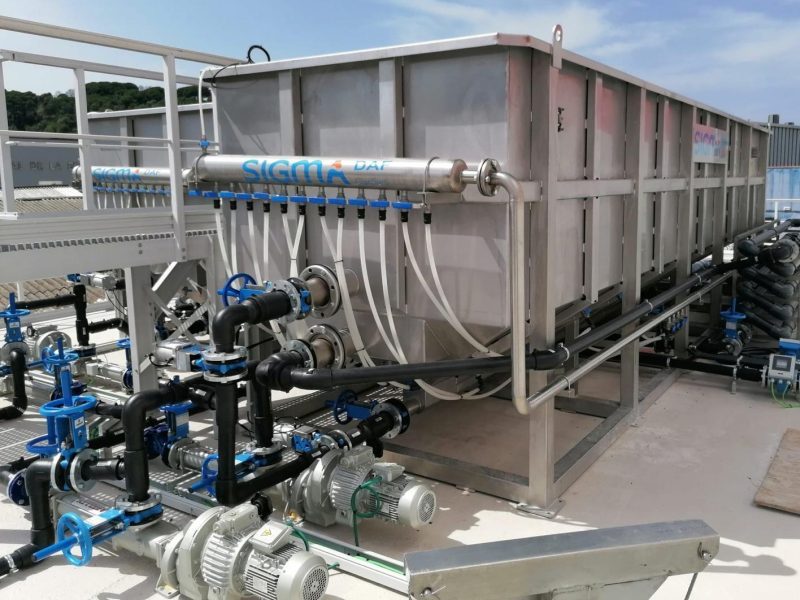
- Capacity from 1 to 200 m³/h
- Designed for high levels of contamination
- It produces high concentrations of dry matter
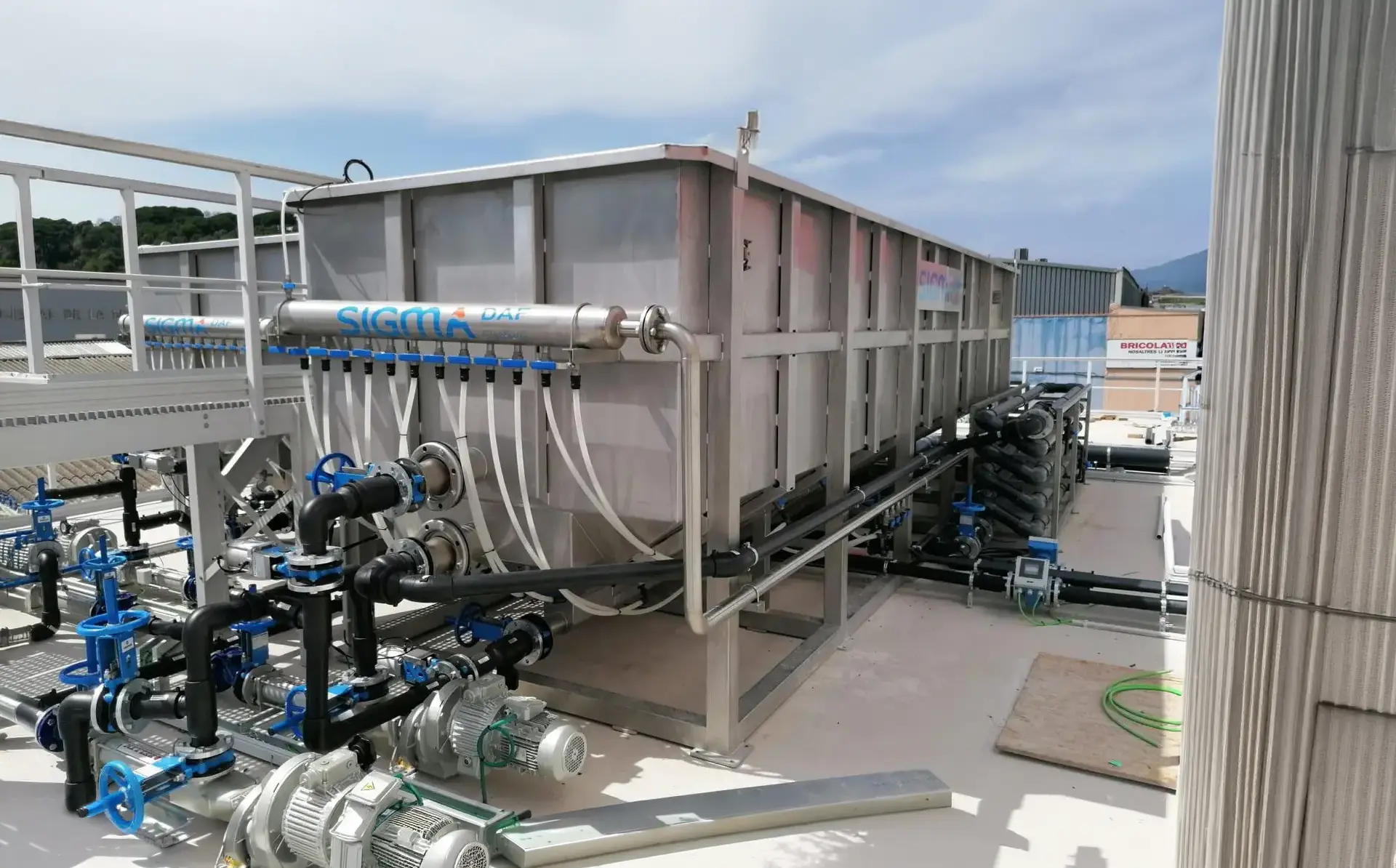

The DAF FPAC dissolved air flotation system has been specifically designed for the treatment of industrial wastewater with high concentrations of suspended solids, fats, oils, and flocculated matter. Its large flotation surface area and cross-flow configuration make it one of the most efficient DAF technologies for high-load applications and sludge thickening processes.
Thanks to its optimized design, the DAF FPAC can treat up to 40 kg of dry matter per m², ensuring excellent solid-liquid separation even under the most demanding conditions.
Our line of dissolved air flotation systems includes a variety of configurations to accommodate all types of flow rates and contaminant loads.
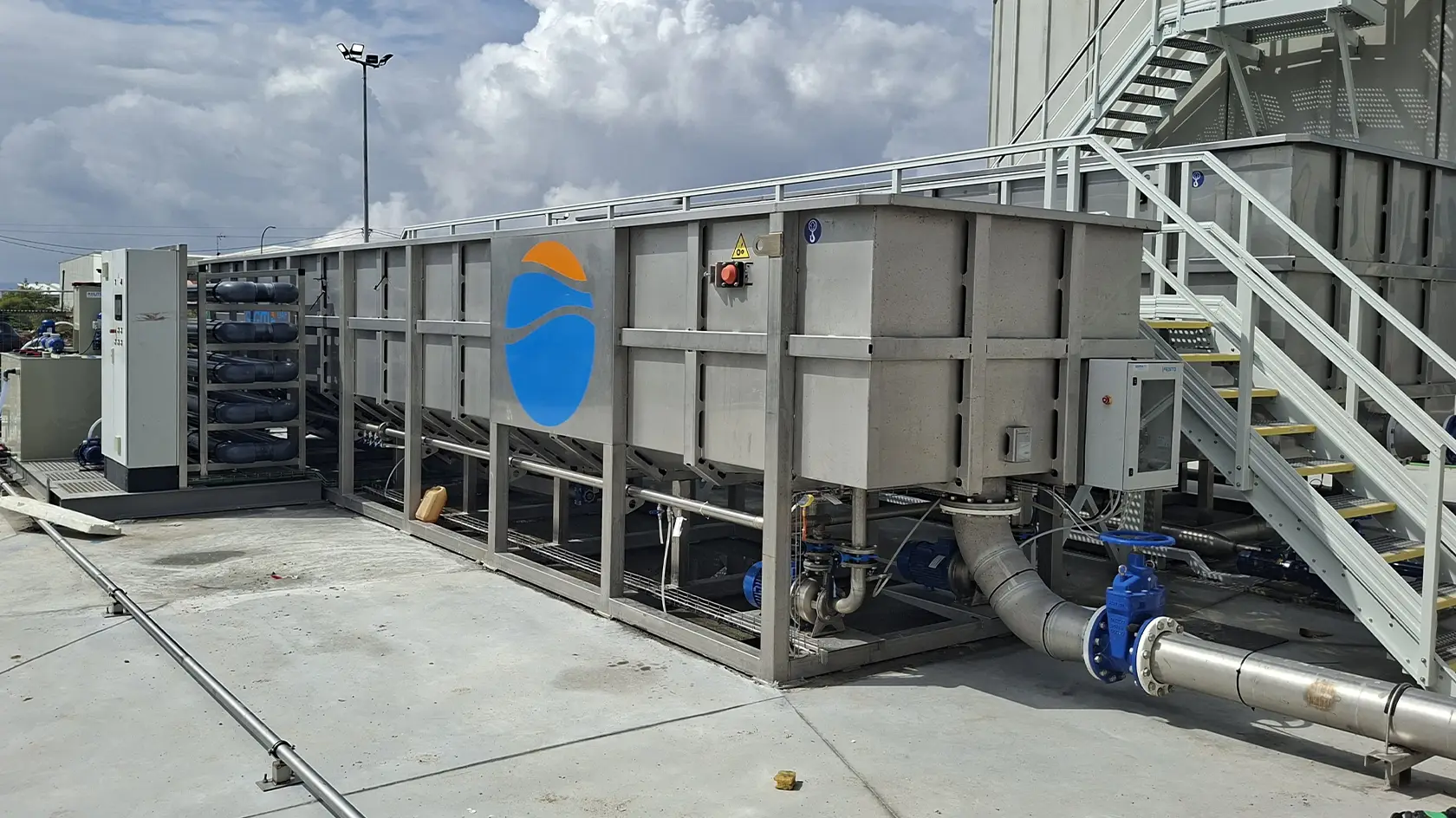
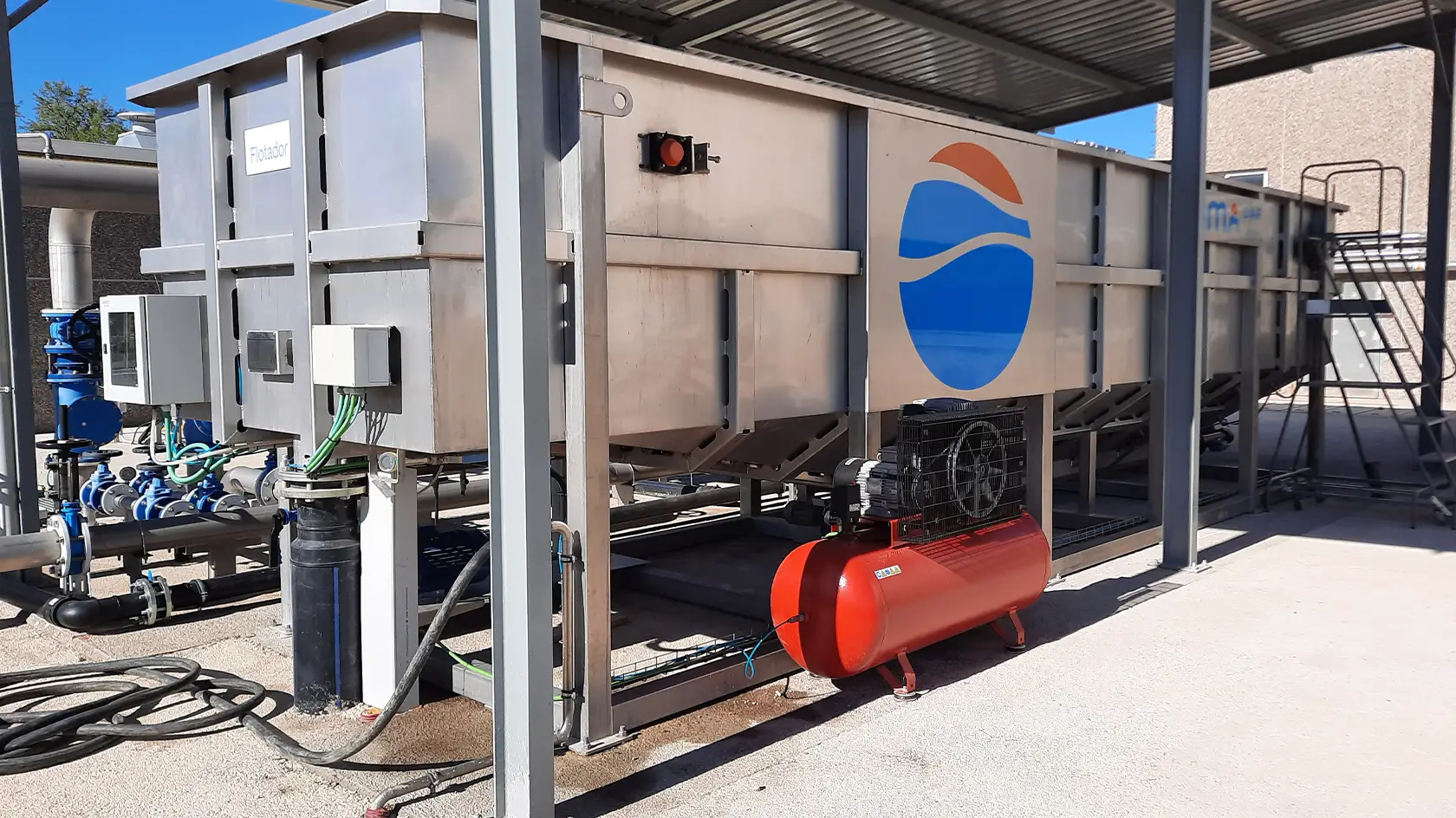
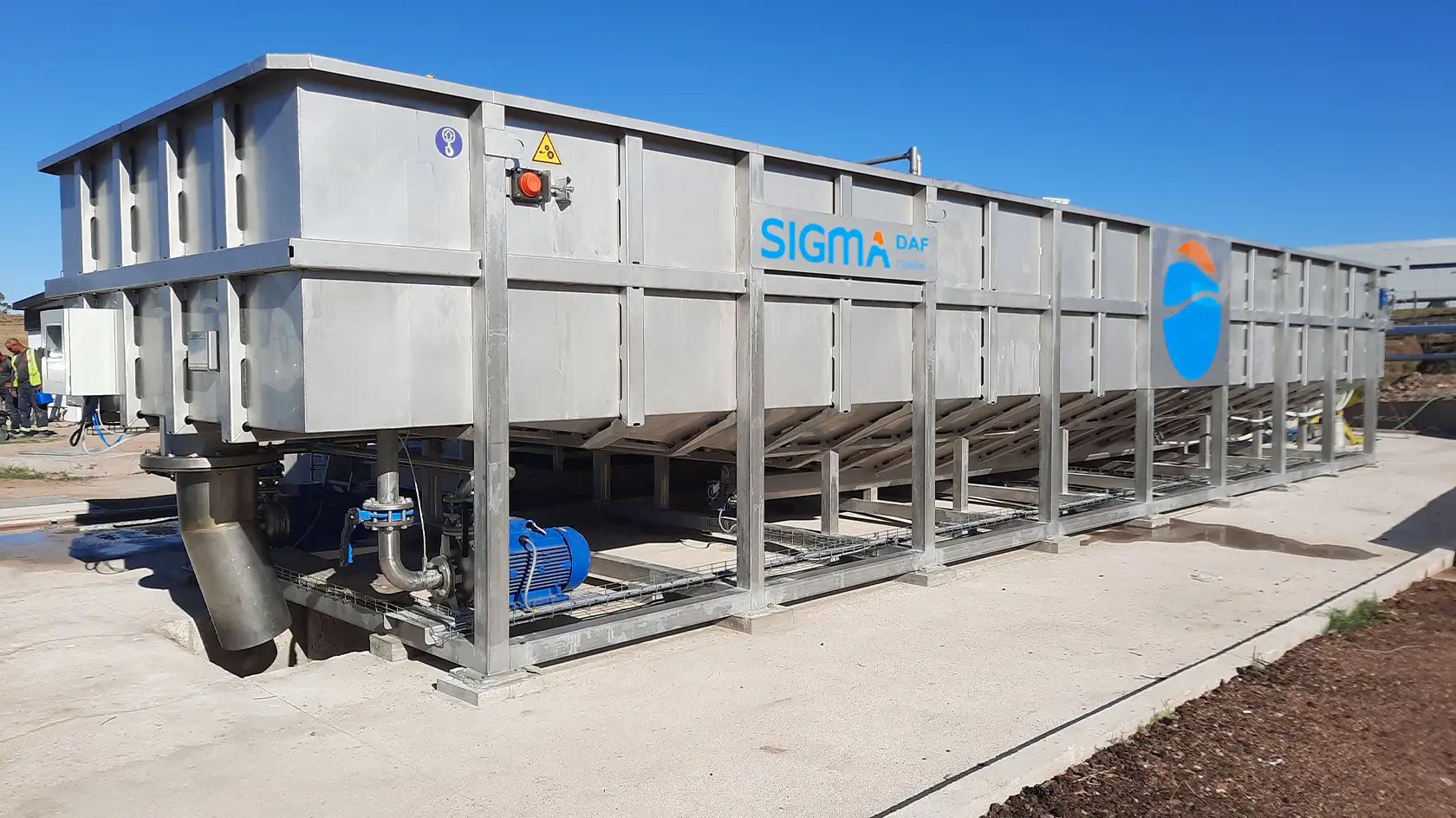
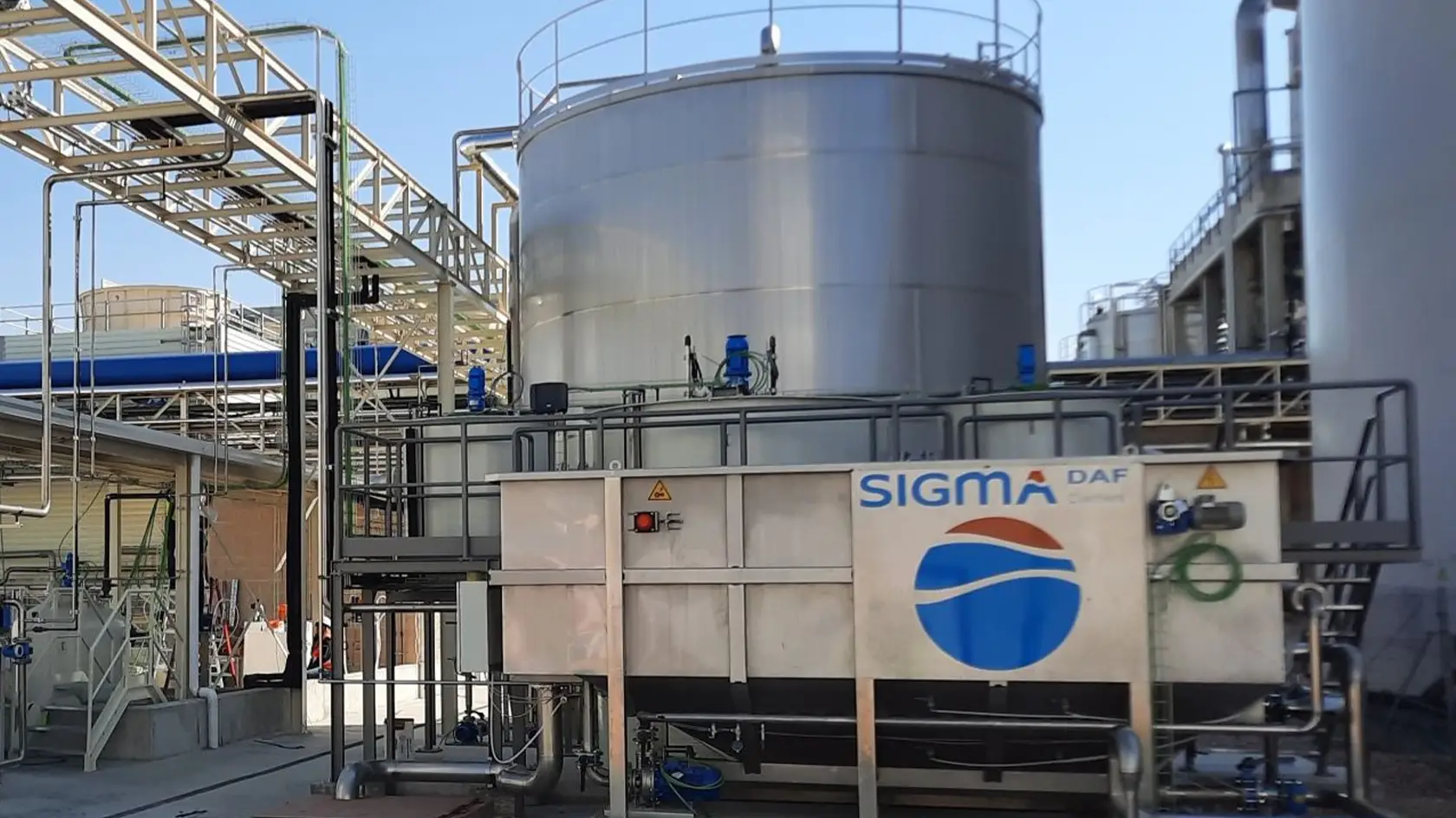
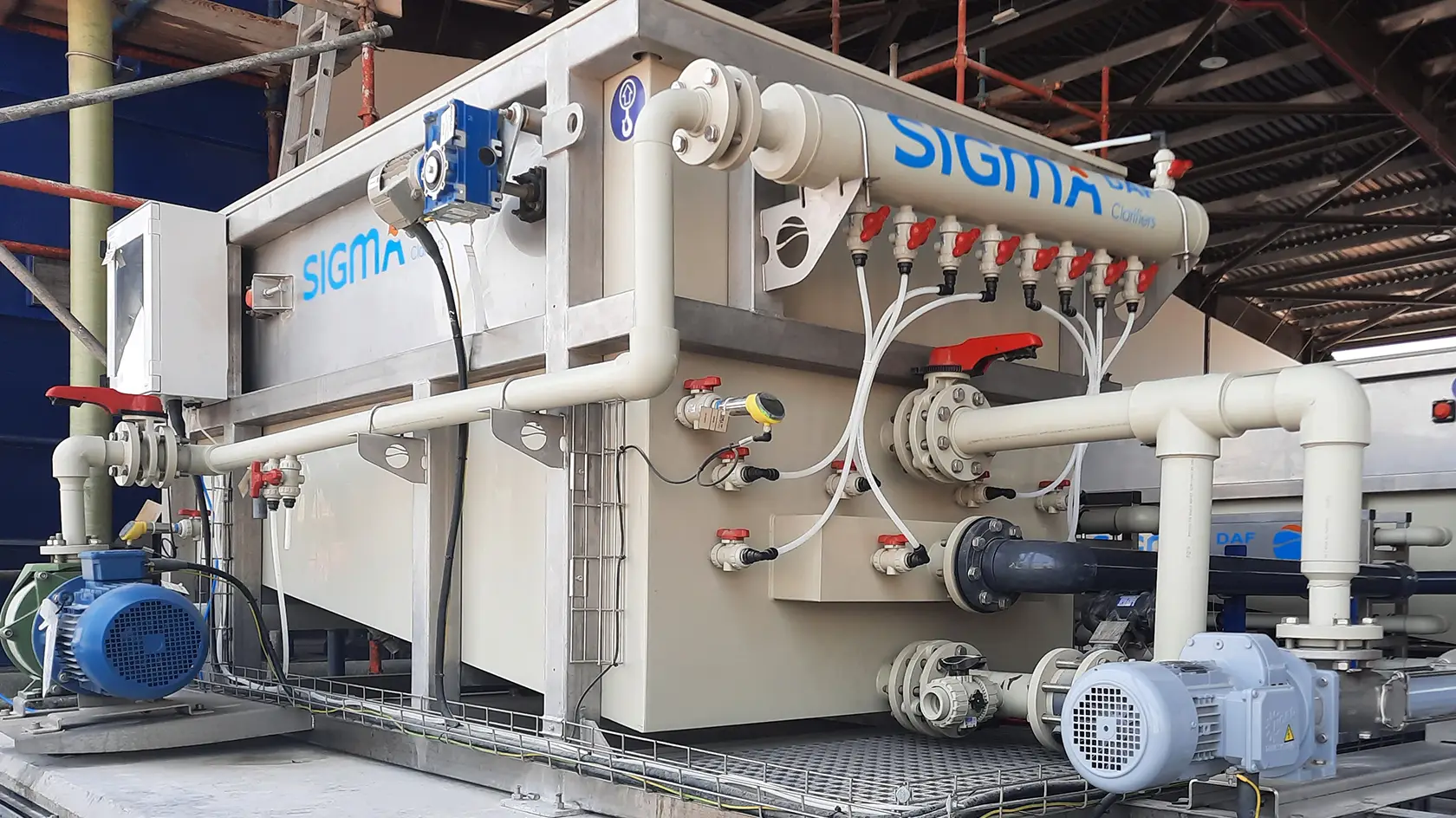
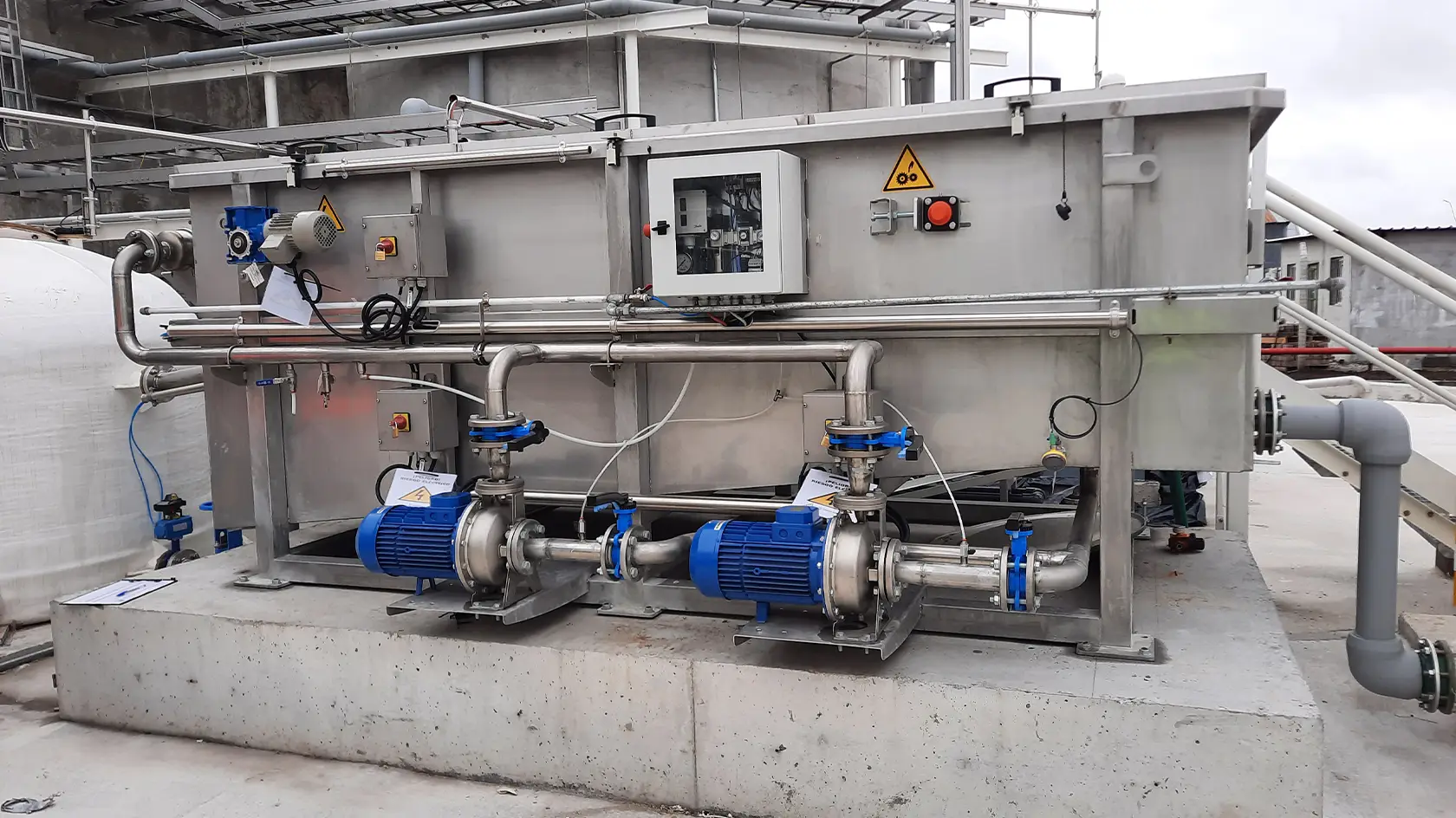
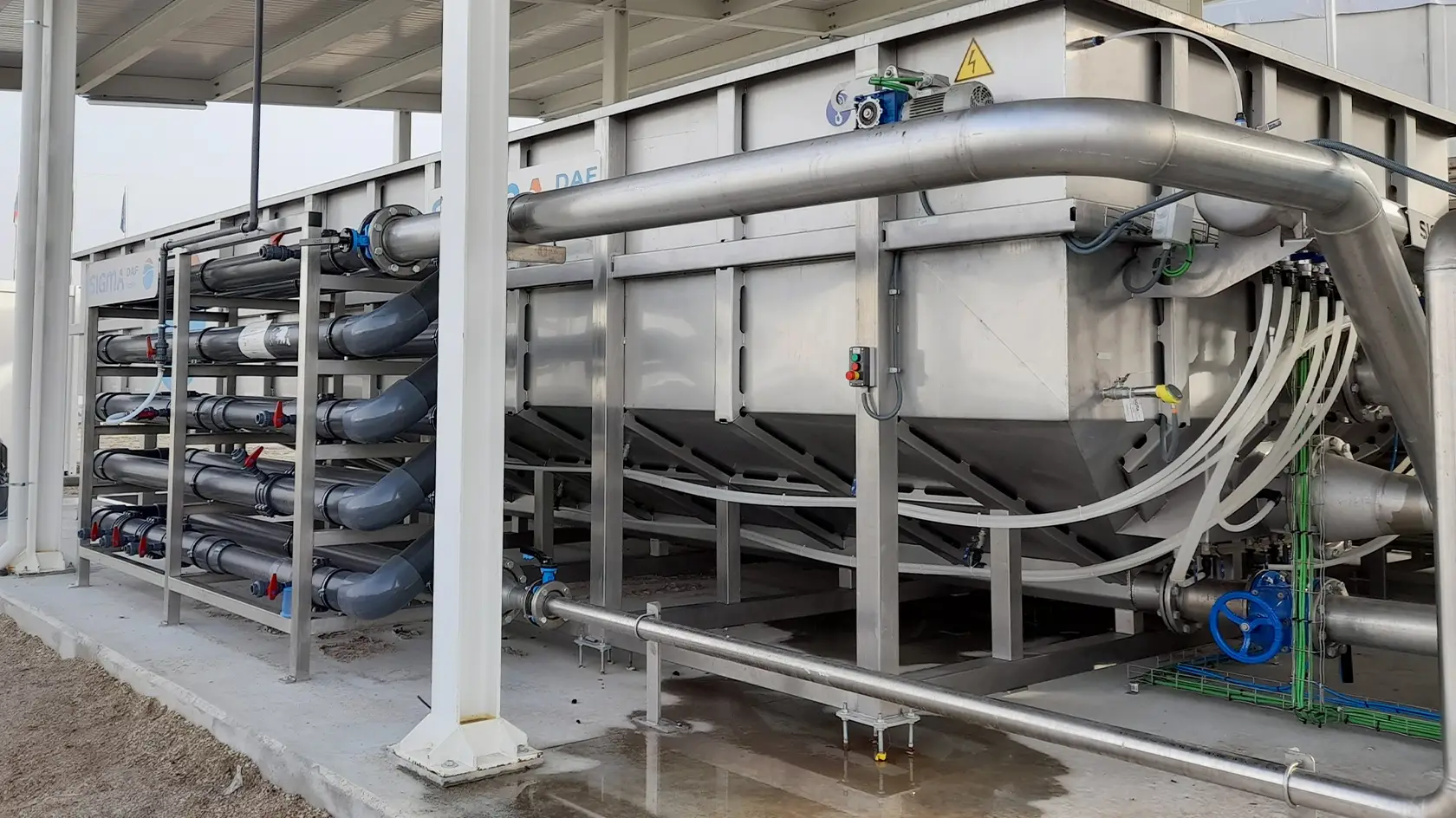
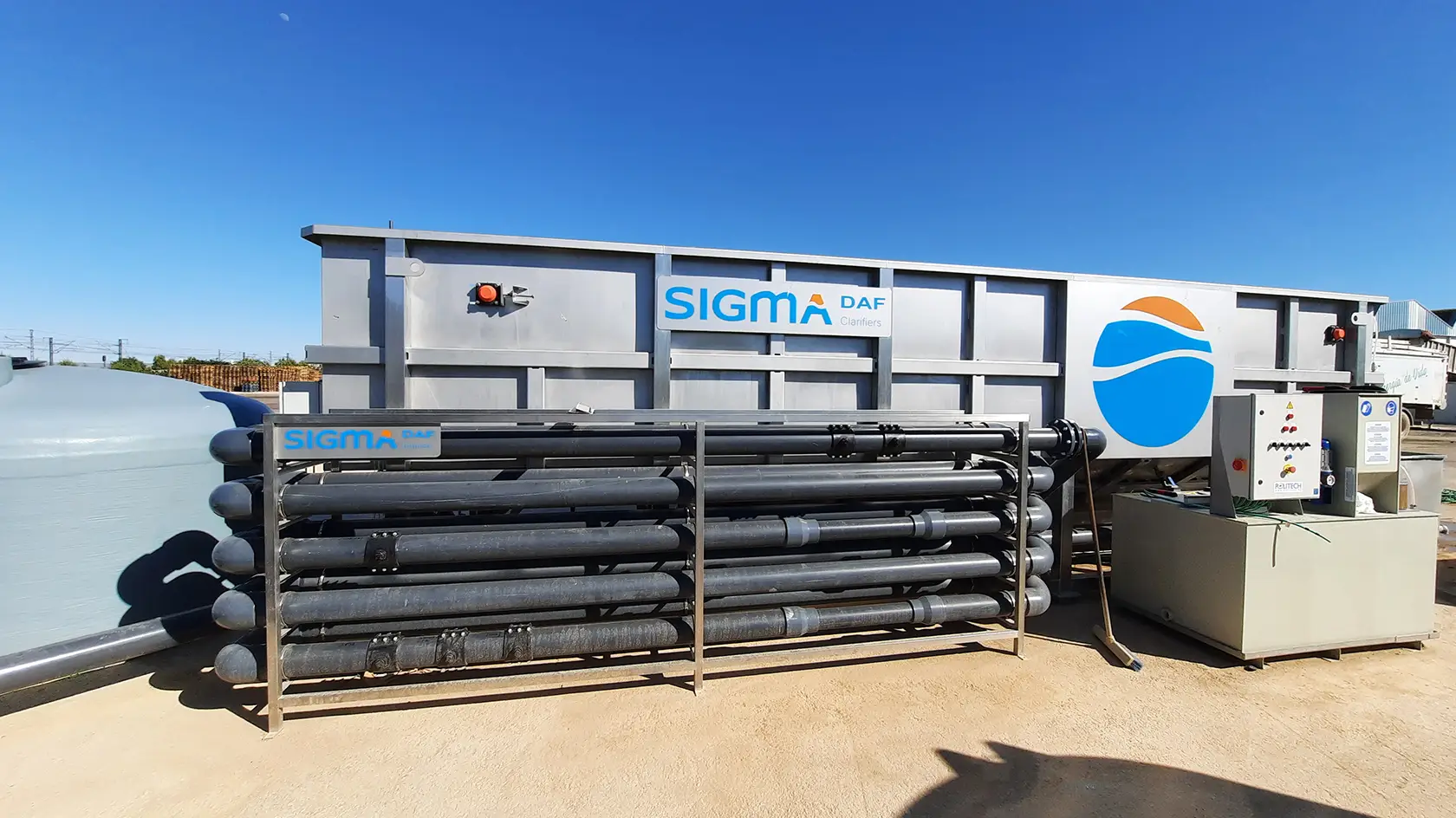
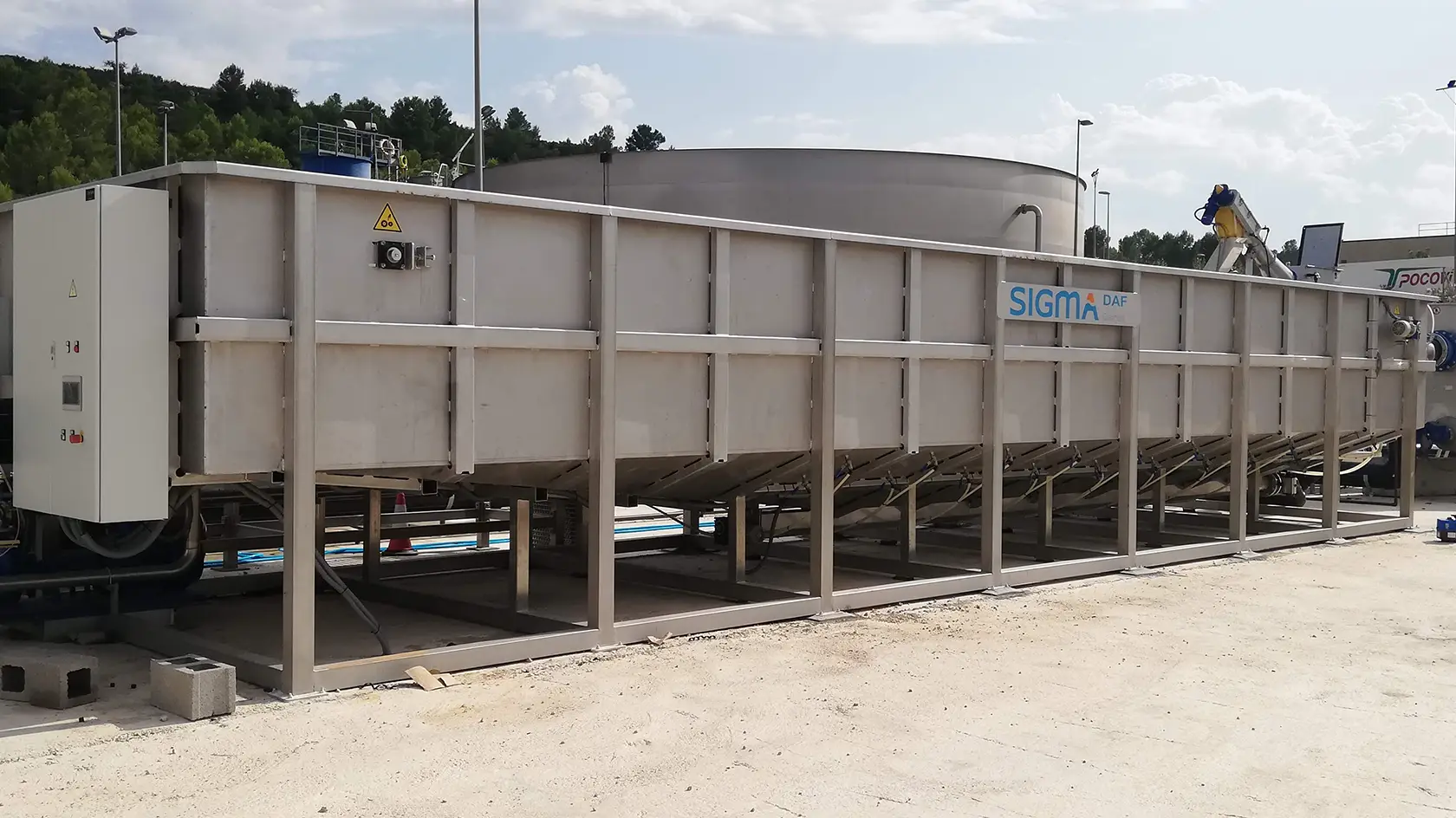
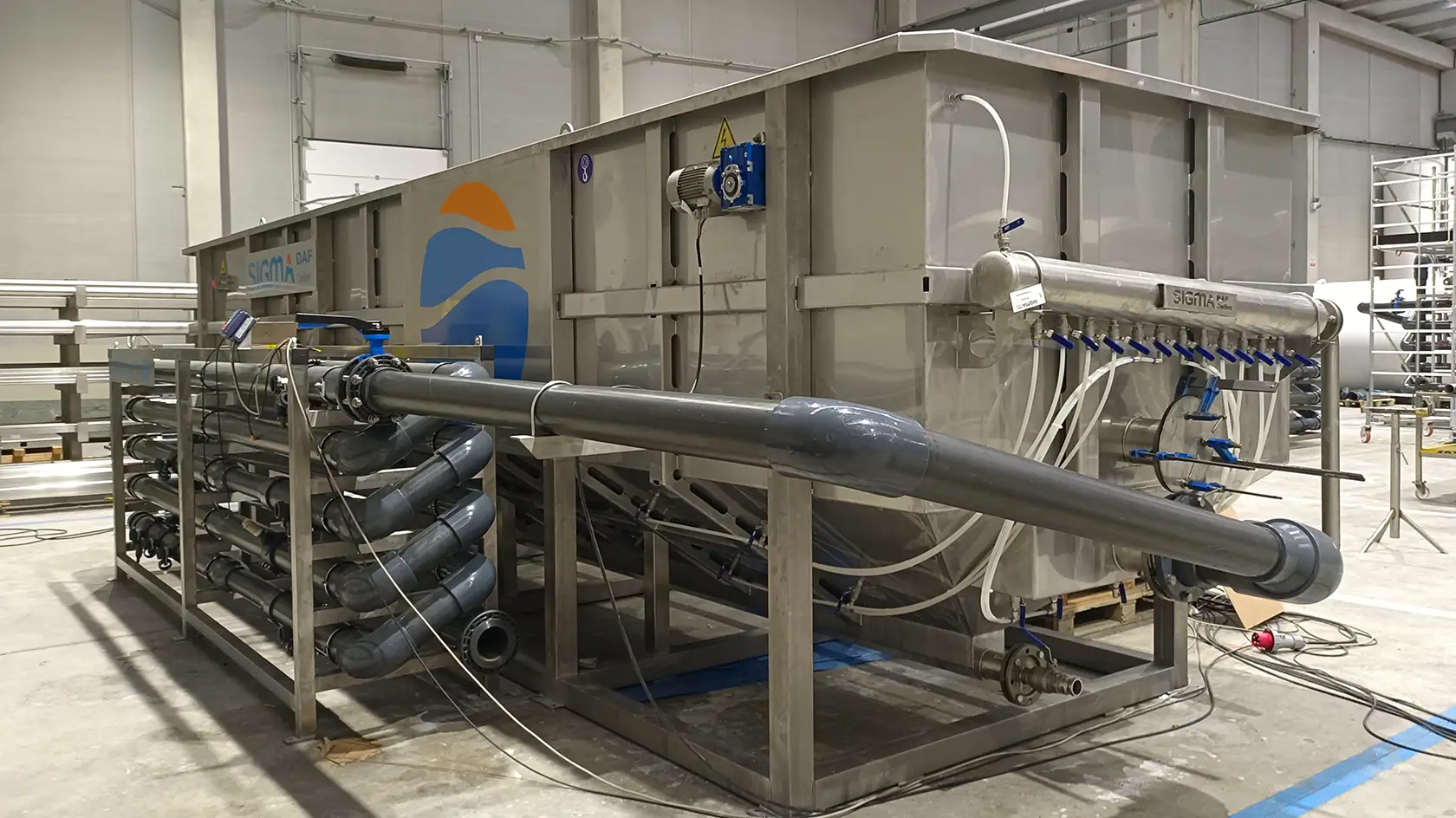
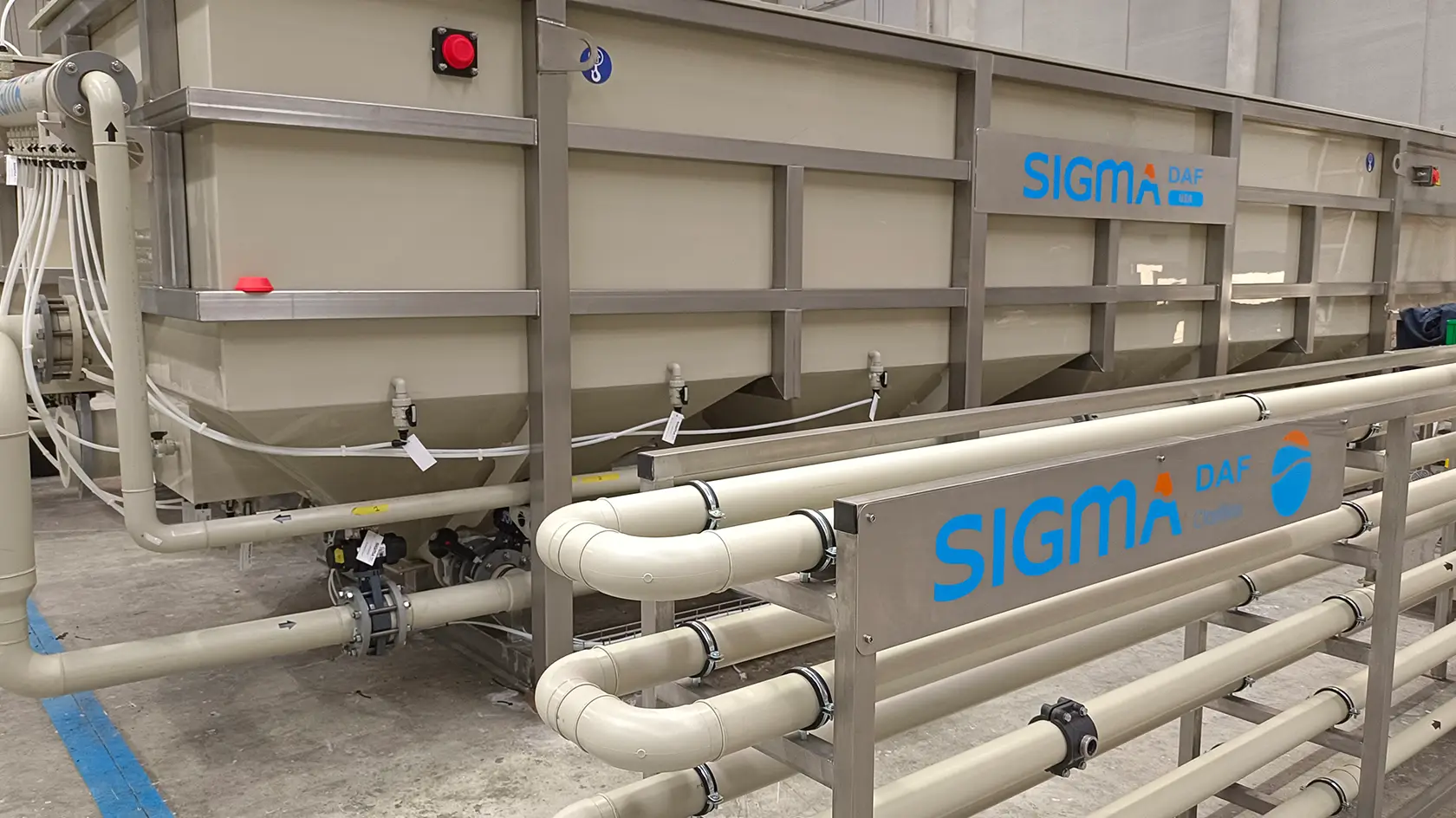
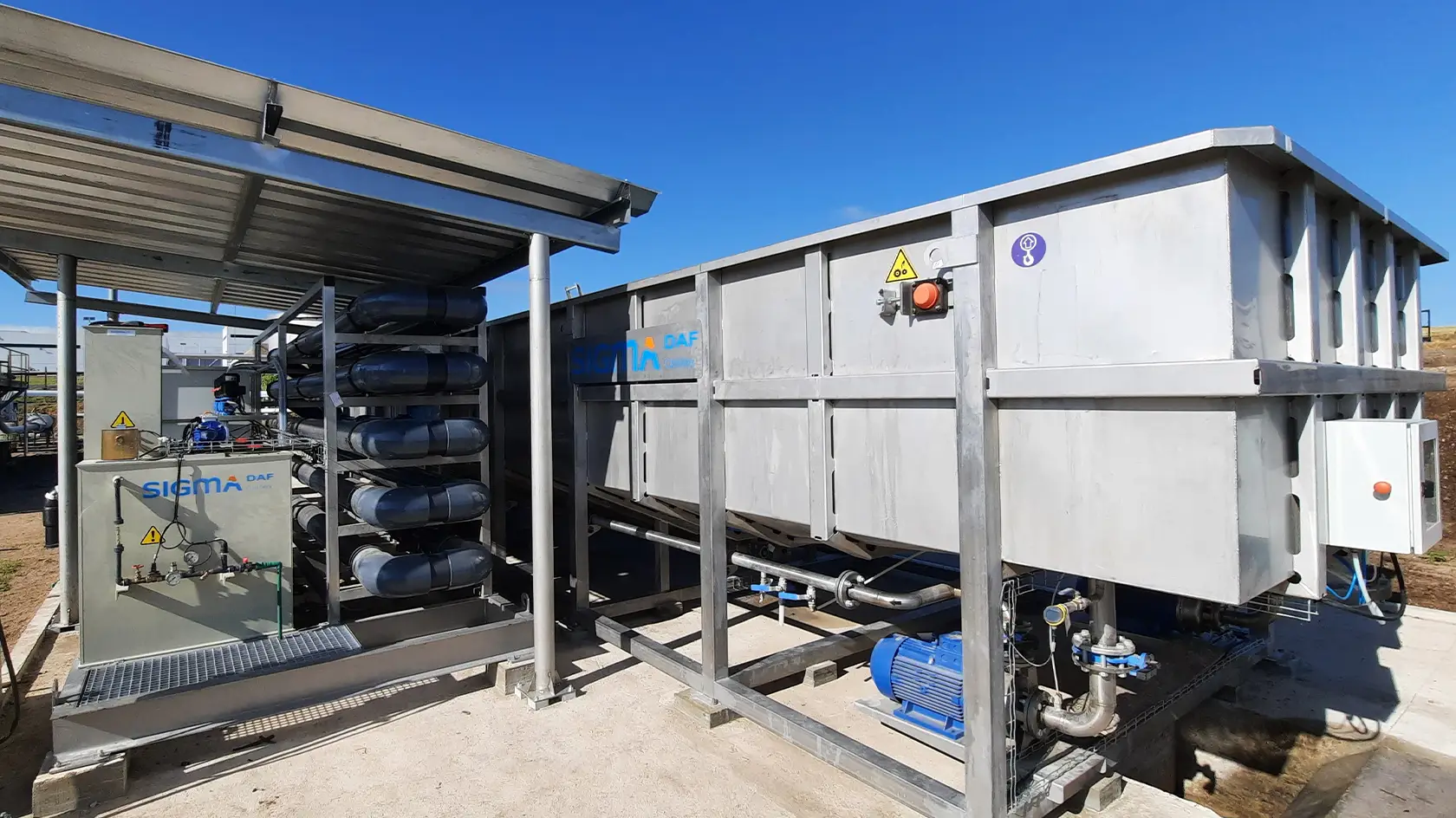

DAF FPAC Specifications: Performance, Dimensions, and Technical Data
The DAF FPAC model provides high performance in the removal of high levels of organic matter, solids, fats, and other contaminants present in wastewater.
CAPACITY (m³/h) | LENGTH (mm) | WIDTH (mm) | ' HEIGHT (mm) | ACTIVE AREA (m²) | CURB WEIGHT (kg) | 's Gross Weight (kg) |
|---|---|---|---|---|---|---|
| 3 | 2300 | 1625 | 1400 | 1,2 | 450 | 1250 |
| 5 | 2300 | 1900 | 1400 | 1,5 | 510 | 1500 |
| 10 | 3150 | 2000 | 1500 | 2,4 | 1200 | 3200 |
| 15 | 4000 | 2200 | 1500 | 4,2 | 1500 | 4500 |
| 20 | 5000 | 2200 | 2300 | 6,6 | 2100 | 10100 |
| 30 | 6500 | 2200 | 2300 | 10 | 2400 | 13400 |
| 40 | 7000 | 2200 | 2300 | 11 | 2500 | 14500 |
| 50 | 8000 | 2200 | 2300 | 13 | 2700 | 16700 |
| 60 | 9000 | 2200 | 2300 | 15 | 2900 | 18400 |
| 80 | 11000 | 2200 | 2300 | 19 | 4000 | 24100 |
| 100 | 9500 | 3400 | 2300 | 24 | 4600 | 29300 |
| 120 | 11000 | 3400 | 2300 | 28 | 4750 | 34250 |
| 140 | 12500 | 3400 | 2300 | 32,5 | 5200 | 39200 |
| 160 | 14000 | 3400 | 2300 | 36 | 5600 | 44250 |
| 200 | 17000 | 3400 | 2300 | 46 | 6200 | 53200 |
Based on nominal capacity under standard conditions.
Technical data is for informational purposes only and is not binding. Specifications may vary depending on the final configuration of the equipment supplied.
CAPACITY (m³/h) | INLET FLANGE | OUTLET FLANGE | FLOATING SLUDGE FLANGES | SETTLED SLUDGE FLANGES | SCREPER POWER (kW) | INFINITE POWER (kW) | RECIRCULATION PUMP POWER (kW) | NUMBER OF SCRAPERS | FLANGE TYPE |
|---|---|---|---|---|---|---|---|---|---|
| 3 | DN 50 | DN 50 | DN 80 | DN 50 | 0,37 | - | 5,5 | 3 | DN 2642 |
| 5 | DN 65 | DN 65 | DN 80 | DN 50 | 0,37 | - | 5,5 | 3 | DN 2642 |
| 10 | DN 80 | DN 80 | DN 80 | DN 80 | 0,37 | - | 5,5 | 3 | DN 2642 |
| 15 | DN 100 | DN 100 | DN 80 | DN 80 | 0,37 | - | 5,5 | 5 | DN 2642 |
| 20 | DN 125 | DN 125 | DN 100 | DN 100 | 0,37 | 0,37 | 7,5 | 6 | DN 2642 |
| 30 | DN 150 | DN 150 | DN 150 | DN 100 | 0,37 | 0,37 | 7,5 | 8 | DN 2642 |
| 40 | DN 200 | DN 200 | DN 150 | DN 100 | 0,55 | 0,37 | 7,5 | 9 | DN 2642 |
| 50 | DN 200 | DN 200 | DN 150 | DN 100 | 0,55 | 0,37 | 11 | 10 | DN 2642 |
| 60 | DN 200 | DN 200 | DN 150 | DN 100 | 0,55 | 0,37 | 11 | 12 | DN 2642 |
| 80 | DN 250 | DN 250 | DN 150 | DN 150 | 0,55 | 0,37 | 11 | 15 | DN 2642 |
| 100 | DN 250 | DN 250 | DN 200 | DN 150 | 0,55 | 0,37 | 15 | 13 | DN 2642 |
| 120 | DN 300 | DN 300 | DN 200 | DN 150 | 0,55 | 0,37 | 15 | 15 | DN 2642 |
| 140 | DN 300 | DN 300 | DN 200 | DN 150 | 0,55 | 0,37 | 15 | 18 | DN 2642 |
| 160 | DN 400 | DN 400 | DN 200 | DN 150 | 0,55 | 0,37 | 15 | 20 | DN 2642 |
| 200 | DN 400 | DN 400 | DN 200 | DN 150 | 0,55 | 0,37 | 15 | 25 | DN 2642 |
Based on nominal capacity under standard conditions.
Technical data is for informational purposes only and is not binding. Specifications may vary depending on the final configuration of the equipment supplied.
| Parameters | Reduction efficiency |
|---|---|
| BOD5 | 50% - 75% |
| COD | 50% - 75% |
| Total suspended solids | 85% - 95% |
| Turbidity | 85% - 95% |
| Total phosphorus | 60% - 90% |
| Total nitrogen | 30% - 50% |
| Oils and grease | 80% - 95% |
Technical data is for informational purposes only and is not binding. Specifications may vary depending on the final configuration of the equipment supplied.

Key Features of the DAF FPAC
- Cross-flow DAF system.
- Designed for very high loads of solids and other contaminants.
- Horizontal installation
- Ideal for pretreatment stages or primary treatment.
- Excellent performance in sludge thickening.
- Exclusive surface separation system.
- Robust design and easy to operate.
- Low maintenance and operating costs.
DAF FPAC System Components
Top view
- Sludge tray
- Air diffuser
- Chain
- Worm screw
- Shovel
- Level Gauge
- Clarification tank

Front view

- Air Bleed Valve
- Manifold
- Pressurization Valves
- Outlet for Floated Sludge
- Water ingress
- Outlet for Settled Sludge
- Sludge Level Sensor
- Pneumatic Control Panel
- Skimmer motor
Side view
- Pressure pipe
- Safety valve
- Pressure reading
- Sampling
- Suction pipe
- Air Injection

Rear view

- Pneumatic Control Panel
- Clarified Water Tank Level Sensor
- Water discharge
- Worm Gear Motor
DAF FPAC Plug & Play: Quick installation and immediate startup
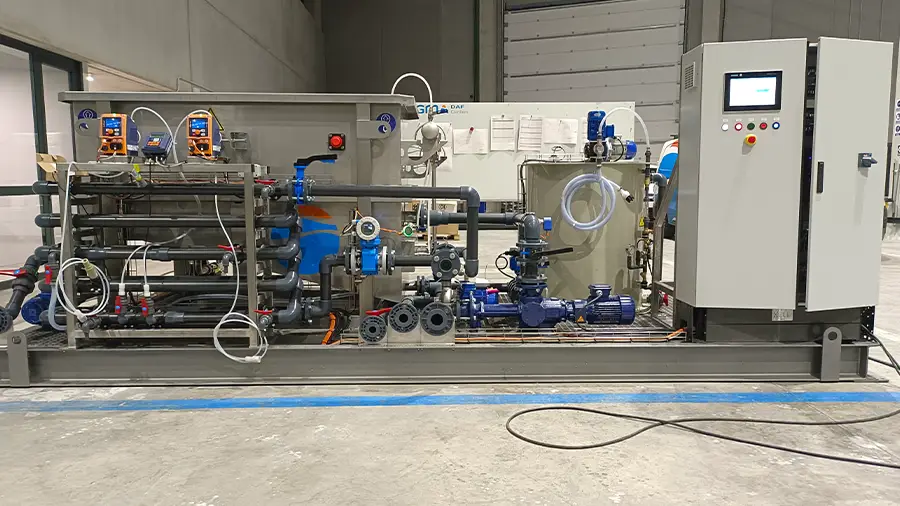
To facilitate implementation, the DAF FPAC system can be supplied in a Plug & Play configuration, integrating the following into a single solution:
- DAF Unit.
- Physical-chemical coagulation and flocculation system.
- Chemical dosing equipment.
- Electrical control panel.
- Wiring and connections are fully installed.
All equipment is assembled, inspected, and subjected to functional testing prior to shipment, ensuring quick, safe, and hassle-free commissioning.
Configuration by Capacity
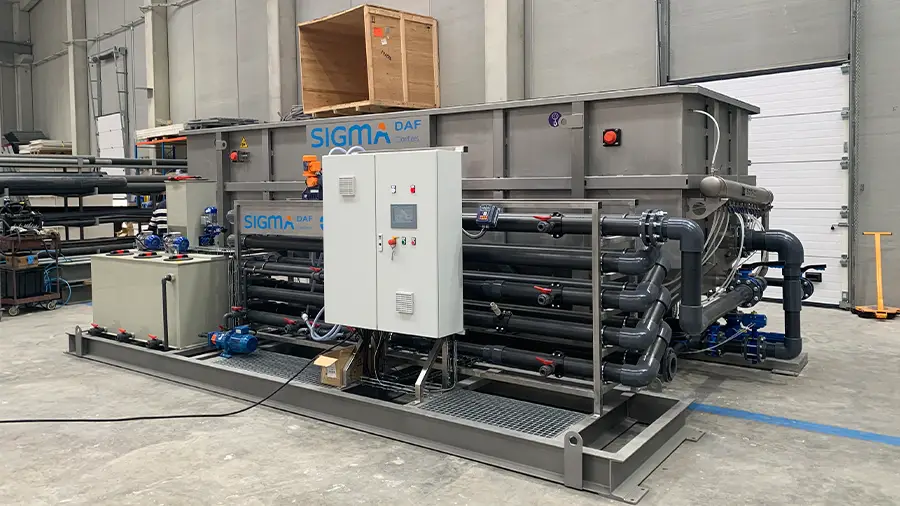
More than 15 m³/h
The DAF unit is supplied separately from the coagulation-flocculation skid to facilitate transport and installation.
Benefits of the DAF Compact Plug & Play Solution
- Immediate startup: The equipment is ready for operation upon delivery; it only requires an electrical connection and reagent adjustment.
- Quick installation: Pre-assembled design that eliminates complex on-site assembly work.
- Cost Reduction: Shorter installation time and lower costs associated with construction and engineering.
- Guaranteed Performance: All systems are pre-tested and calibrated to ensure reliable, stable, and efficient operation from day one.
Available Materials
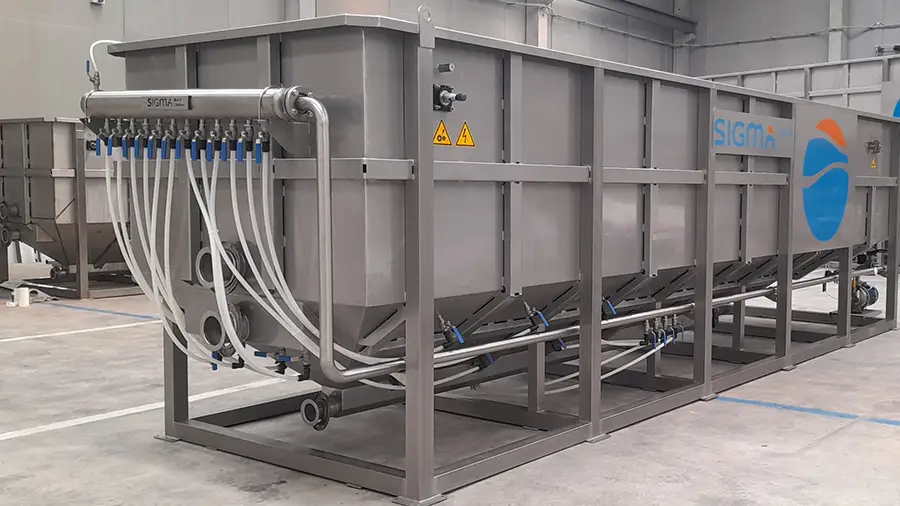
Stainless steel AISI 304
Standard construction materials for all our DAF systems, including the DAF FPAC model.
Upon customer request, we also manufacture DAF units made of AISI 316 stainless steel.
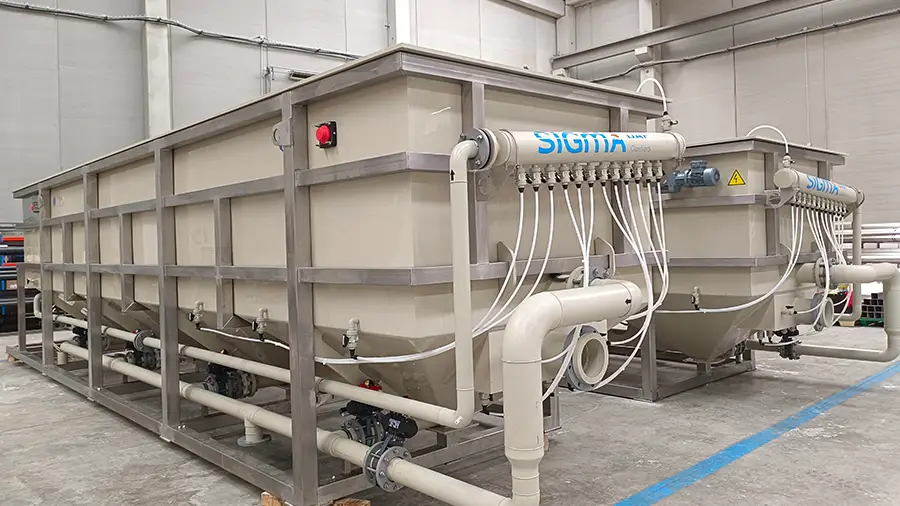
Polypropylene
The DAF FPAC system is manufactured from polypropylene when highly corrosive wastewater must be treated.
This material offers high protection against oxidation and chemical degradation.

How does the DAF FPAC system work?
The SIGMADAF FPAC is a dissolved-air flotation system with a large flotation surface area and cross-flow configuration, which allows for the treatment of effluents with very high solids loads, reaching up to 40 kg of dry matter per square meter.

- Water Inlet and Floc Formation
The wastewater enters at one end of the unit after passing through the coagulation and flocculation stages, where fine particles, oils, and colloidal matter aggregate to form larger flocs.
These flocs are much easier to separate during the flotation process, improving the overall efficiency of the treatment. - Microbubble Generation
A portion of the already clarified water is recirculated by a pump to the air-water saturator, where it is pressurized in the presence of air.
When the pressure is subsequently released through the aeration system, microbubbles are generated which, due to their small size, have a large surface area and a high capacity to adhere to particles, significantly increasing separation efficiency. - Water flotation and clarification
Microbubbles attached to the flocs reduce their density and cause them to rise rapidly to the surface of the tank, where they form a layer of floated sludge.
The FPAC model uses a large-surface-area cross-flow clarification system, which provides a long residence time and high separation capacity even when the water has very high loads of suspended solids. - Efficient Removal of Floated Sludge
One of the most distinctive features of the FPAC is its single-motion surface scraper, which moves in the opposite direction of the hydraulic flow.
This design minimizes the distance the floated sludge must travel to the discharge point, preventing solids from being carried into the clarified water and improving process performance.
In addition, it produces sludge with a dry matter concentration three to four times higher than that of conventional DAF systems. This reduces the volume of sludge generated and simplifies subsequent stages of dewatering, drying, or final disposal, thereby lowering operating costs. - Management of Settled Solids
The denser particles that do not float settle at the bottom of the unit, where they are collected by a shaftless conveyor.
This system concentrates and partially dewatered the sediments before conveying them to the central discharge point, from where they are automatically discharged via a pneumatic valve.
Each discharge cycle also generates a self-cleaning effect that helps dislodge solids adhering to the unit’s walls, keeping the system clean and reducing maintenance requirements. - Clarified Water Outlet
Once the floating and settled solids have been removed, the clarified water exits the unit from the end opposite the inlet.
Part of this water is continuously recirculated to the saturation circuit to generate new microbubbles, while the rest proceeds to the next stages of the treatment or reuse process.
Advantages of the DAF FPAC Dissolved Air Flotation System
- Drier, denser sludge: Its large free surface area allows for the accumulation of greater quantities of floated sludge and yields dry matter concentrations 3 to 4 times higher than those achieved by conventional methods, significantly reducing the costs associated with subsequent dewatering, drying, and waste management processes.
- High load capacity: It can handle high concentrations of suspended solids, processing up to 40 kg of dry matter per square meter.
- Separation efficiency: It very effectively removes oils, fats, hydrocarbons, and flocculated matter. In addition, it significantly reduces chemical oxygen demand (COD), biological oxygen demand (BOD), and turbidity.
- Minimization of carryover: Its exclusive separation system incorporates a unique skimming mechanism that rotates in the opposite direction of the hydraulic flow, reducing the transport distance of the floated sludge and minimizing the carryover of solids into the effluent.

WHY CHOOSE THE DAF FPAC SYSTEM?
The DAF FPAC combines a large flotation surface area, high load capacity, a unique surface separation system, and optimized sludge and sediment management. These features make it one of the most efficient solutions for treating industrial wastewater with high concentrations of contaminants and for sludge thickening applications where maximum operational efficiency is a key requirement.