
Dissolved Air Flotation System for High Flow Rates – DAF FPHF

DAF FPHF
Dissolved-Air Flotation System for High Flow Rates

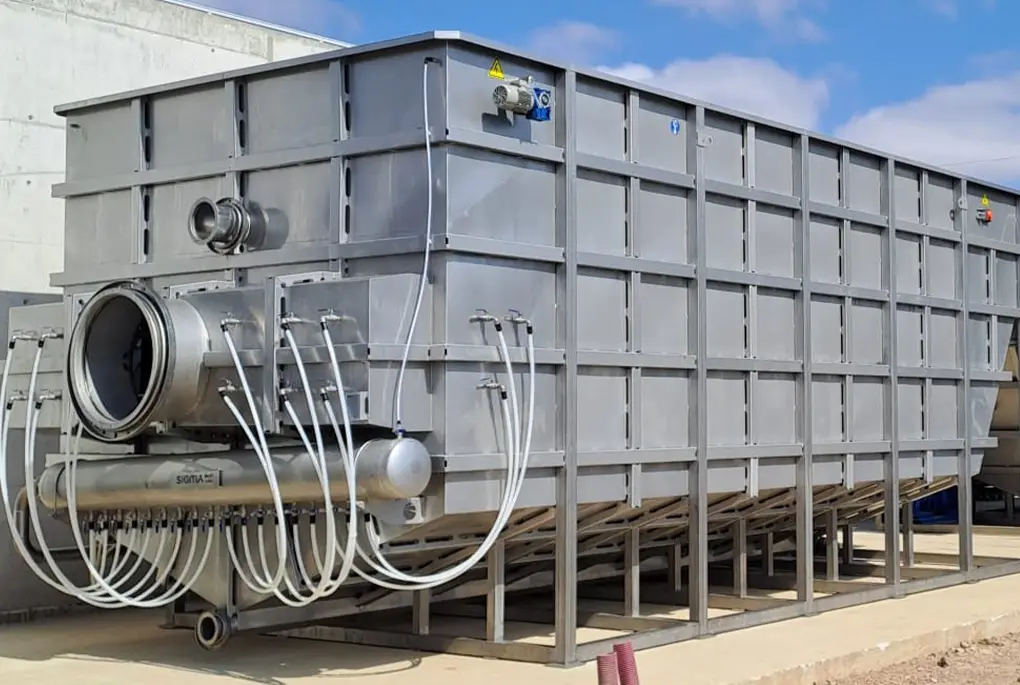
- Capacity from 400 to 1,200 m³/h
- Suitable for all types of hazardous waste
- IPS technology with angled plates for maximum hydraulic capacity
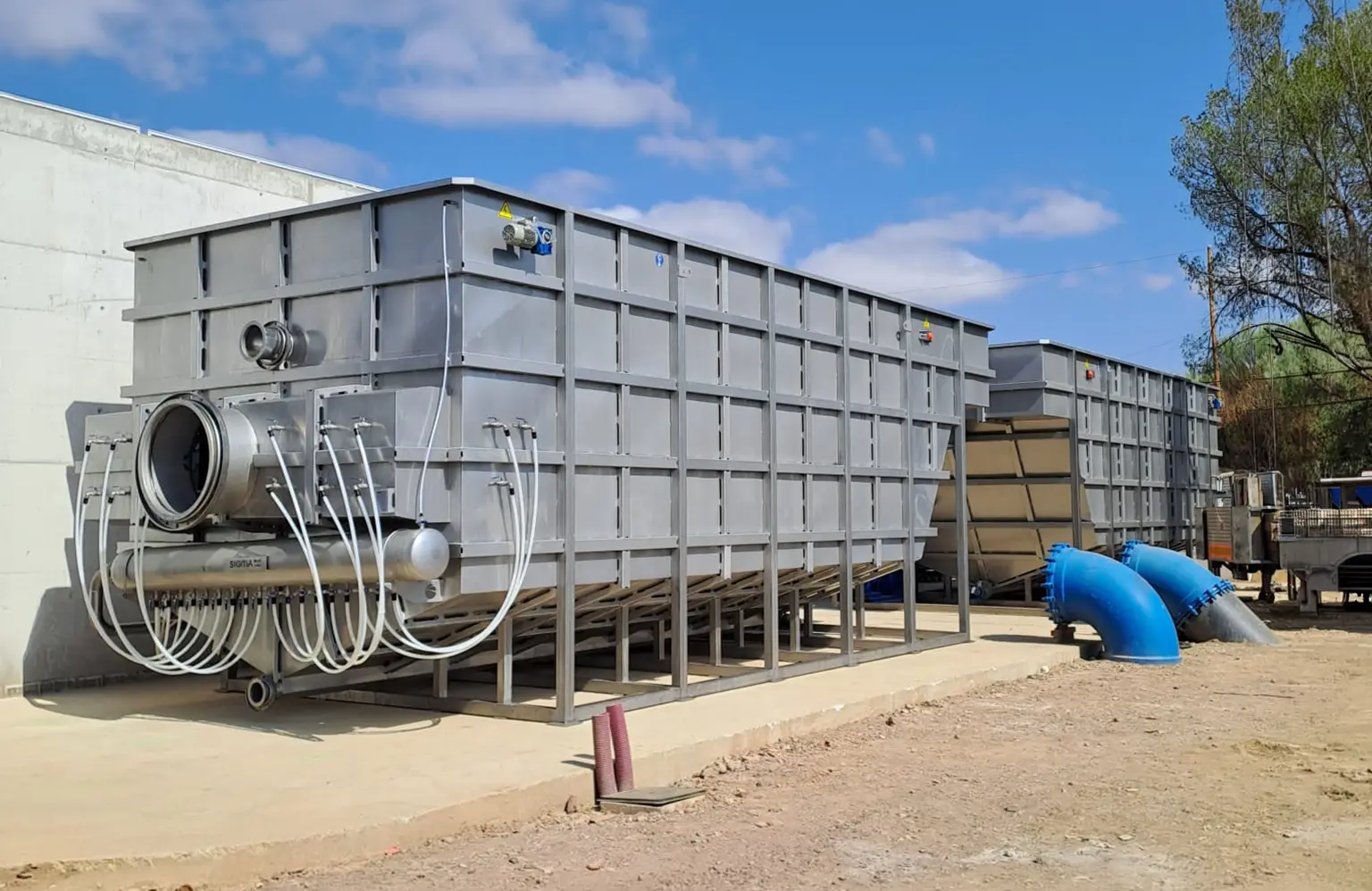

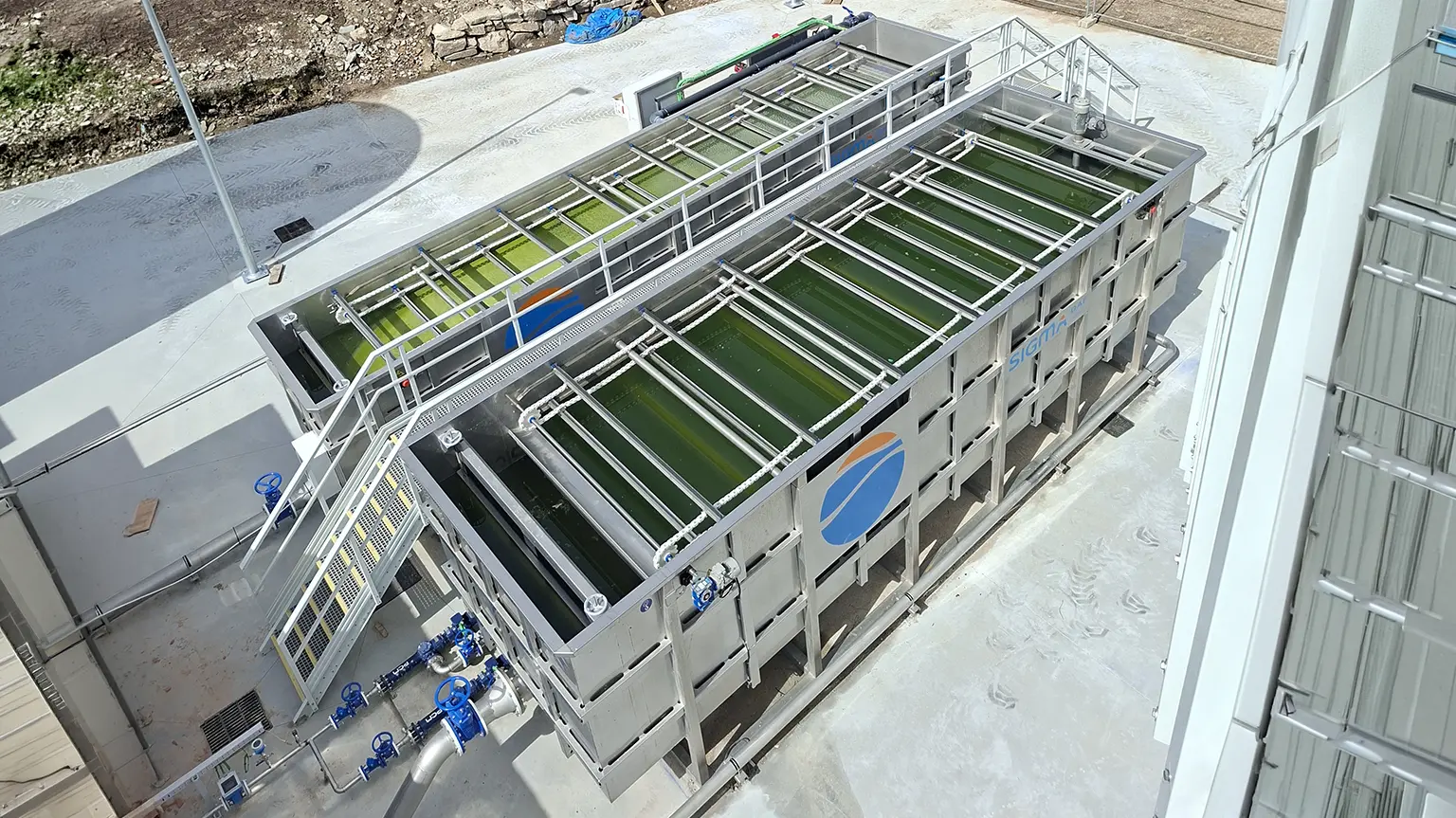
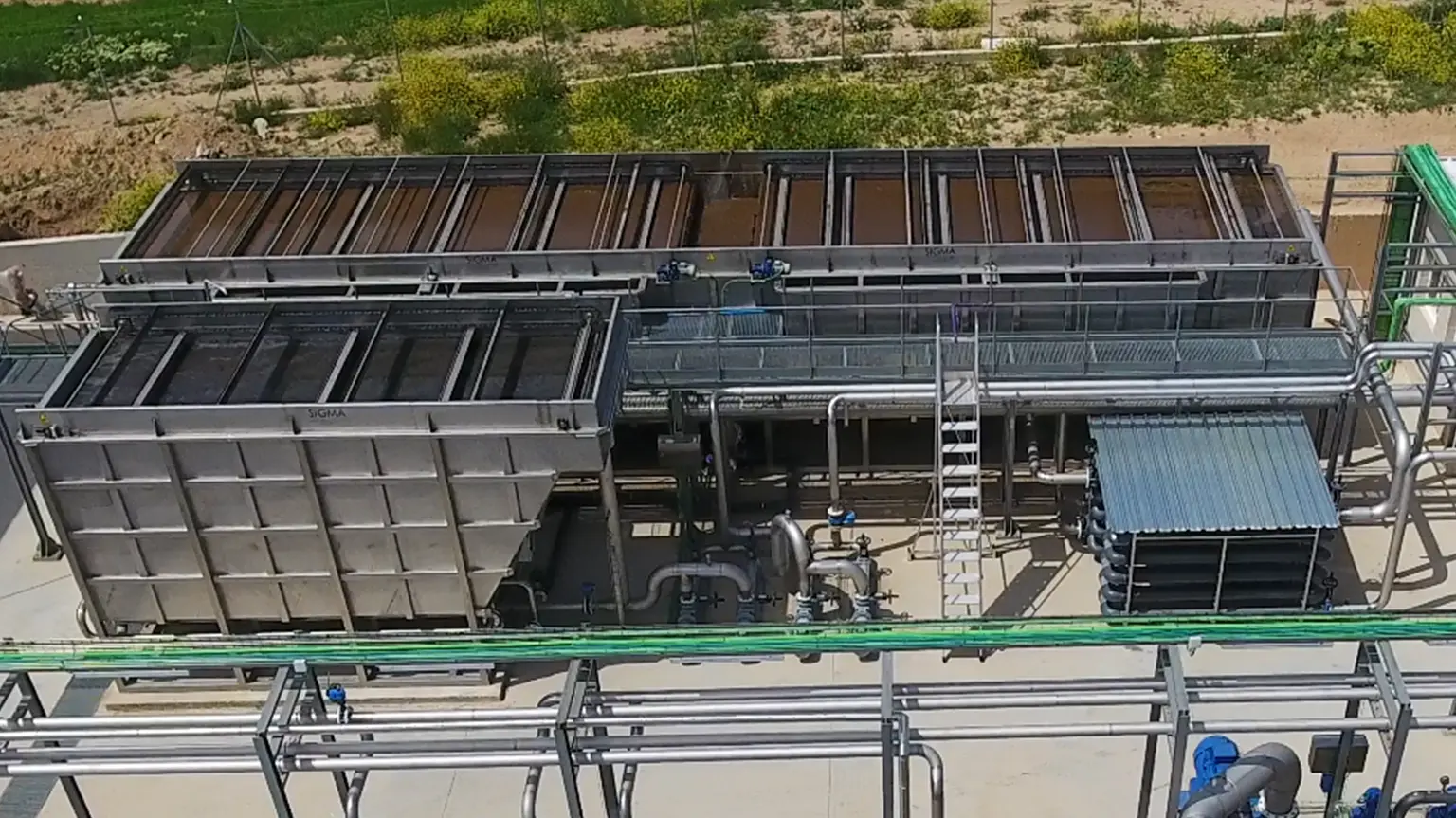
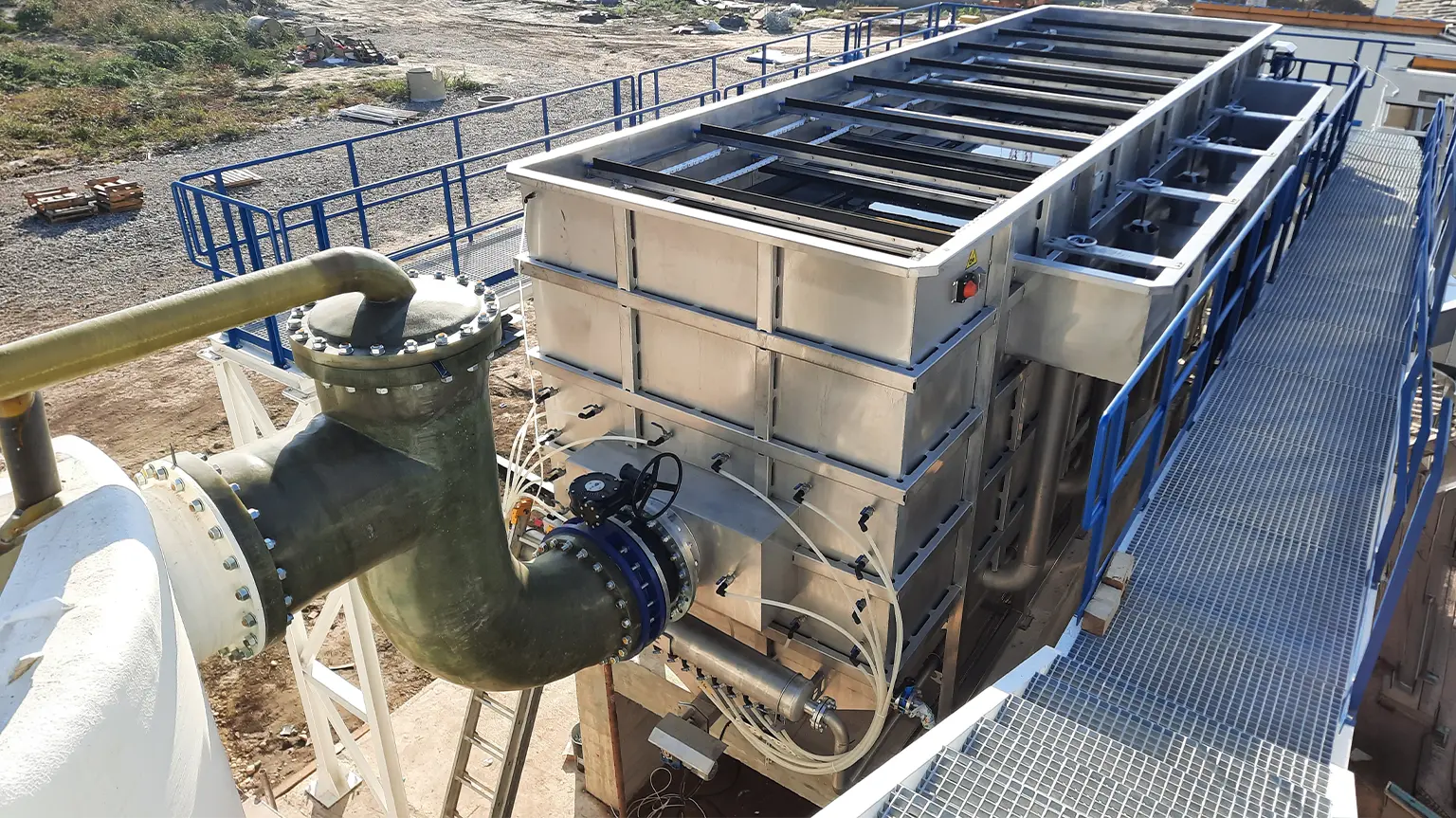
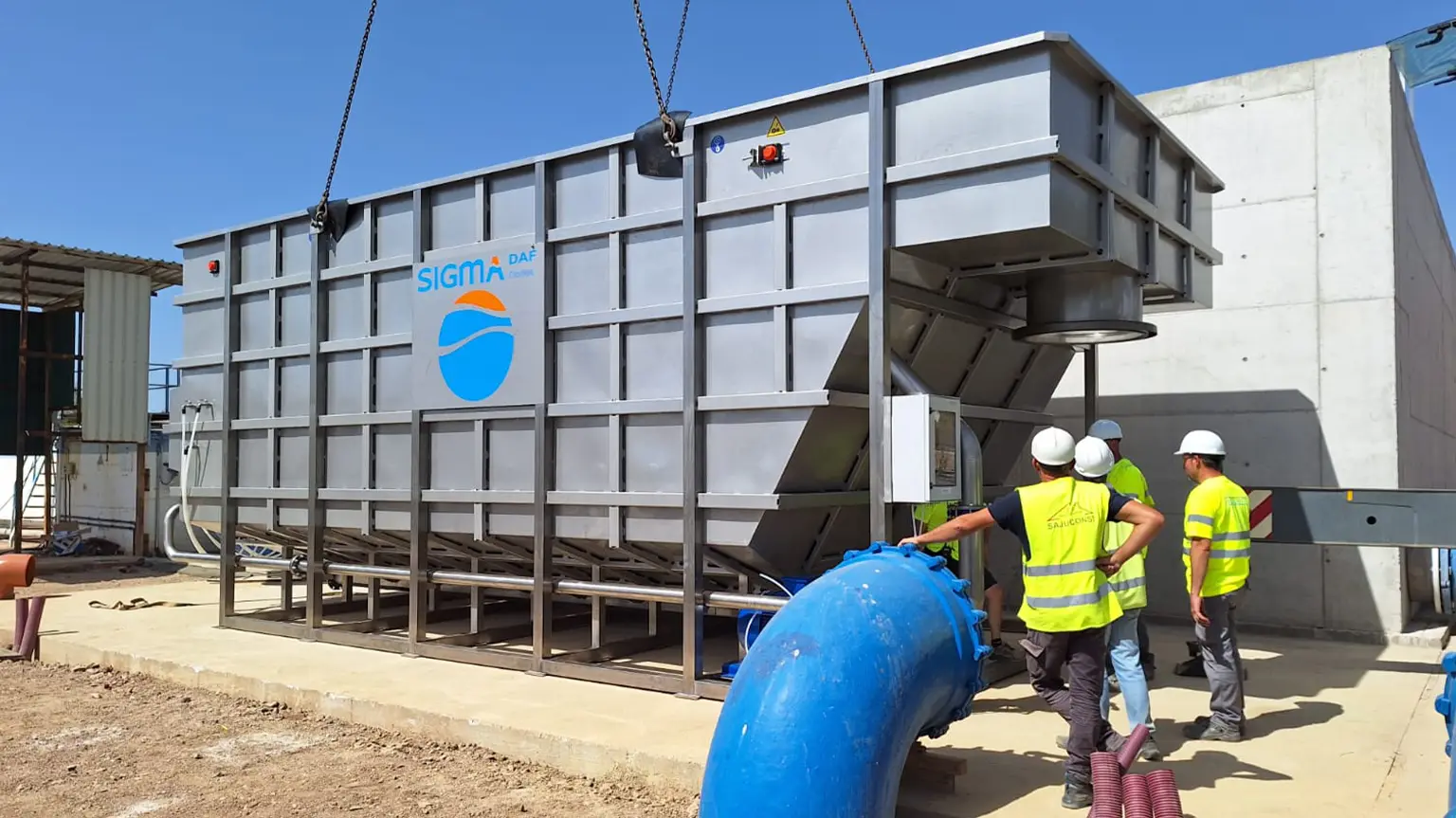
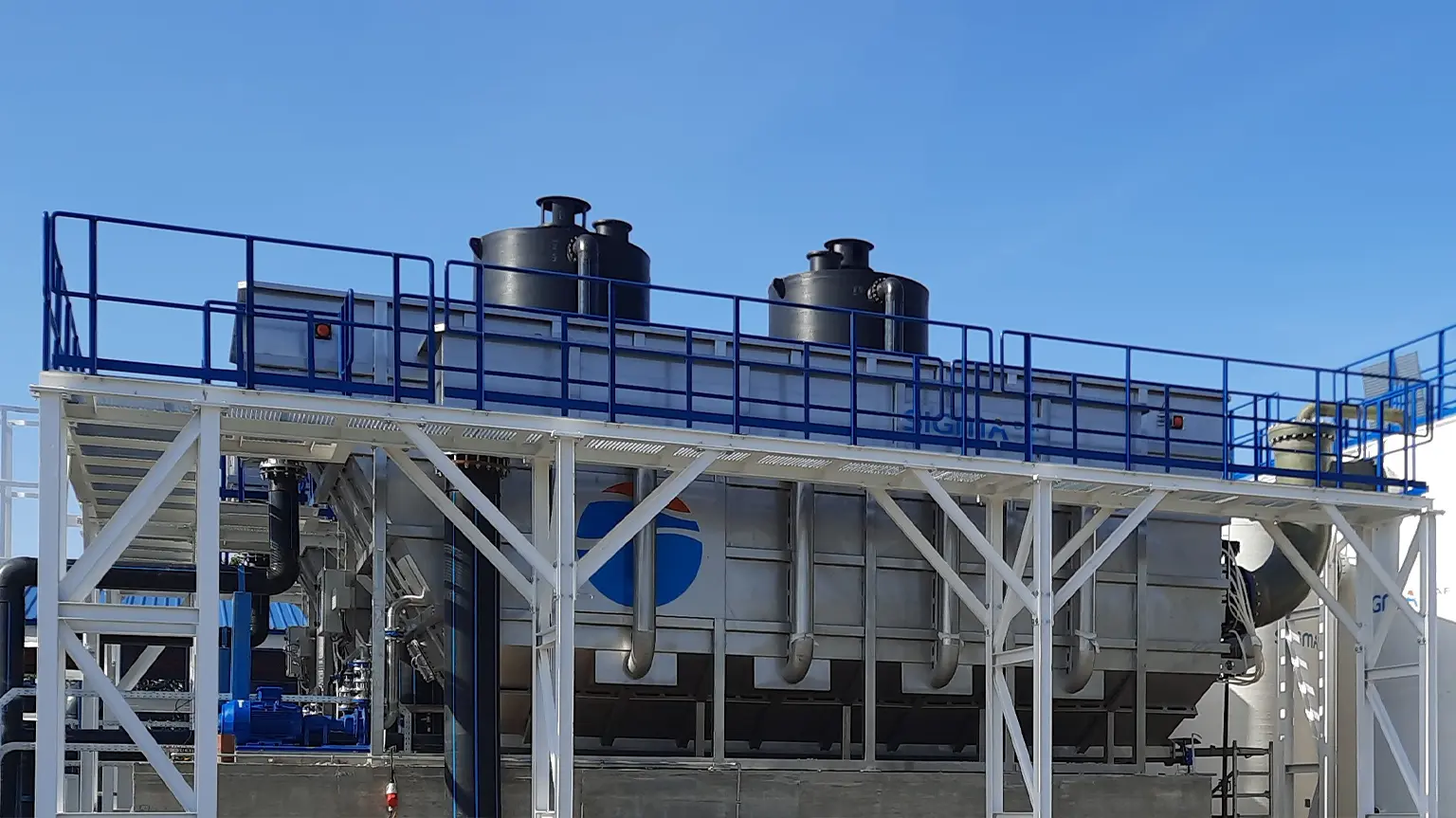
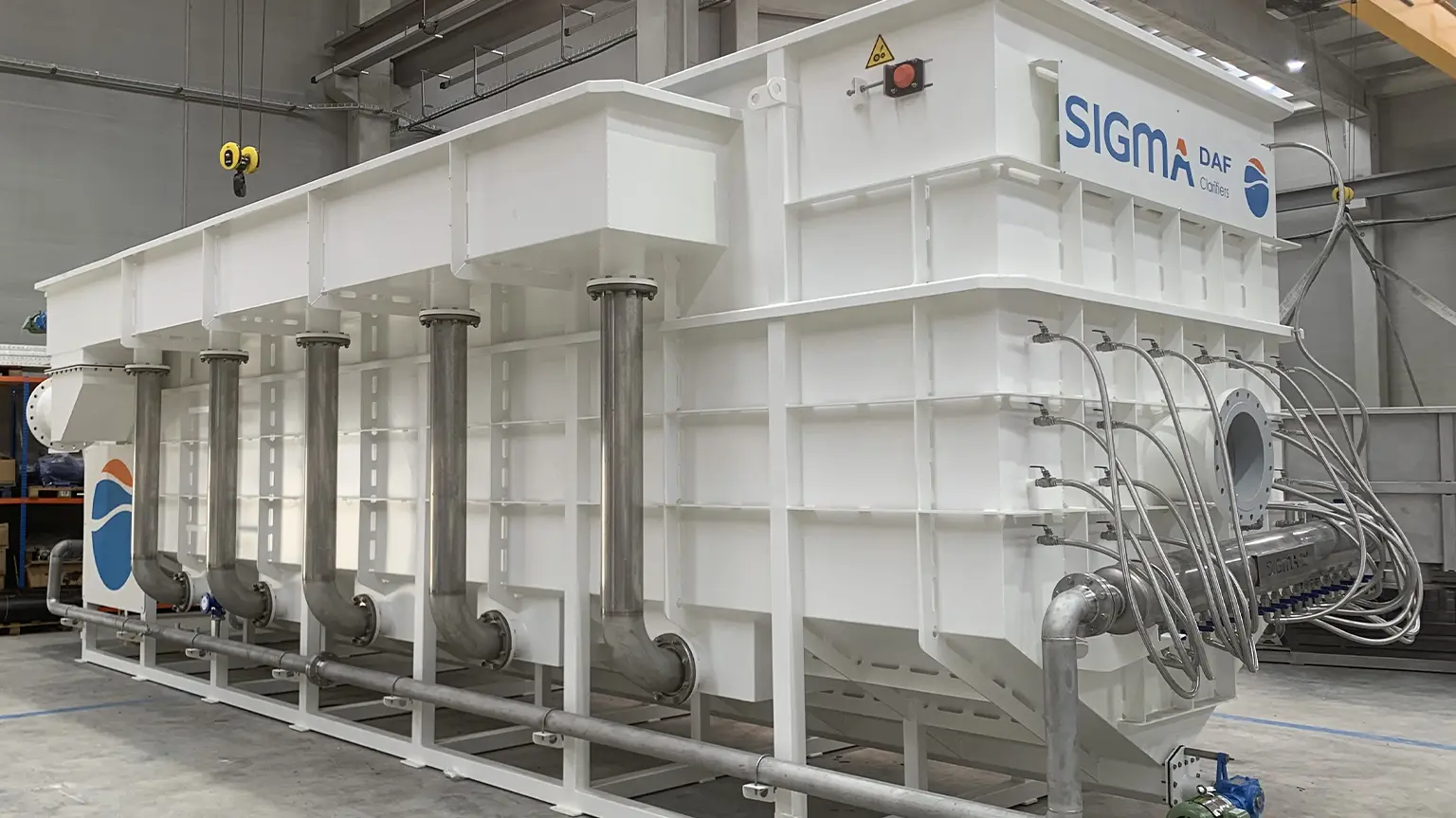
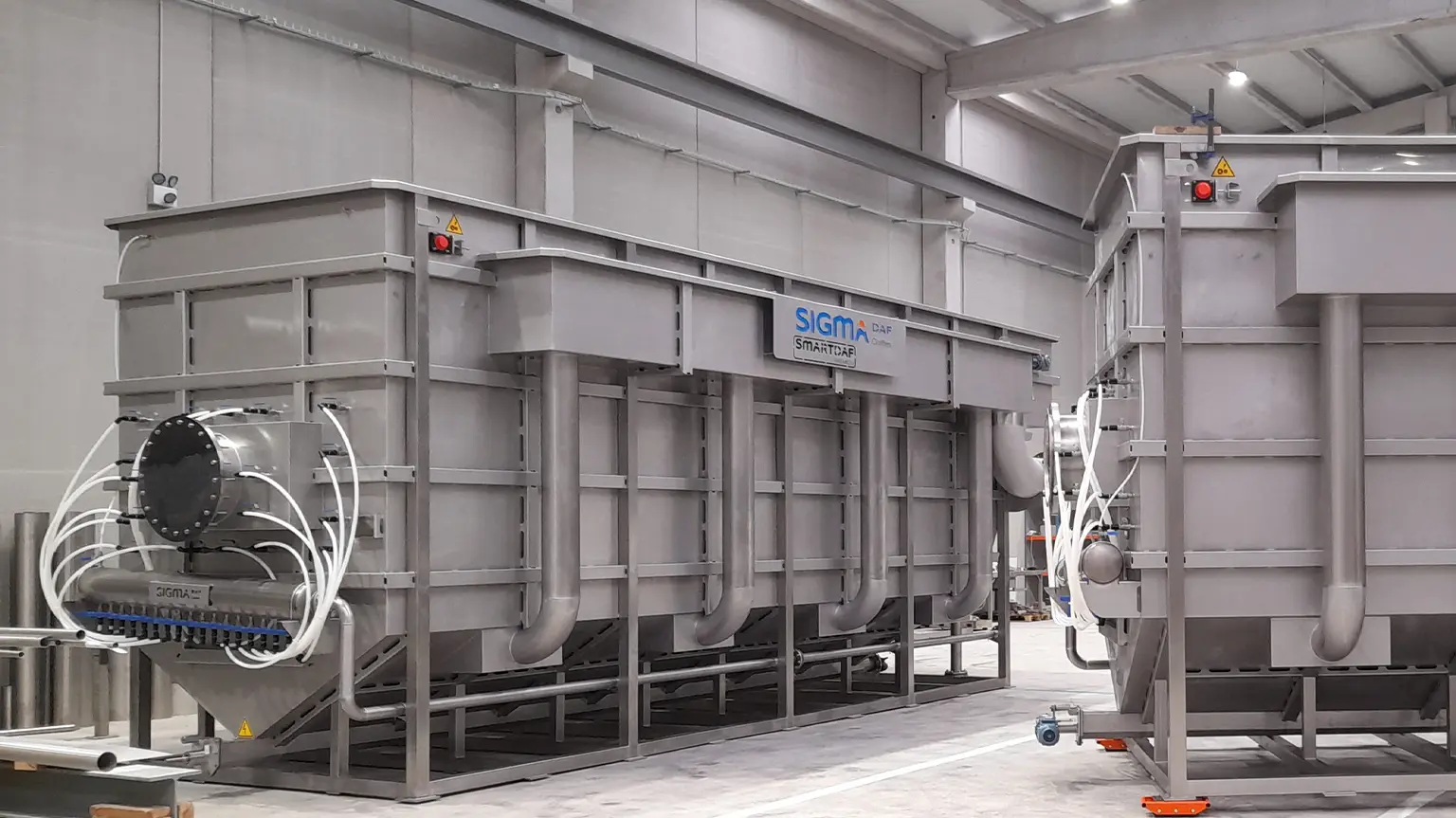
The SIGMADAF FPHF dissolved air flotation system has been developed for the treatment of large flows of industrial wastewater containing high concentrations of suspended solids, oils, fats, and flocculated matter.
Its design incorporates an advancement in inclined plate settling (IPS) technology, combining cross-flow and counter-flow to achieve uniform hydraulic distribution even in high-capacity applications.
Thanks to this configuration, the DAF FPHF offers a large effective separation surface area, allowing it to treat up to 1,200 m³/h in a single unit with excellent clarification performance and a small footprint.
We offer a wide range of DAF systems, designed to treat all types of wastewater.
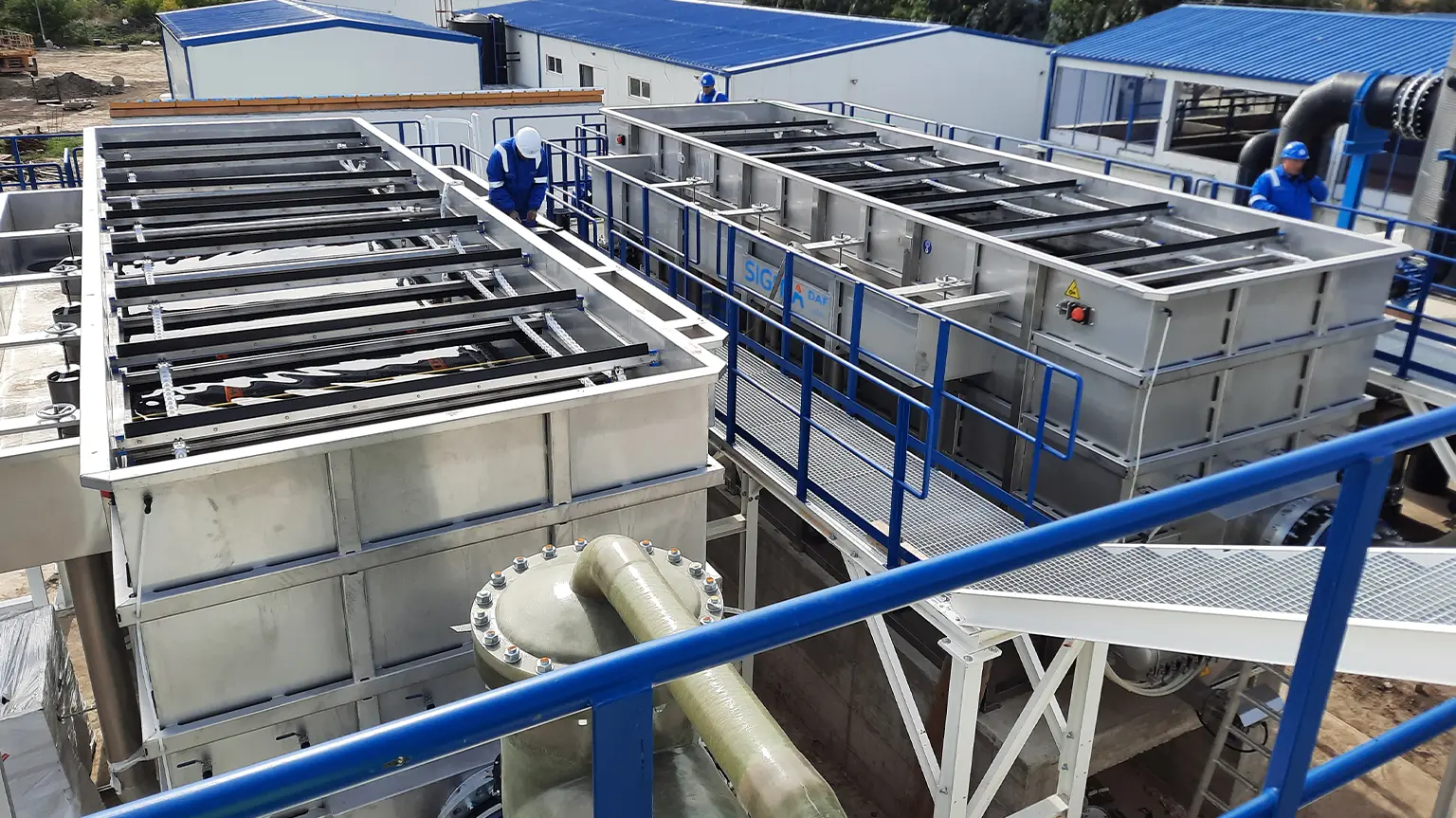
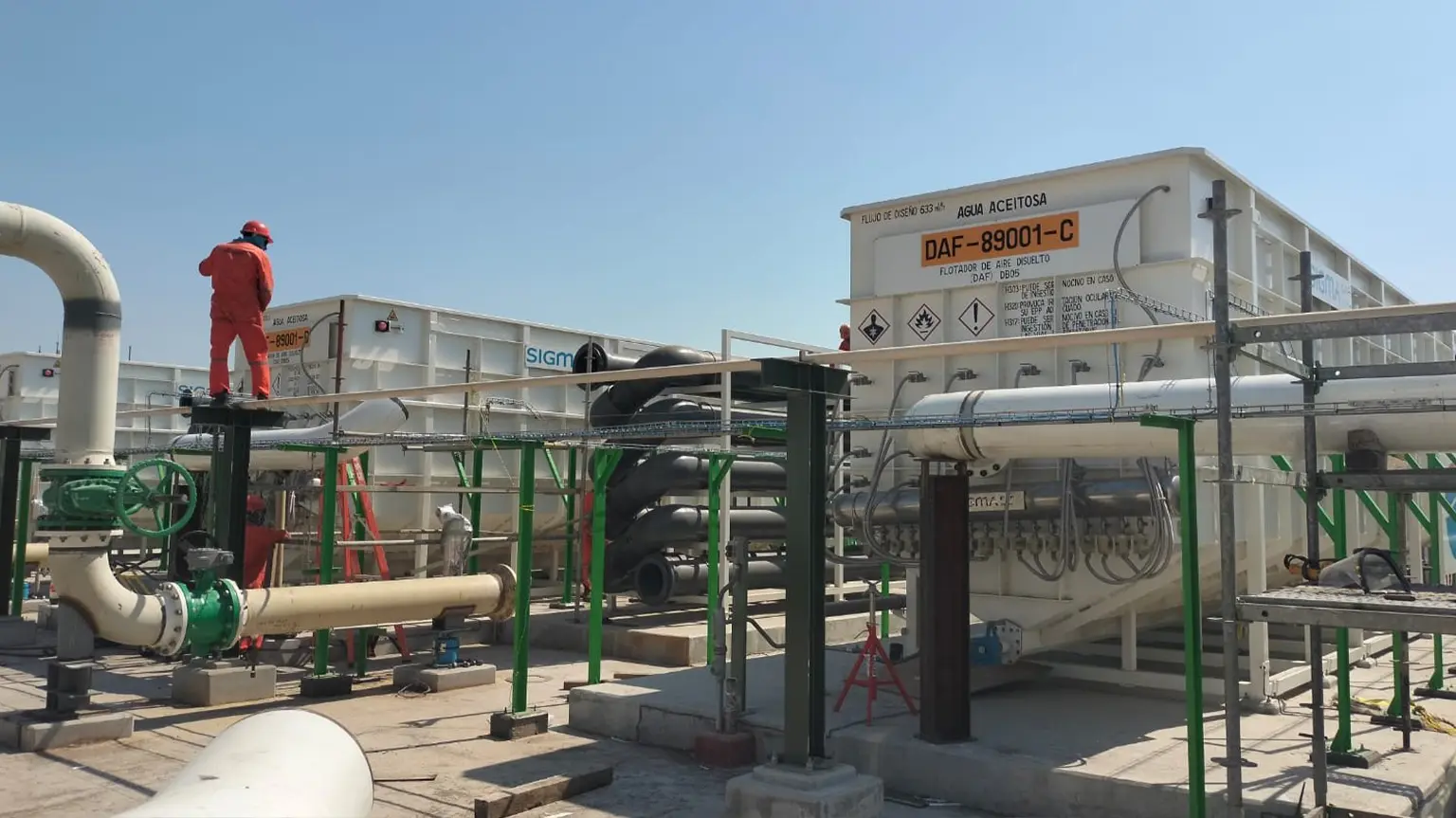
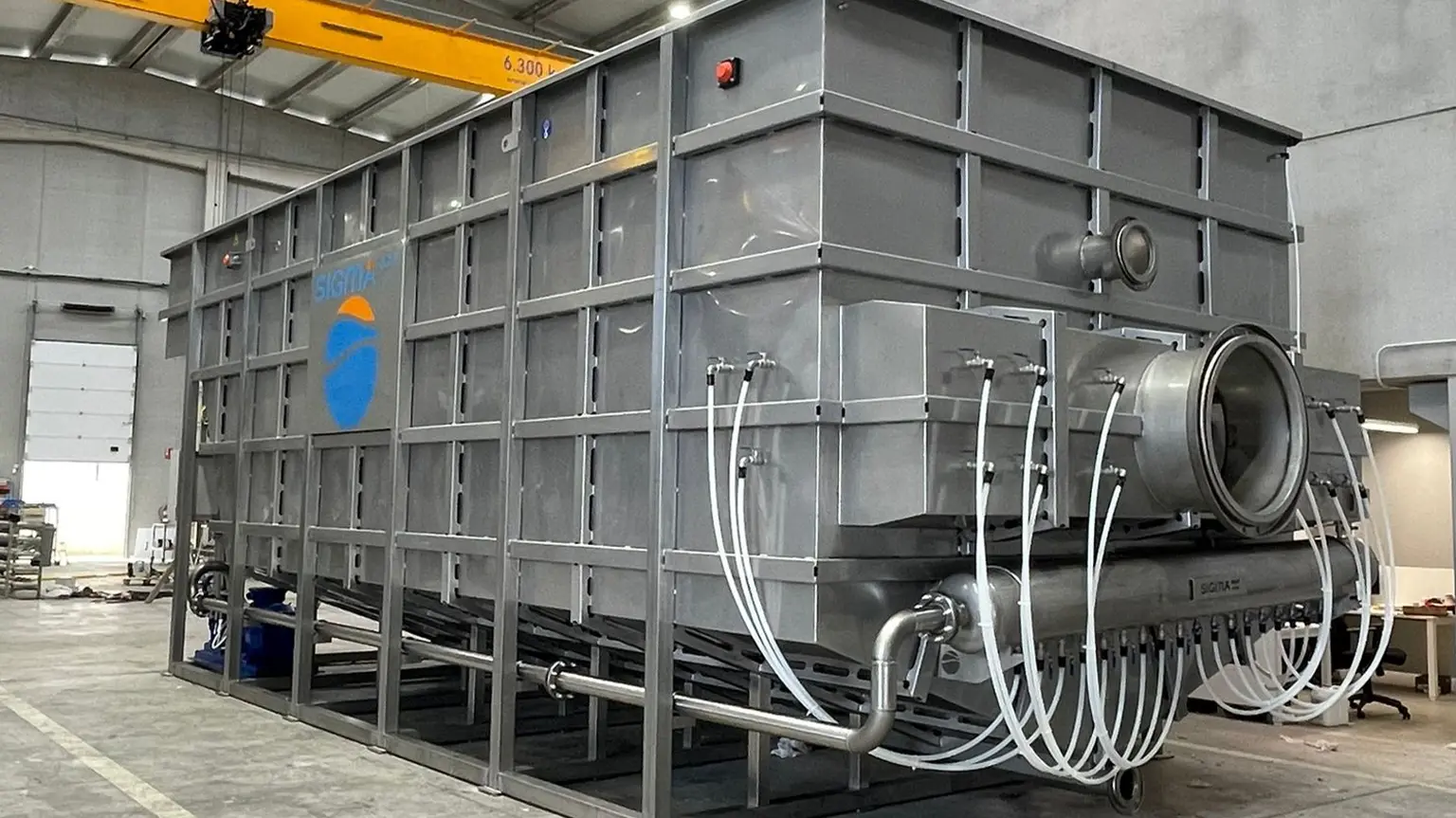

DAF FPHF Specifications: Performance, Dimensions, and Technical Data
The DAF FPHF offers excellent performance in the treatment of large volumes of wastewater thanks to its high removal rate of organic load, solids, fats, and other contaminants present in the wastewater.
CAPACITY (m³/h) | LENGTH (mm) | WIDTH (mm) | ' HEIGHT (mm) | ACTIVE AREA (m²) | 's Gross Weight (kg) | CURB WEIGHT (kg) |
|---|---|---|---|---|---|---|
| 400 | 7500 | 4000 | 40000 | 17,3 | 8000 | 60000 |
| 500 | 8750 | 4000 | 4000 | 21 | 10000 | 70000 |
| 750 | 10000 | 4000 | 4000 | 23,8 | 11000 | 80000 |
| 1000 | 12000 | 4000 | 4000 | 29,2 | 13500 | 90000 |
Based on nominal capacity under standard conditions.
Technical data is for informational purposes only and is not binding. Specifications may vary depending on the final configuration of the equipment supplied.
CAPACITY (m³/h) | INLET FLANGE | OUTLET FLANGE | FLOATING SLUDGE FLANGES | FLANGE SETTLED SLUDGE | SCREPER POWER (kW) | POWER SINFIN (kW) | RECIRCULATION PUMP POWER (kW) | NUMBER OF SCRAPERS | FLANGE TYPE |
|---|---|---|---|---|---|---|---|---|---|
| 400 | DN 400 | 2 x DN 400 | DN 250 | DN 150 | 0,55 | 0,37 | 30 | 11 | DIN 2642 |
| 500 | DN 450 | 2 x DN 450 | DN 250 | DN 150 | 0,55 | 0,37 | 30 | 15 | DIN 2642 |
| 750 | DN 600 | 2 x DN 450 | DN 250 | DN 150 | 0,55 | 0,37 | 30 | 15 | DN 2642 |
| 1000 | DN 600 | 2 x DN 500 | DN 250 | DN 150 | 0,55 | 0,37 | 37 | 15 | DN 2642 |
Based on nominal capacity under standard conditions.
Technical data is for informational purposes only and is not binding. Specifications may vary depending on the final configuration of the equipment supplied.
| Parameters | Reduction efficiency |
|---|---|
| BOD5 | 50% - 75% |
| COD | 50% - 75% |
| Total suspended solids | 85% - 95% |
| Turbidity | 85% - 95% |
| Total phosphorus | 60% - 90% |
| Total nitrogen | 30% - 50% |
| Oils and grease | 80% - 95% |
Technical data is for informational purposes only and is not binding. Specifications may vary depending on the final configuration of the equipment supplied.

Key Features of the DAF FPHF
- DAF system designed for high flow rates.
- Tilted-Panel IPS Technology.
- Uniform fluid distribution throughout the lamellar pack.
- Cross-flow combined with counter-current flow.
- High treatment capacity.
- Excellent performance in industrial primary treatment.
- Exclusive surface separation system.
- Low maintenance.
- Fully customized construction based on the project.
DAF FPHF System Components
Top view
- Sludge tray
- Air diffuser
- Chain
- Worm screw
- Shovel
- Level Gauge
- Clarification tank
- Slats

Front view

- Air Bleed Valve
- Manifold
- Pressurization Valves
- Outlet for Floated Sludge
- Water ingress
- Outlet for Settled Sludge
- Sludge Level Sensor
- Motorized skimmer
- Pneumatic Control Panel
Side view
- Pressure pipe
- Safety valve
- Pressure reading
- Sampling
- Suction pipe
- Air Injection

Rear view

- Pneumatic Control Panel
- Clarified Water Tank Level Sensor
- Water discharge
- Worm Gear Motor
Available Materials
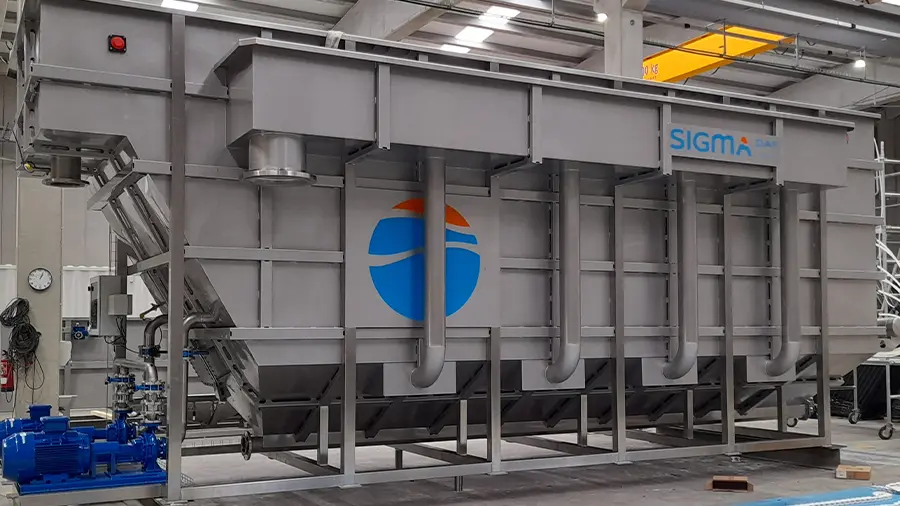
Stainless steel AISI 304
Standard material for most industrial applications.
The DAF FPHF model can also be manufactured in AISI 316 stainless steel upon customer request.
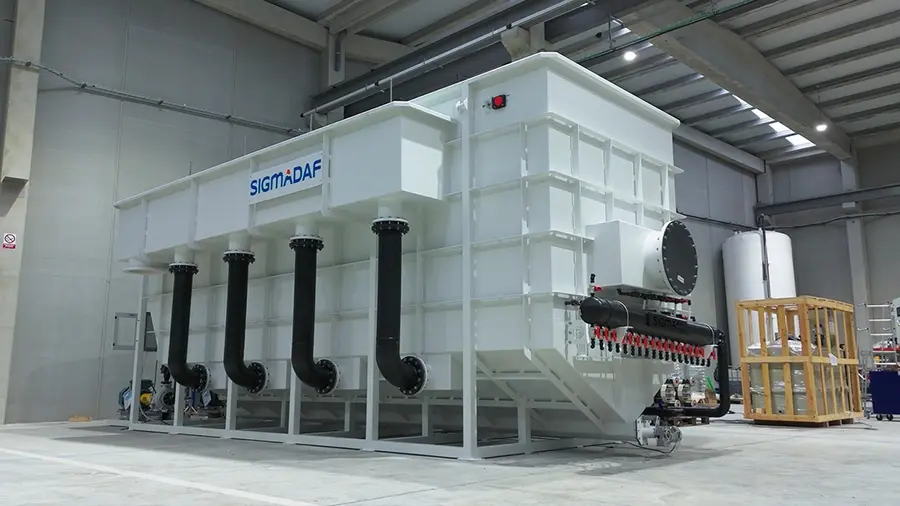
Carbon steel
The DAF FPHF model is manufactured from shot-blasted and painted carbon steel when it is intended for use with corrosive wastewater or for installation in seawater desalination plants.

How does the DAF FPHF system work?
The DAF FPHF model combines the advantages of cross-flow, counter-current flow, and an optimized hydraulic distribution system to deliver high separation efficiency without increasing the size of the equipment, making it an ideal solution for high-capacity industrial plants.

- Water Inlet and Floc Formation: Wastewater enters the system after the coagulation and flocculation stages, where suspended solids, oils, fats, and other fine particles aggregate to form larger flocs.
Once inside the unit, the water is distributed evenly by a cross-flow system specially designed to distribute the flow uniformly across the entire separation surface. This uniform distribution prevents localized overloads and ensures that the entire volume of the unit operates at maximum efficiency. - Microbubble Generation: A portion of the already clarified water is recirculated by a pump to the air-water saturator, where it is mixed with pressurized air.
When this stream is depressurized inside the DAF, millions of microbubbles ranging from 30 to 50 microns in size are generated, which easily adhere to the flocs formed during the physicochemical treatment.
Their small size provides a large contact surface area with the particles, improving flotation capacity and increasing the overall efficiency of the process. - Cross-flow and counter-flow separation: The main distinguishing feature of the FPHF model is the combination of cross-flow and counter-flow, an evolution of conventional lamellar plate technology.
Water is distributed uniformly throughout the various zones of the lamellar pack, ensuring that the entire effective separation surface operates in a balanced manner. This allows the system to operate at very low hydraulic loads, even when treating very high flow rates.
At the same time, the countercurrent flow improves the equipment’s hydraulic performance, reduces the distance solids must travel to reach the surface, and increases separation efficiency, even when the water contains high concentrations of contaminants.
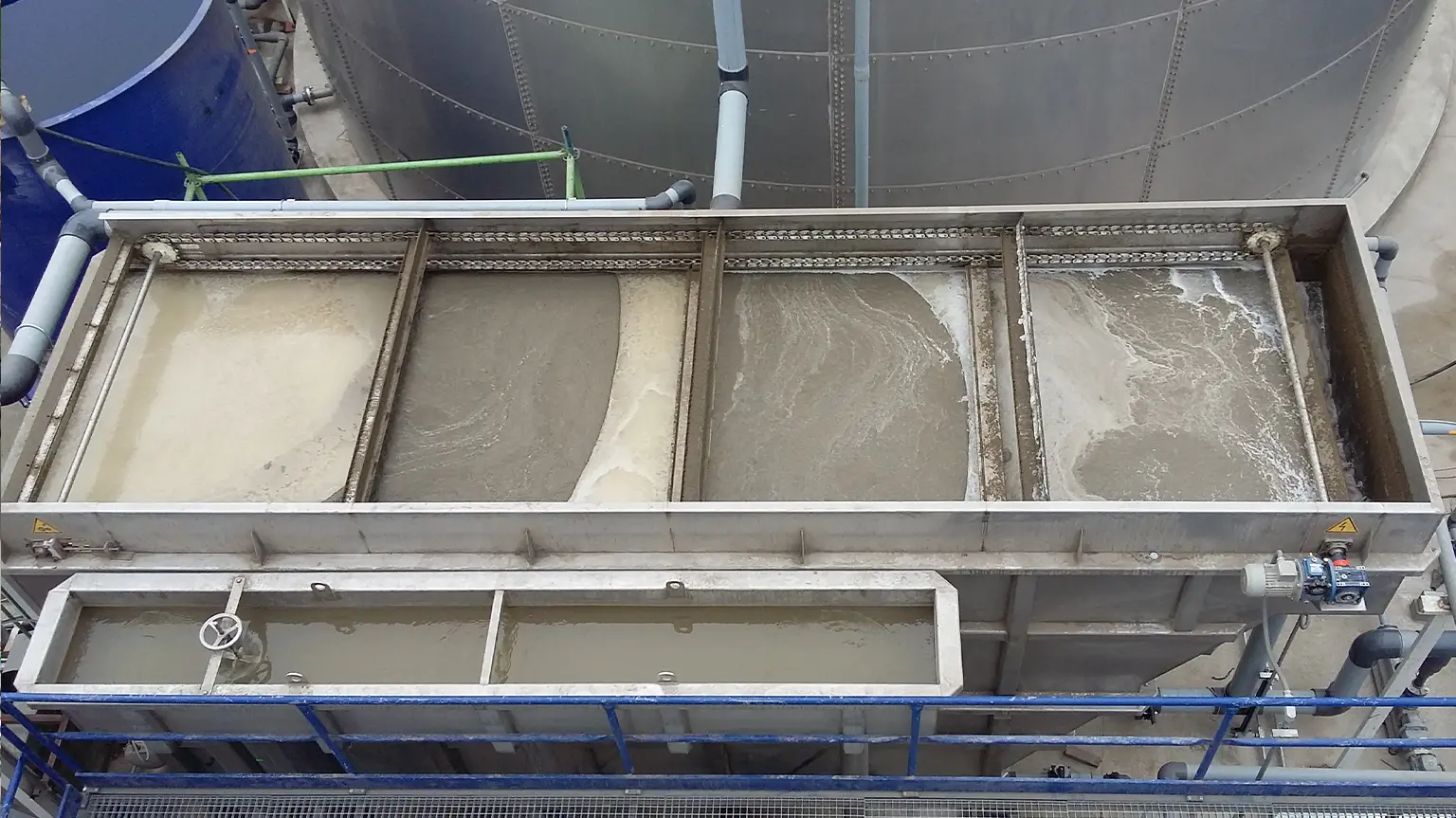
Thanks to this combination of technologies, the FPHF achieves excellent performance in both high-flow applications and processes with high loads of suspended solids. - Efficient sludge removal: Particles that rise, driven by microbubbles, form a layer of floating sludge on the surface of the unit.
The system incorporates a unique surface scraper that rotates in the opposite direction of the hydraulic flow to minimize the distance the sludge travels to the discharge point. This design prevents solids from being carried into the clarified water and significantly improves process efficiency.
As a result, the FPHF produces sludge with a dry matter concentration three to four times higher than that obtained by conventional DAF systems, reducing waste volume and optimizing subsequent sludge dewatering and management stages. - Automatic Sediment Management: Higher-density particles that do not float accumulate at the bottom of the unit, where they are collected by a shaftless conveyor that facilitates their concentration and partial dewatering.
The sediment is then conveyed to the central discharge point and automatically discharged via a pneumatic valve.
Each purge cycle generates a self-cleaning effect that removes solids adhering to the unit’s internal walls, maintaining optimal operating conditions and reducing maintenance requirements. - Clarified Water Outlet: Once the floating and settled solids have been removed, the clarified water leaves the system with the quality required for the subsequent treatment stages.
A portion of this water is continuously recirculated to the saturation circuit to generate new microbubbles, ensuring continuous, stable, and highly efficient operation.
VAdvantages of the dissolved air flotation system DAF FPHF
- Maximum capacity for high flow rates: Specifically designed for industrial facilities that need to process between 300 and 1,200 m³/h while maintaining high separation efficiency.
- Optimized IPS technology: The uniform distribution of flow across all the inclined plates allows for better utilization of the flotation surface and more stable clarification.
- Excellent hydraulic performance: The cross-flow and counter-current design reduces turbulence and improves separation even at high inlet flow rates.
- Compact equipment for its capacity: The high specific surface area of the inclined plates makes it possible to significantly reduce the size of the equipment compared to other solutions with equivalent capacity.
- Lower operating costs: The system produces sludge with a dry solids concentration 3 to 4 times higher than that obtained with conventional equipment, thereby reducing transportation, dewatering, and disposal costs.
- Simple operation: The system features automatic sediment removal, a shaftless conveyor, and a robust design that minimizes maintenance.

WHY CHOOSE THE DAF FPHF SYSTEM?
The DAF FPHF combines the advantages of cross-flow and counter-current flotation in a hybrid configuration designed to maximize hydraulic capacity and separation efficiency. Its lamella system and low specific hydraulic load allow it to treat large flow rates while maintaining excellent performance, making it a particularly well-suited solution for applications that require high treatment capacity in a limited space.