
Filter presses for the mining industry

- 1. Introduction
- Mechanical drying by means of filter presses
- 3. Filter press application in mining
- 4. Combined use of DAF systems and filter presses
- 5. Summary
1. Introduction
Filter presses are a solid-liquid separation technology used for mechanical sludge drying, which is applied in a wide variety of industries, including mining.
In the case of the mining industry, filter presses are commonly used for tailings management, sludge dewatering, metal recovery and water recycling.
Thanks to their ability to dewater sludge, recover valuable liquids and solids, and reduce the volume of tailings, filter presses not only improve process efficiency, but also help mining companies reduce operating costs and comply with environmental regulations.
This technology is also applied in the recycling and disposal of hazardous waste. An example is filtered ash containing heavy metals from incineration plants, which is dissolved in hydrochloric acid. The resulting hydroxide sludge is neutralized and recycled as a solid cake by mechanical drying in filter presses. The same applies to the mining industry, whose wastewater contains high loads of heavy metals of varying degrees of toxicity.
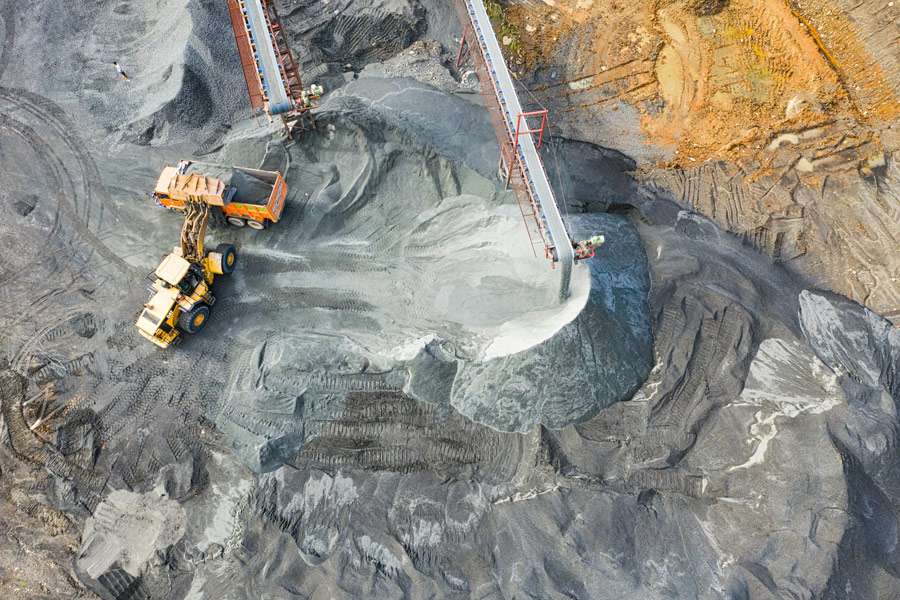
In mining , filter presses are used to dewater coal slurries and other minerals to obtain dry, high purity solids. It is also used as part of the process of metal extraction, such as iron, lead, copper, zinc, gold, etc.
2. Mechanical drying by means of filter presses
A filter press is a machine mounted on a support structure that includes a set of chambers with filter cloths inside. The sludge is supplied by means of a pump, which is of the pneumatic type, to avoid operational problems that could be caused by the significant amount of solids present in the liquid to be filtered.
A collector sends the liquid sludge stream to the different chambers of the filter press. These chambers are usually made of plastic materials and the filter cloths are arranged inside them, so that a dehydrated sludge cake is formed inside each chamber.
The drained water is collected on the opposite side once it has been filtered. In this way, the filter cloths and the accumulating sludge itself facilitate the increase in pressure, the increase in concentration and the formation of sludge cakes.
Filter presses are used to operate at pressures ranging from 6 to 16 bar and even higher. The concentration of the sludge increases with increasing pressure and the objective is to achieve the highest possible dewatering. The pressure limit of the filter is obtained thanks to the analysis and piloting of a sample in the laboratory.
The unloading of the cakes is very simple. It is only necessary to decompress the electrohydraulic group that keeps the plates closed, and then open them and separate them from each other so that the cakes fall into the attached tank under their own weight.
To optimize the collection of dry sludge, cake breaking systems are installed to reduce the volume occupied inside the collection tanks.

Filter presses are usually placed outdoors and have a canopy to prevent rainwater from reaching the sludge tank.
The maintenance of this type of filters is very simple, since it only implies a proper cleaning of the cloths associated to the plates. For this purpose, they must be cleaned with a certain frequency, either by means of a closed circuit washing operation, or by disassembling and cleaning them separately.
3. Components of a filter press
The basic elements that make up a filter press are as follows:
- Frame: it is the structure that conforms and supports the whole filter press.
- Filter chambers: these are the spaces between the filter plates. They act as a mold for the sludge that is formed inside.
- Filter cloths: these are fabrics made of plastic materials (PP, polyester, polyamide, etc.) and are permeable to the passage of the liquid. They act as filters retaining suspended solids.
- Electrohydraulic unit: the plate pack is kept closed at high pressures due to the action of an electrohydraulic unit that uses a central piston to press the chamber pack.
- Collectors: these are the pipes, usually made of plastic materials, which are designed to collect the water drained in the filter after the filtration of the sludge to be dewatered.
4. Applications in the mining industry
In mining, filter presses are mainly used for:
- Recovery of valuable metals.
- Sludge dewatering.
- Drained water utilization and recirculation circuits.
After pressing, metal recovery can be processed, as the filter cake will have a low water content.
Filter presses are widely used in various stages of mineral processing, including:
- Hazardous waste management: In the treatment of polluting effluents, filter presses contribute to the removal of solids and heavy metals prior to discharge or reuse.
- Tailings treatment: Tailings is a collection of mining process wastes from the concentration of minerals. It is usually a mixture of ground rock, water and gangue minerals.
- Concentration of minerals: In the extraction process of precious metals and other minerals, filter presses help to recover water and obtain drier concentrates.
- Water recycling: Efficient water recovery is crucial to reduce water consumption and minimize the environmental impact of mining operations.

Types of filter presses most commonly used in mining
There are different types of filter presses used in mining operations, the most commonly used being:
- Plate and frame filter presses: Used in processes where efficient and fast separation is required.
- Membrane filter presses: Incorporate flexible pneumatic membranes that improve dewatering and reduce the moisture content in the cake.
- Belt filter presses: Used for continuous filtration of large volumes of sludge with high moisture content.
- High pressure filter presses: Suitable for achieving a cake with a minimum moisture content, optimizing the transport and disposal of waste.
In all cases, the operation of this equipment can be manual, automatic or semi-automatic, depending on variables such as:
- Filter cycles
- Filter sizes
- Discharge flow and load
- Operational complications such as toxicity and high waste temperature.
5. Advantages of filter presses in mining
The recovery of metals by means of filter presses offers important advantages over other procedures such as thermal drying, belt filters or centrifuges, among which the most important are:
Increased efficiency in the separation of solids and liquids
Filter presses achieve optimal water separation compared to belt filters or centrifuges, obtaining cakes of higher dryness (higher DM). This reduces the amount of water retained in the waste and improves the recovery of valuable metals.
Lower energy consumption
- Compared to thermal drying, filter presses do not require large amounts of energy to separate water, which makes them more efficient and economical.
- Centrifuges require high speed motors, so filter presses operate with lower energy consumption and achieve higher dewatering capacity.
Increased metal recovery
- They allow a more efficient recovery of fine metal particles compared to belt filters and centrifuges.
- They are ideal for hydrometallurgical processes where the aim is to maximize the recovery of metals from aqueous solutions.
- The volume occupied by hazardous materials, such as toxic metals, is minimized, simplifying handling and reducing environmental impact.
Greater adaptability to different types of sludge
- Filter presses can handle high solids concentration sludge.
Lower operating and maintenance costs
- They require little maintenance and are easy to operate.
Improved quality of reclaimed water
The effluent resulting from the filtering process has lower turbidity and less suspended solids, facilitating its reuse in the mining circuit, or its discharge without the need for additional treatment.
6. Combination of DAF systems with filter presses
In many cases the sludge separated by a settler will have a concentration that will hardly exceed 2% dry matter (DM). This sludge concentration is too low to be dried in a filter press, so the installation of an intermediate thickener is necessary.
A thickener is a large and costly piece of equipment that requires a tank, mechanical systems and suitable transfer pumps. The sludge thickened in this equipment usually reaches concentrations of 4% to 6% DM, which is considered suitable for treatment by mechanical drying equipment.
This sludge is stored in an accumulation tank and fed into the filter press by a pneumatic pump. If necessary, coagulant and coagulating reagents are added.
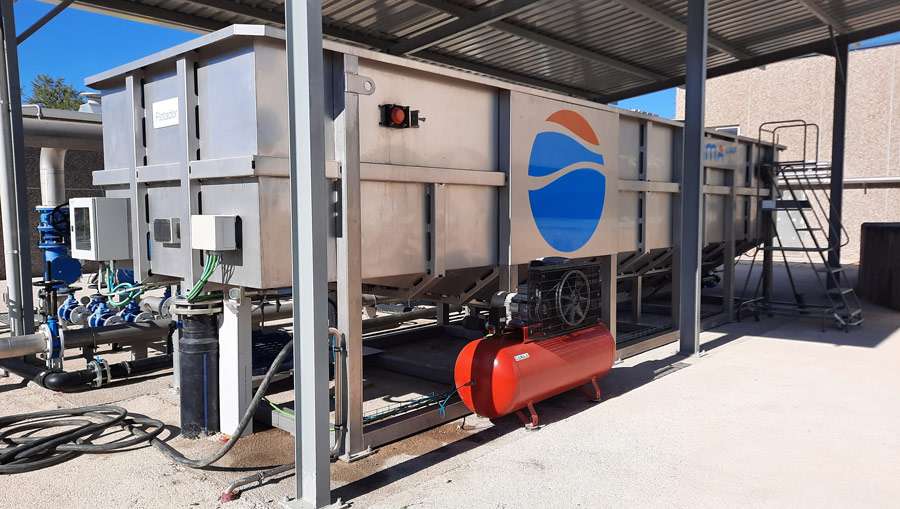
Although sludges from mining are usually of high density, the dissolved air flotation process can be applied in this sector, especially in lighter sludges, since it increases their concentration before mechanical drying and achieves greater efficiency in the separation of suspended solids from the discharge.
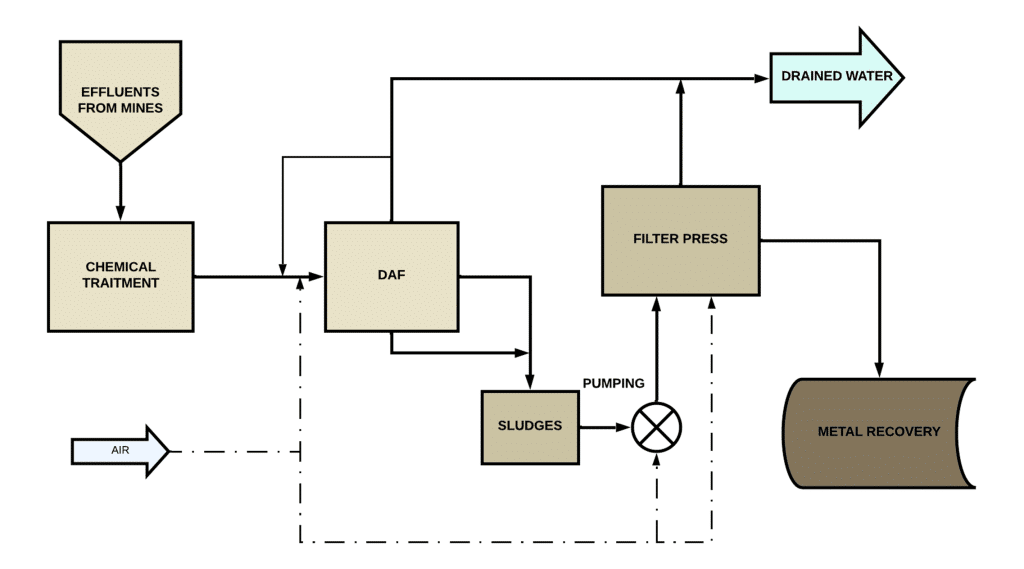
If instead of a sedimentation clarification system, the installation of a DAF system is chosen. a DAF systemsystem, the intermediate thickening unit is dispensable, since the sludge obtained by the DAF has a higher concentration of dry matter. A DAF system offers the following advantages:
- Space saving.
- The installation of a thickener is not necessary.
- Higher efficiency in the separation of suspended solids.
- A better quality clarified water is obtained.
If we make an economic balance, there is no great difference in investment and consumption between the two systems, since the DAF requires additional equipment for the pressurization and depressurization of the air provided.
7. Summary
The separation of solids and liquids is essential to ensure the recovery of valuable minerals in the mining industry. A major challenge in this sector is to efficiently manage the sludge generated during ore processing. The use of filter presses has enabled many mining companies to optimize their metal recovery processes and reduce the amount of waste produced.
The filter press is a solid-liquid separation equipment that uses a series of filter plates and filter cloths to extract water from the sludge generated in mining processes. It works by applying pressure on the set of chambers that are loaded with sludge, allowing the filtration of the liquid and leaving a solid cake of remarkable dryness.
This technology is used to process and recover, among other things:
- Tailings wastewater
- Concentrates
- Copper ore
- Gold ore iron ore
- Lead-zinc ore
- Stone wastewater
- Coal
- Titanium ore
- Tailings
- Slag
- Kaolin
- Ceramics
- Other non-ferrous and non-metallic minerals.
Its implementation improves mining operations and contributes to more sustainable and environmentally responsible mining.
Filter presses are the preferred choice in mining due to their efficiency in:
- Metal recovery.
- Lower energy consumption.
- Better adaptation to different muds.
- Lower operating costs.
Although other technologies such as thermal drying, belt filters and centrifuges have their specific applications, filter presses offer a better cost-benefit ratio in the dewatering and recovery of metals in the mining industry.
Consultations and bibliography
Filter presses for sludge drying in wastewater treatment plants
How filter presses have improved productivity in different industries : Ferotex
Are you interested in this solution?
BASIC INFORMATION CLAUSE
DATA CONTROLLER: SIGMADAF CLARIFIERS, S.L. PURPOSE: To respond to the user’s request. LEGAL BASIS: Consent of the data subject. DISCLOSURES: No disclosures are anticipated, except where required by law or court order. RIGHTS: Access, rectification, erasure, objection, restriction, data portability, and withdrawal of consent. If you believe that the processing of your data does not comply with the regulations, you may contact the Supervisory Authority (www.aepd.es). ADDITIONAL INFORMATION: For more information, please see our privacy policy.