
Effluent treatment in the printing and dyeing industry

- Introduction: Effluent in the ink printing industry.
- 1.1. Type of printing effluents.
- 2. Treatment of printing effluents.
- 2.1. Physical-chemical treatments.
- 2.2. Biological treatments.
- 2.3. Ammonia nitrogen removal.
Introduction: Effluent in the inkjet printing industry.
Virtually all industries producing consumable goods (wrapping and packaging in food, cosmetics, textiles, pharmaceuticals, paper, plastics and toys, bottling, etc.) use pigments and inks extensively, both in product manufacture and packaging, and make use of printing plants. Synthetic pigments are generally used to meet the industrial demand for dyes, as they have great flexibility to modify chemical and color characteristics, their manufacturing process is very well developed and their production cost is low, but organic pigments are increasingly being incorporated.
Effluents containing inks have a very complex pollution profile, containing a wide variety of compounds: cyclic organic pigments, synthetic pigments, titanium dioxide-based pigments TiO2, chromium and other heavy metals, solvents, nitrocellulose, glycol, resins, binders, coadjuvants, dispersants, etc.
The wastewater resulting from the use of these pigments in printing ink has an intense color and high values of pollutant parameters: organic matter, measured as COD, is very high, generally around 20.The pH is more or less alkaline, ammoniacal nitrogen can be high and suspended solids can be between 2,000 and 10,000 mg/L, in addition to containing oils, greases, heavy metals and process compounds (ink, solvents, resins, recalcitrant and toxic chemical compounds, etc.).
The effluent from the printing presses cannot be discharged directly into the sewage system as it would have a fatal impact on the wastewater treatment plants, nor can it be discharged into waterways due to its harmful effects on the environment and human beings.
The treatment process must be selected and designed according to the composition of the effluent and the economic cost, both in terms of investment and operation.
The second treatment objective is the reuse of water for secondary uses in the industry, such as washing machinery, washing buckets or watering gardens.
1.1. Types of printing effluents
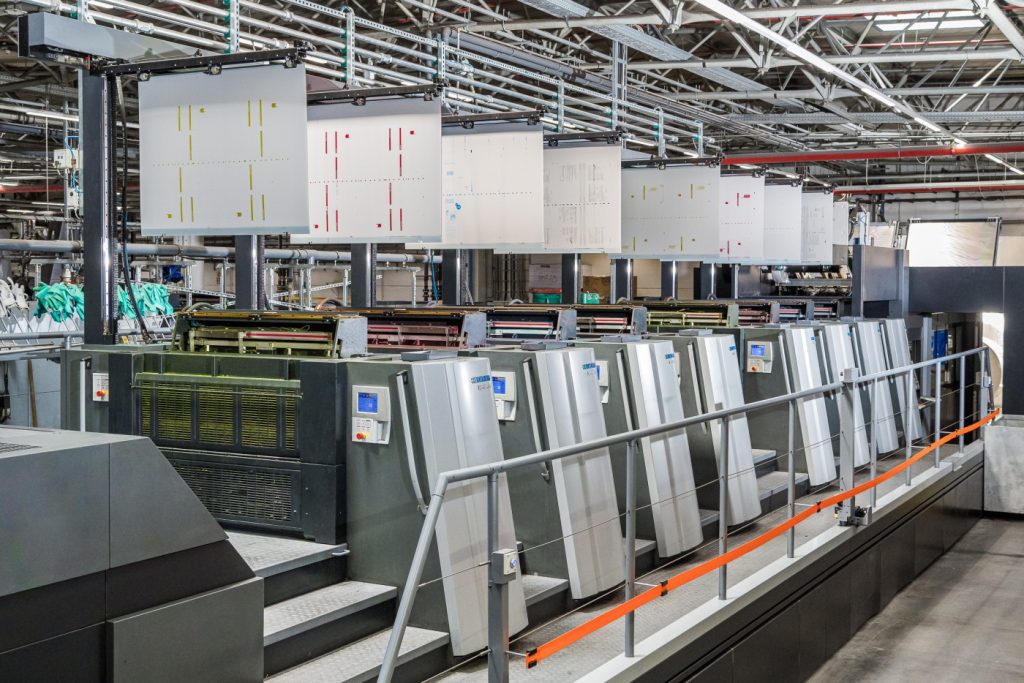
There are different types of effluents from printing plants, depending on the printing method or type of inks used, and each requires adaptation of the treatment. The most common are shown below.
- Flexographic or flexographic printing: they contain large amounts of heavy metals such as zinc, lead, copper and chromium, intense color, high suspended solids content, high COD and BOD5, ammonia nitrogen, presence of oils and greases and synthetic and organic polymers. The most commonly used treatment for this type of effluent is pretreatment with acid and coagulation-flocculation, ammonia nitrogen precipitation if necessary, followed by MBR biological treatment including Ultrafiltration, and polishing by Reverse Osmosis membranes or Activated Carbon multimedia filters.
- Wash water: can be effectively treated with coagulation-flocculation by applying ferric chloride, which removes varnish and glue, and a suitable flocculant. Polishing should be introduced to completely remove the color, generally by applying activated carbon filters.
- Waste ink: highly polluting effluent, containing inks, synthetic gums, additives and with COD and solids in extreme concentrations. It requires pretreatment with coagulation-flocculation and acid, since low pH is when treatment is most effective, both for solids and organic matter and for reducing color.
2. Treatment of printing effluents
There are several treatments for ink printing effluents, and each involves modifications depending on the type of effluent explained above, but the main and effective processes are as follows:
i) physical-chemical treatments, ii) biological treatments and iii) specific treatments for nitrogen elimination.
2.1. Physical-chemical treatments:
Coagulation-Flocculation
The process removes dye molecules, colloids, aggregates of solids, particulates, suspended solids, undissolved organic matter and other undissolved compounds.
It is based on causing the aggregation and flocculation of these undissolved contaminants so that they can be removed in the form of flocs by mechanical separation methods, one of the most effective of which is the dissolved air flotation (DAF).
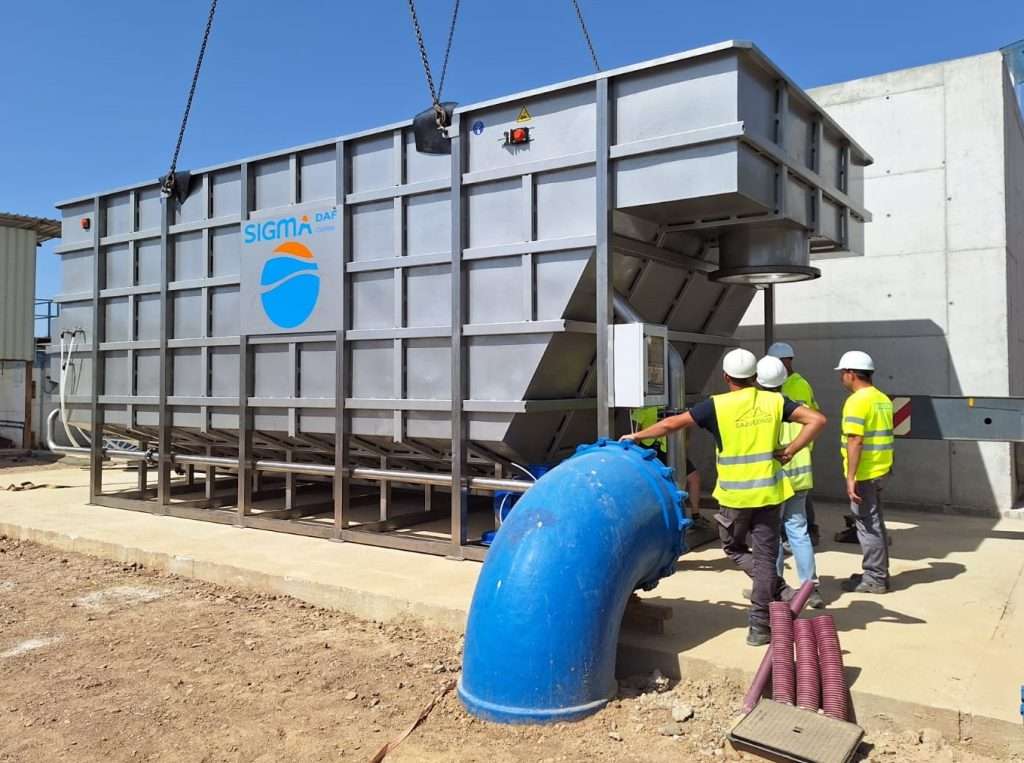
The coagulation-flocculation process is simple, flexible in operation and easy to manage.
Generally, inorganic coagulants of aluminum (aluminum polychloride and aluminum sulfate) and iron (ferric chloride is the most commonly used, but ferrous sulfate can also be used) or organic coagulants such as chitosan are used, all of which form stable floccules. After agglomeration of the contaminants with the coagulant, a flocculant is applied which significantly improves the quality of the floc and the clarified water. A well-designed coagulation-flocculation process can remove more than 90% of color and suspended solids and more than 50% of COD and BOD5.
Coagulation-flocculation is the pretreatment indicated for high flow rates.
The doses and types of coagulant and flocculant to be applied depend on the nature and composition of the effluent, so it is necessary to evaluate the process through laboratory tests commonly known as Jar-Test, and suspended solids and COD analysis to quickly estimate the performance. At SIGMADAF we carry out these tests in our own laboratory.
Chemical Oxidation
In chemical oxidation, iron ions Fe2+, hydrogen peroxide H2O2, ozone, sodium hypochlorite NaClO or other strong oxidizing agents are used. These compounds cause the oxidation of reducing substances in the effluent.
When applied in printing effluents where there is a high concentration of color, oxidizers break down the carbon rings of which the dyes are composed and lose the ability to absorb light, thus the color is lost. These broken rings give rise to small organic and inorganic molecules, which can be removed by other methods such as coagulation-flocculation and biological treatments.
Chemical oxidation can also be done with ozone, electrolysis or the Fenton process. Ozone has a strong oxidizing power, which allows high molecular weight dyes to be broken down into small molecular weight organic and inorganic contaminants, causing the loss of light absorption capacity and thus eliminating the color. The ozone oxidation method is fast, has no by-products, does not generate sludge, requires little space and is easy to control, but it cannot be applied in large flows as it will involve high cost and low COD removal efficiency.
The Fenton oxidation process is carried out under acidic conditions, the catalysis of Fe2+ with H2O2 produces a strong oxidant: the hydroxyl radical -OH.
Adsorption
Water passes through an adsorbent bed of a porous material. The most common types of adsorbents for printing effluents are activated carbon, zeolites, clays and ashes. Dyes and other residual contaminants adhere to the surface of the adsorbent product by molecular attraction.
Adsorption works well for low color load effluents or as a polishing treatment to remove residual color after pretreatment and biological treatment. It does not generate sludge and has low investment cost and easy operation. The effectiveness of the adsorption treatment is affected by temperature, pH and adsorption time, and the adsorbent material must be changed every so often when it reaches its saturation limit.
Of all adsorbent materials, activated carbon and zeolites have proven to be the most effective in removing color and other recalcitrant or difficult contaminants.
Membrane filtration
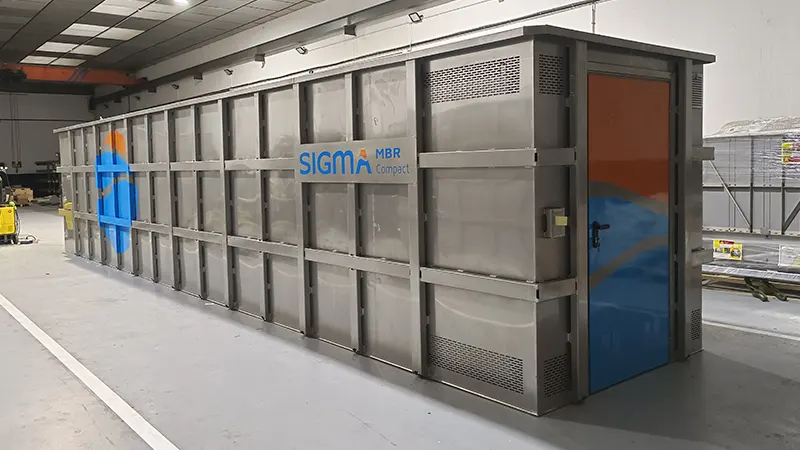
Ultrafiltration membranes have been shown to retain contaminants from printing effluents. When biological treatments are combined with a UF membrane as a sludge separator, the system is called Membrane Biological Reactor MBR and combines the efficiency of the aerobic reactor with ultrafiltration separation.
Reverse Osmosis membranes are used as treatment polishing, to remove recalcitrant compounds and color residues. It must be installed after other treatments as no organic matter that could cause biofouling should reach them, so it is usually installed after an MBR. (Discover our Membrane Biological Reactors).
- Washing and cleaning of tanks and pipes.
- Washing of barrels and equipment.
- Bottle washing.
- Pressing and fermentation processes.
- Dumping of product waste or lees.
- Floor cleaning and sweeping.
- Losses of wine, must and by-products.
- Contaminated cooling water.
Most of the pollutants present in wine cellar wastewater are of the organic type, although we also encounter:
- Mineral remains
- Lands
- Fats
- Detergents and disinfectants
- Exogenous toxic contaminants located in grapes,
- Etc.
In addition to contaminants from cleaning operations, these effluents are characterized by a high contaminant load from the dry matter of the must or wine, or from microorganisms. These are mainly coloring matter, tannins, proteins, organic acids, carbohydrates and microorganisms (yeasts, lactic and acetic acid bacteria, fungi, etc.). Mineral residues usually consist of potassium tartrate that precipitates in the winemaking process.
The basic characteristics of these discharges are summarized as follows:
- High concentration of BOD5 and biodegradable COD.
- Acid pH in winery discharges and basic pH in bottling plant discharges.
- High concentration of total suspended solids (TSS), many of them in colloidal form.
- Low toxicity.
- Fats, oils and soil from the grape harvest, which are dragged by the processes and machines used for harvesting.
- Cleaning agents such as: inorganic acids, organic acids,
- There are also residues of phytosanitary products found in the grapes. These toxins are transferred to the must and wine, but most of them are eliminated in the different processes such as pressing, racking and wine stabilization.
2.2. Biological treatments
Biological treatments use microbial metabolic activity to degrade organic matter in wastewater. Aeration biological treatments are used where the microorganisms are in an oxygen-rich medium, which allows them to carry out the mineralization of organic matter. In addition, thanks to the action of specialized microbial enzymes that destroy dye molecules, wastewater purification is achieved by removing much of the color and organic matter.
Prior to a biological treatment of printing effluents, a pretreatment must be applied, which is designed according to the origin of the wastewater and its composition and is based on one or more of the physicochemical processes described above. The pretreatment will allow to first decompose the most complex molecules increasing the biodegradability and therefore the efficiency of the biological system.
MBR systems are the most suitable configuration for the treatment of organic or inorganic contaminants present in general industrial wastewater. MBRs operate with high efficiency and achieve consistent treatment performance. The MBR is a more cost-effective treatment method when considering the throughput and volume requirements. In addition, they are simple to operate and have low control complexity.
Conventional activated sludge systems, sequential batch and trickling filters are designed to operate at a lower volumetric removal rate, requiring larger tanks and more space. These conventional systems often experience disturbances when treating complex effluents such as printing effluents, eventually inhibiting the activity of microorganisms, so they are not a suitable option for these effluents.

2.3. Ammonia nitrogen removal
Ammonia nitrogen is derived from ammonium hydroxide NH4OH additives used in some printing plates. For effective removal, an acidification pretreatment with sulfuric acid followed by precipitation with magnesium oxide MgO and phosphoric acid H3PO4 must be applied. Subsequently, the pH must be adjusted prior to biological treatment by applying calcium hydroxide Ca(OH)2.
Are you interested in this solution?
BASIC INFORMATION CLAUSE
DATA CONTROLLER: SIGMADAF CLARIFIERS, S.L. PURPOSE: To respond to the user’s request. LEGAL BASIS: Consent of the data subject. DISCLOSURES: No disclosures are anticipated, except where required by law or court order. RIGHTS: Access, rectification, erasure, objection, restriction, data portability, and withdrawal of consent. If you believe that the processing of your data does not comply with the regulations, you may contact the Supervisory Authority (www.aepd.es). ADDITIONAL INFORMATION: For more information, please see our privacy policy.