
Removal of detergents and other surfactants present in wastewater

1. Dumping of detergents and other soapy substances
Some wastewater generated in industrial processes contains soapy substances and detergents. The discharge of these waters produces negative effects on the natural environment, such as eutrophication, which generates an ecosystem characterized by the abnormally high presence of nutrients such as phosphates.
When detergent leaks occur, a film forms on the surface of the water, which decreases the absorption of oxygen from the atmosphere and its subsequent dilution, affecting all types of aquatic organisms.
Discharges of water contaminated with detergents and other surfactants often leach into the soil, leaving some of the contaminants behind. On other occasions these contaminants pass into the groundwater.

Types of surfactants
Surfactants, also known as surfactants, are molecules of organic origin that have the ability to modify the balance of the attractive forces existing between molecules close to the surface of a liquid. In other words, they are substances that can lower the surface tension of a liquid.
These compounds are widely used in various industrial applications, as they dissolve or emulsify water-insoluble substances such as oils, fats and other elements.
Surfactants are used in the production of products such as:
- Detergents: Surfactants are essential for the manufacture of detergents and cleaning products, as they help to separate or dissolve insoluble substances, thus facilitating the cleaning process.
- Cleaning IndustrySurfactants play a vital role in the production of shampoo, dishwashing, textile detergents and surface dusting products.
- Emulsifiers and Solubilizers: They are also used as emulsifiers and solubilizers in various industrial applications.
By their structure, surfactants can be divided into:
- Non-ionic: they are characterized because they contain ionizable functional groups, which do not dissociate with water. They are mainly composed of a polar side with ethers and alcohols, and an apolar side containing the aliphatic chain, although they can also be non-aliphatic anionic.
- Ionic: they are characterized by a strong affinity with water due to electrostatic attraction with respect to their dipoles, which gives them the capacity to drag hydrocarbon chains.
In turn, ionic surfactants are subdivided into:
- Anionic surfactants: these are the most common surfactants in the industry and are produced on a large scale because they offer effectiveness at low cost. They are characterized by their hydrophilic side, which contains a negative charge due to phosphate, sulfate, carboxylate and sulfonate groups.
- Cationic surfactants: they contain a positive charge that gives them greater adherence to substrates with great persistence. They can vary surface properties, transforming hydrophilic ones into hydrophobic ones and vice versa. In addition, compounds such as amines and their derived salts have bactericidal effects that eliminate certain microorganisms or reduce their development.
- Amphoteric surfactants: characterized by containing both anionic and cationic groups, where the molecule changes with pH.
3. Presence of surfactants in the wastewater.
As we have seen, it is common to find traces of detergents in wastewater, both domestic and industrial.
Among the most negative effects of surfactants in wastewater, the following stand out:
- They increase the pH of wastewater, which impacts the life cycle of aquatic species.
- They cause an increase of nutrients in the waters where they are discharged, producing a significant increase in algae and bad odors due to the contribution of large amounts of phosphorus.
- Phosphates are replaced by substances such as Nitrilotriacetic Acid (NTA) or Ethylenediaminetetraacetic Acid (EDTA), which contain heavy ions that dissolve in the water and can be ingested by the population.
- Mercury, lead and chromium are heavy metals that can dissolve in water causing alteration of the food chain or genetic damage in many species.
- Chlorine and organochlorine compounds can increase their concentration in wastewater becoming a threat due to their mutagenic and carcinogenic effects.
- To carry out the decomposition of organic compounds originating from detergents, a lot of oxygen is consumed, which produces anoxic conditions and causes the death of aquatic flora and fauna.
- They have a direct impact on sedimentation, flocculation and coagulation processes in wastewater treatment plants.
- Contaminate groundwater.
- They generate large amounts of foam, which floats on the water and causes changes in oxygen dilution, while affecting the environment.
Surfactants present in wastewater cause major problems when they reach water treatment plants. Under the influence of aeration they produce massive amounts of floating scum which, in addition to being unsightly, cause problems with oxygen transfer and operational problems in the facilities.
Surfactants modify water quality, since they intervene in various processes, such as oxygen exchange, which reduces its availability, affecting the biological process.

Micelle formation
When surfactants dissolve in a liquid they form small spherical structures (10 - 30 nm) called "micelles". These are essential for various applications, such as cleaning and emulsification. Micelles are formed based on the following characteristics:
- Surfactants have a polar (hydrophilic) and a non-polar (hydrophobic) part.
- In a liquid, surfactant molecules spontaneously clump together to minimize surface energy.
- The hydrophilic parts are oriented towards the water, while the hydrophobic parts are grouped inside, forming a spherical structure called a micelle.
- Micelles swell and give rise to micro emulsions and facilitate the dissolution of oils, grease, hydrocarbons, or aromatic chains such as benzene and its derivatives, etc.
Micelle Properties
- Solubilization: Micelles can encapsulate non-water soluble substances, such as fats and oils, increasing their solubility.
- Detergency: Micelles help to remove dirt and grease from solid surfaces.
- Emulsification: In products such as creams and lotions, micelles emulsify water-insoluble ingredients.
- Colloidal stability: Micelles keep particles dispersed in colloidal suspensions.
In summary, micelles are key structures in surfactant chemistry. They are fundamental to the efficacy of surfactants in a variety of industrial and personal care applications, but are also capable of increasing the solubility of undesirable contaminants in wastewater.

4. Removal of surfactants present in waste water
Due to the presence of micelles in effluents containing surfactants, the treatment process of these wastewaters requires the destabilization of the micelles by correct coagulation in a medium with a suitable pH.
On the other hand, the associated presence of oils, greases or hydrocarbons is frequent, which must be separated together with the rest of the pollutants present in the water through the formation of floccules, with the addition of a suitable polyelectrolyte.
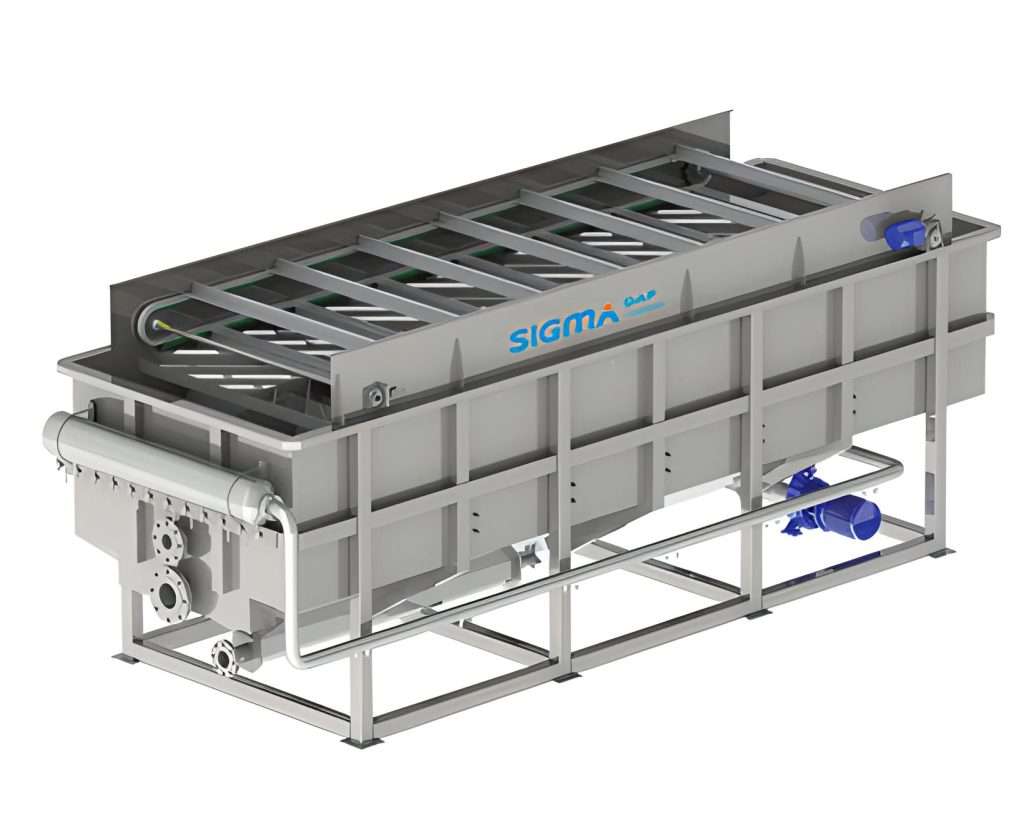
The dissolved air flotation (DAF) separation process, in which SIGMADAF has a wide expertise, is the most suitable one.The DAF process, in which SIGMADAF has a wide expertise, is the most suitable, since in addition to its high separation performance, it allows to obtain a floating sludge of higher concentration than other treatment processes.

There are industries that, due to their activity related to surfactants, may discharge effluents with high concentrations of pollutants. This is an example of an analysis of a wastewater with a high presence of surfactants and other pollutants.
- Surfactants (≥10 mg/l)
- BOD (≥3000 mg/l O2)
- COD (≥9000mg/l O2)
- Oils and fats (≥950 mg/l)
- Aromatic elements as phenols (≥ 1 mg/l)
- Detergents (≥10 mg/l)
A high efficiency treatment plant for the purification of wastewater with detergents and other soaps consists of the following stages:
- Homogenization and pH adjustment
- Coagulation / Flocculation
- Dissolved Air Flotation (DAF)
- Aerobic biological treatment
- Tertiary treatment with MBR for reclamation or discharge
- Dewatering of separated sludge for disposal to landfill.
In most cases, a DAF system is not sufficient to reach the appropriate discharge or reuse limits. Therefore, it is necessary to have a secondary treatment composed of an aerobic biological reactor and a DAF with recirculation of activated sludge to the oxidation zone. If part or all of the treated effluent is to be recovered, it is advisable to install a membrane ultrafiltration system (MBR)..
In a surfactant manufacturing plant, contaminant loads and the presence of glycerides can be high, so prior emulsion breaking in an acid medium is necessary, followed by coagulation, flocculation and DAF flotation, as shown in the following scheme:

5. Summary
Surfactants or surfactants are versatile molecules that play a crucial role in cleaning, emulsifying and solubilizing substances in the industrial and domestic world.
Wastewater containing surfactants has a great potential to negatively affect the environment, due to the presence of pollutants that increase the solubility of toxic products such as hydrocarbons, metals, oils and greases, among others. In addition, the high concentrations of nutrients (especially phosphates) they contain favor the appearance of the phenomenon of eutrophication, decompensating the distribution of oxygen in the water and threatening aquatic life at the points where they are discharged.
The wastewater treatment lines used to treat these effluents usually consist of a coagulation-flocculation process to destabilize the micelles that form the emulsions, followed by a DAF dissolved air flotation system that separates most of the TSS and a large part of the organic pollutants (oils, greases and detergent residues).
These DAF flotation systems are also used as secondary clarifiers, after the aerobic biological treatment used to oxidize the organic matter in these discharges. In the case of reuse of part or all of the treated effluent, an ultrafiltration membrane system (MBR) is applied, which allows high levels of reduction of pollutants and a significant simplification of the installation.
Consultations and bibliography
Are you interested in this solution?
BASIC INFORMATION CLAUSE
DATA CONTROLLER: SIGMADAF CLARIFIERS, S.L. PURPOSE: To respond to the user’s request. LEGAL BASIS: Consent of the data subject. DISCLOSURES: No disclosures are anticipated, except where required by law or court order. RIGHTS: Access, rectification, erasure, objection, restriction, data portability, and withdrawal of consent. If you believe that the processing of your data does not comply with the regulations, you may contact the Supervisory Authority (www.aepd.es). ADDITIONAL INFORMATION: For more information, please see our privacy policy.