
Treatment and reuse of wastewater from the Fragrances and Essential Oils industry.

- 1. The Fragrance and Essential Oil Industry
- 2. Typical wastewater
- 3. Treatment and reuse of wastewater
- 4. Example of SIGMA Success Story
- 5. References
1. The Fragrance and Essential Oil Industry
The Fragrances and Essential Oils industry sector can be included within the cosmetics industry, but with characteristics that make it different. The substances used in this industry are mainly solvents, alcohols and what stands out as a characteristic substance: Essential Oils.
Given the high growth in demand for perfumery products, it is very important to include this industry and its effects on the environment in the main pollution problems.
Essential oils combined with fixatives and solvents (mainly alcohols) are used in the manufacture of perfumes.
Essential oils are substances obtained from the various parts of a plant (flowers, fruits, leaves, bark, roots...) and have a complex chemical composition with a predominance of aromatic compounds.
They volatilize easily and, due to their nature and high concentration, are a highly significant polluting factor for the environment, especially for water, if they are not properly treated.
The main composition of the oils is distributed as follows:
- Terpenic hydrocarbons (in higher proportion)
- Characteristic aromatic components of each oil (in smaller proportion)
- Other components with preservative, antibiotic and aroma-fixing functions.
Drying and crushing processes are applied to extract the Essential Oils from the different parts of the plants. This process requires the use of a large amount of raw material due to the low extraction yield of the oils. In addition, it requires the use of huge amounts of water.
In the manufacture of fragrances, the most commonly applied process for the distillation of essential oils is steam distillation. This process is commonly applied because the essences to be extracted have the capacity to be entrained by water vapor at boiling temperature.
Water heated to its boiling point, around 100ºC, produces vapors that segregate and separate the compounds responsible for the aroma, which are embedded and integrated into the vapor stream.
This vapor loaded with odorous substances is introduced into a refrigeration cabin where it condenses to generate the "hydrolat".
The hydrolate is then decanted and the aromatic essences are separated from its aqueous phase and extracted for the final elaboration of the perfume.
Due to these special characteristics of the wastewater and the type of pollutant coming from the Fragrances and Essential Oils industry, if this water were to be discharged into the sewage system, the municipal plant would quickly become saturated, so a decentralized treatment is the most appropriate, both to treat the water and to allow its immediate reuse.
How to treat wastewater generated in the production of fragrances and essential oils?
Although bioreactors are the most efficient technology for the treatment of these effluents, pre-treatment is necessary to ensure good treatment results in the biological reactor.
The great difficulty encountered in eliminating the complex organic load does not allow the direct application of conventional biological technologies using bioreactors, but makes the incorporation of a pre-treatment that allows the elimination of part of the organic matter and its transformation into easily separable compounds, while also eliminating oils and fats, mandatory.
DAF systems are the ideal equipment to carry out this pre-treatment, since they are equipment for the separation of solid particles, grease and oils, designed to clarify wastewater (industrial and urban) or to condition surface or marine water for subsequent treatment and reuse.
2. Typical wastewater
The steam distillation process involves a high demand for water, and consequently generates a large amount of wastewater.
As described above, the part of the hydrolate that remains after the extraction of the aromatic essences is what is considered as wastewater.
It is mainly composed of:
- Starch.
- Sales.
- Fatty acids.
- Aromatic or closed ring structures (main contaminant, derived from terpenes present in the essential oil): esters, ethers, ketones, aldehydes, alkenes and alcohols.
Their structure is shown in Figure 1. These compounds, in high concentration, have adverse effects on the environment and human health.

This means that wastewater from the Fragrances and Essential Oils industry is characterized, from a physical-chemical point of view, by its high content of organic load (plant remains, starch and organic structures with closed rings and double bonds that make it very difficult for its biological degradation, which accentuates its refractory nature), conductivity (due to the high concentration of salts) and oils and fats.
Table 1 shows the parameters of a typical wastewater from the Fragrances and Essential Oils industry:
Table 1. Typical characterization of wastewater from the Fragrances and Essential Oils industry.
| Parameter | Units | Characteristic values of wastewater |
|---|---|---|
| pH | - | 7 |
| COD | mg/L | 5000 - 20000 |
| Conductivity | µS/cm | 10000 - 20000 |
| Suspended solids | mg/L | 1000 - 4000 |
| Oils and Fats | mg/L | 2000 - 4000 |
3. Treatment and reuse of wastewater
The main objective when designing a wastewater treatment process for the Fragrances and Essential Oils industry is the removal of organic load, salts, oils and fats.
But this industry has such a high demand for water that the trend is not only to treat the water but also to condition it for reuse. Therefore, an appropriate selection of the technologies to be applied is a key point in the development of a plant.
The following is a description of the process that has so far demonstrated the highest efficiency with the production of very high quality treated effluents.
As indicated in the previous section, the great difficulty for the biological elimination of the organic load does not allow the direct application of conventional technologies through bioreactors, but makes the incorporation of a highly efficient pre-treatment for the elimination of part of the organic matter and its transformation into easily separable compounds, in addition to the elimination of oils and fats, mandatory.
In this way, the wastewater is conditioned so that it can be treated by biological processes.
It is extremely important to maintain close control of pH, phosphates and nitrogen to avoid malfunctioning of the biological process.
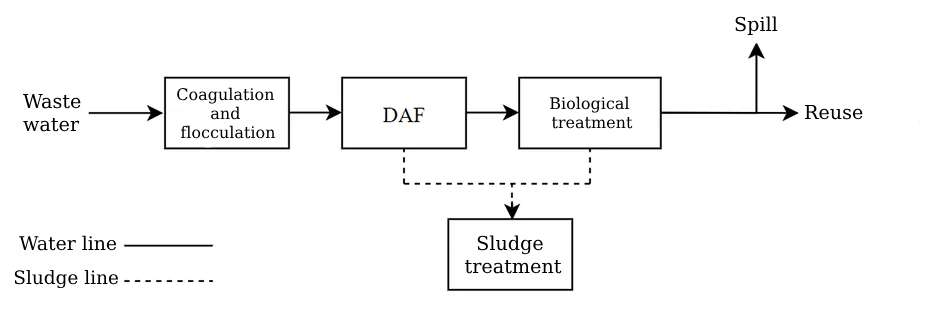
Table 2 shows the achievable performance in the elimination of the parameters shown in Table 1 by means of the proposed sequence of technologies:
Table 2. Yields achievable through physicochemical pretreatment and DAF clarification followed by biological treatment.
| Parameter | Elimination performance |
|---|---|
| COD | >98% |
| Conductivity | >95% |
| Suspended solids | >99% |
| Oils and Fats | >99% |
3.1. Pretreatment
A physicochemical treatment sequence of coagulation, flocculation and pH adjustment followed by a clarification stage is generally and effectively applied.
For this clarification stage, a highly efficient process is dissolved airflotation(DAF).
The purpose of coagulation is to destabilize colloidal matter. The reaction is produced by the addition of a coagulant, for example, iron salts, aluminum polychloride, organic coagulants, etc.
The function of neutralization is to adjust the pH by adding bases or acids.
Flocculation is the addition of a polyelectrolyte of specific polarity for each specific case (anionic, cationic or nonionic) intended to aggregate the clots formed in the previous process in order to have floccules of sufficient size for the separation of water from them (clarification) to be carried out efficiently and quickly in the subsequent flotation equipment.
In order to know the types and doses of coagulants, flocculants and pH adjustment products needed, it is necessary to carry out tests on the wastewater. At SIGMA we can carry out these tests known as Jar - Test in our SIGMALAB facilities.
SIGMA has two types of coagulation, pH adjustment and flocculation technology: a stirred tank system where the reactions take place or a special SIGMA PFL continuous piston flow system.
The technology is selected and designed according to the flow rate to be treated and the required product dosages.

The flocs formed in the coagulation-flocculation process are ideally sized to be separated from the water in a DAF dissolved air flotation unit. The DAF technology developed by SIGMA combines the principles of dissolved air flotation and sedimentation with optimal equipment design.
DAF technology is an efficient and robust separation process for oils, fats, greases, colloids, ions, macromolecules, microorganisms and fibers.
During DAF treatment, compressed air is introduced into a recirculation stream of the clarate, dissolves in the liquid medium and then generates 30 to 50 µm bubbles when released through a dispersion head into the flotation chamber. The coagulated and flocculated particles adhere to the bubbles and float to the top of the DAF unit, where they are removed mechanically.
The settleable matter descends to the sediment compartment at the bottom of the DAF unit and is discharged through a sludge extraction system, usually a screw conveyor.
The clarified water leaves the DAF unit through an adjustable supernatant system. Part of this clarified water stream will be redirected by the recirculation pump to enter the compression and air saturation system.
The coagulation-flocculation sequence followed by DAF is a very common and widely employed concept in the treatment of wastewater from the Fragrances and Essential Oils industry and has proven over the years to be efficient in performance and cost, both operational and in chemical and energy consumption when properly designed. It is an effective and robust pretreatment for general industrial wastewater treatment.
SIGMA offers a wide range of DAF flotation equipment, specially designed according to the flow rate to be treated and space requirements, from equipment that can treat flows of 5 m3/h to equipment that can treat 1,000 m3/h, compact equipment is also available. The treatment capacity of SIGMA DAF systems covers contaminant load ranges up to 40 kg of solids per flotation surface.
We have a wide range of high performance equipment, both standard and customized, designed to handle different flow rates and contaminants.
Advantages of SIGMA DAF systems:
- High and constant quality of the clarified product.
- Fast start-up.
- Minimal sludge production (sludge concentrations up to 5%, much higher than those achieved by conventional settlers)
- Easy to operate with simple, adaptable and efficient control systems.
- Well-known technology, flexible to each case and robust.
3.2. Biological treatment
The main objective of a biological process is the elimination of the organic load of wastewater through the action of microorganisms in biological reactors.
Conventional activated sludge reactors with anoxic and aerobic zones are generally used to achieve nutrient removal as well, but a more efficient biological system is the membrane bioreactor or MBR ('membrane bio-reactor').
MBR reactors combine the biological treatment process with Ultrafiltration membranes as the water and sludge separation technology.
The biological process can be aerobic, anoxic or anaerobic, for the treatment of wastewater from the Fragrances and Essential Oils industry an aerobic treatment is commonly applied.
The application of Ultrafiltration membranes as a clarification technology allows reaching very high concentrations of biomass inside the reactor, between 6000 and 12000 mg/L MLSS(mixed liquor suspended solids), which leads to a high performance of the biological process and a minimum production of excess sludge, therefore, the volumes of this type of reactors are much lower than those used in conventional biological processes.
MBR processes can be designed so that the membrane zone or tank is located outside the reaction tank or inside.
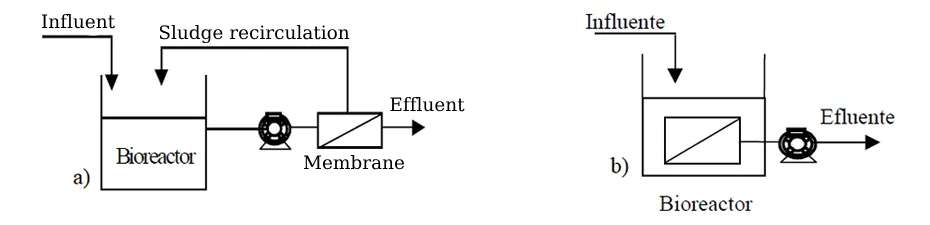
At the outlet of the MBR biological reactor, very clean water of sufficiently high quality is obtained to be reused as service or process water.
A detailed description of SIGMA MBR systems can be found in the following article, which describes the process designed and applied by SIGMA to the treatment and reuse of water from the cosmetics industry, an industry closely related to Fragrances and Essential Oils: CAF, DAF, MBR and Reverse Osmosis application in the treatment and reuse of wastewater from the cosmetics industry.
Advantages of SIGMA MBR plants:
- Continuous discharge of clarified effluent.
- Total separation (100%) of the sludge and no suspended solids or particles in the clarified sludge.
- Very high organic load reduction performance (> 90% COD and BOD5 removal).
- Very high concentration of BIOMASS inside the reactor: between 6,000 and 12,000 mg/L MLSS.
- Reduced reaction volumes and space savings.
- High resistance to oxidizing agents.
- Very high and CONSTANT quality of the discharged water with the possibility of REUSE.
- Minimal sludge generation.
In addition to the implementation of modules attached to an MBR system, SIGMA designs, builds and installs compact MBR plants that incorporate in the same equipment the reaction zone (including anoxic zone and aeration zone) and filtration. SIGMA SMBR plants offer the following advantages:
- They are a PLUG&LAY solution.
- They offer maximum reliability and durability.
- They allow to obtain a constant effluent quality.
- It is a compact plant that allows the modular addition of UF membranes.
- Operation and control are simple and robust.
- They are highly resistant to oxidizing agents.

SIGMA DAF SMBR plants are designed specifically for each wastewater stream to be treated. Capacities range from 20 - 100 m3/day.
Although the water treated by these technologies is of sufficiently high quality for reuse, there are treatment alternatives that can be applied:
- Multi-stage evaporation.
- Treatment by advanced oxidation processes such as Fenton (these alternatives are installed in extreme cases where COD is so refractory that it cannot be completely removed by the process described above).
- Reverse osmosis as a tertiary treatment to enhance the quality of reuse water.
However, these technologies involve a more complex installation, as well as higher energy consumption, with the only advantage being that the installations are smaller than the main process proposed and can be used as a back-up.
4. Example of SIGMA Success Story
SIGMA's experience in the treatment of wastewater from the Fragrances and Essential Oils industry is extensive. The following is an example of a Case Study.
For more information about the processes offered by SIGMA, for this industry and any other type of industry in general, please do not hesitate to contact us using the form on the right, or by e-mail at info@sigmadafclarifiers.com, or by calling us at +34 972 223 481.
Aceites Especiales del Mediterráneo S.A. (AEMEDSA) is a world leader in the manufacture and marketing of white mineral oils and natural sulfonates. Its industrial activity is combined with the fulfillment of its Environmental Responsibility commitments.
AEMEDSA's wastewater treatment system installed by SIGMA complies with current industrial wastewater discharge requirements and offers the possibility of reusing the water in the process.
SIGMA installed a complete pretreatment consisting of a physicochemical process and DAF clarification. For the biological treatment, the reactor previously existing in the old plant, which consisted of a poorly functioning SBR 'sequencing batch reactor' system, was reconfigured for a continuous aeration process accompanied by a secondary DAF clarifier.
Year: 2011
Project location: Escombreras Valley, Cartagena, Murcia.
Objectives: Modify the current wastewater treatment system, which is not being effective, to comply with current discharge requirements and the possibility of water reuse.

Installed equipment:
- Homogenization tank with JET aeration system
- Sigma PFL inline coagulation-flocculation equipment
- DAF FPAC model CPL15 Clarifier
- JET aerators as a new biological reactor configuration
- DAF FPAC secondary clarifier model CPL20
Capacity: 100 m3/day.
Characteristics and performance of SIGMA's success case in the treatment of wastewater from the Essential Oils industry. AEMEDSA case.
| COD | Conductivity | SST |
|---|---|---|
| fluctuating, average of 5500 mg/L | 20000 µS/cm | >1000 mg/L |
| COD removal | Solids removal |
|---|---|
| >97% | >97% |
The wastewater is homogenized in an aeration tank and pumped to a SIGMA PFL system where coagulation, flocculation and pH adjustment are carried out. The first clarified DAF FPAC-CPL15 allows the separation of the floccules generated, eliminating fats, oils, suspended solids and part of the organic matter.
In the biological reactor, all organic matter and nutrients are removed and a DAF FPAC-CPL20 is used as a secondary clarifier. The discharged water is of very high quality and, in addition to being discharged to the sewage system, can be reused in the process. The sludge generated in the process undergoes thickening and centrifugal dewatering.

5. References
Ortuño M. 2006. Practical manual of essential oils, aromas and perfumes. 2006. Aiyana Editions.
Poch J. 2007. The perfumery. Bailly - Bailliere Publishing House.
Are you interested in this solution?
BASIC INFORMATION CLAUSE
DATA CONTROLLER: SIGMADAF CLARIFIERS, S.L. PURPOSE: To respond to the user’s request. LEGAL BASIS: Consent of the data subject. DISCLOSURES: No disclosures are anticipated, except where required by law or court order. RIGHTS: Access, rectification, erasure, objection, restriction, data portability, and withdrawal of consent. If you believe that the processing of your data does not comply with the regulations, you may contact the Supervisory Authority (www.aepd.es). ADDITIONAL INFORMATION: For more information, please see our privacy policy.