
Wastewater treatment and reuse in the cosmetics industry

- 1. Introduction: Wastewater from the cosmetic industry
- Technologies for water treatment and reuse in the cosmetics industry. Process proposed by SIGMA
- 3. SIGMA Case Study: Beiersdorf Manufacturing Tres Cantos - Madrid.
- 4. References
1. Introduction: Wastewater in the cosmetic industry
The cosmetics industry consumes a large amount of water and is subject to increasingly stringent discharge limits. These two factors have led to a considerable increase in the installation of wastewater treatment plants that allow the reuse of wastewater.
Wastewater reuse is in line with the principles of CIRCULAR ECONOMY AND ENVIRONMENTAL SUSTAINABILITY, which more and more industries are applying in their waste management processes.
Wastewater generated in the cosmetics industry is characterized by its high content of suspended solids, chemical oxygen demand (COD), oils and fats (colorants, oils and emulsions).
How to treat wastewater from the cosmetics industry?
Due to the diversity of pollutants present in the wastewater generated in the production of cosmetic products, the most efficient treatment for their treatment and reuse consists of a combination of technologies.
The first step is a pretreatment, which combines the following technologies:
- ACAF to separate fats and oils.
- Coagulation-flocculation to agglomerate solids in suspension
- DAF systems to separate suspended systems and part of the organic matter.
This is followed by biological treatment that removes COD and nutrients using a membrane bioreactor. Prior to final sludge management, a tertiary treatment by reverse osmosis can be carried out to increase the quality of the treated water.
However, given the tightening of discharge limits and the increasing need for water reuse, intensive, high-efficiency treatment processes, including advanced technologies to meet water reuse quality requirements, are becoming more common.
Various technologies of physical, chemical and biological nature have been tested in recent years. One of the most effective processes is the application of MBR membrane bioreactors preceded by a carefully designed physicochemical pretreatment. Thanks to the incorporation of advanced filtration treatments with reverse osmosis membranes, high quality treated water suitable for reuse can be obtained.
2. Technologies for water treatment and reuse in the cosmetic industry
An effective process for the treatment of wastewater in the cosmetics industry has to meet the following objectives:
- Comply with landfill laws.
- Produce water of sufficient quality for reuse.
- It must provide efficient results, both environmentally and economically.
- It should allow for future capacity expansions given the growing demand and production in this sector.
The most efficient configuration is a combination of the following processes:
- Separation of oils, fats and suspended solids by physical-chemical pretreatment.
- Advanced biological treatment.
- Tertiary treatment through the application of reverse osmosis membrane technologies.
This treatment can be modified and adapted for each case and for each type of water, however, the basic principles remain the same.
Pre-treatment: elimination of oils, grease and suspended solids.
- CAF induced air flotation for the separation of fats and oils.
- Coagulation - flocculation and neutralization for the agglomeration of suspended solids.
- Dissolved air flotation DAF for the separation of suspended solids and part of the organic matter.
Biological treatment: removal of COD and nutrients.
- MBR membrane bioreactor with aeration and ultrafiltration system.
- Tertiary treatment: maximum effluent quality.
- Application of reverse osmosis membranes to achieve extraordinary qualities of treated water.
Sludge treatment.
The sludge generated in the different stages must be correctly managed and treated.
An effective treatment for sludge produced in the cosmetics industry is stabilization by digestion (either aerobic or anaerobic) and subsequent dewatering and thickening by centrifuge.
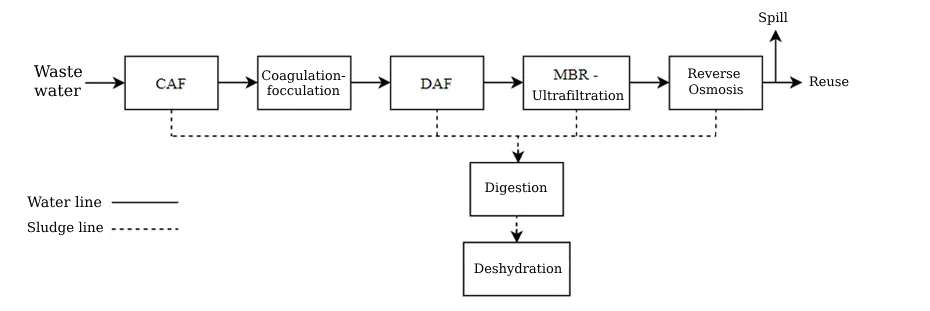
Figure 1 shows a simplified scheme of the complete treatment of wastewater from the cosmetics industry, which allows the reuse of water and/or its discharge to the sewage system.
2.1. Oil and grease separation: CAF equipment
Cavitation air flotation (CAF ) systems are generally simple and straightforward in operation.
The ACAF System, manufactured by SIGMADAF, is extremely simple to operate, as it contains no complex mechanical equipment and requires no manual intervention. The mechanical equipment consists of only two parts and does not require air compressors, pumps or compression tanks.
It is an extremely efficient oil and grease separator, with 99% efficiency and very low maintenance costs. CAF systems can treat water with very variable flow rates and concentrations, offering excellent results in all cases.


The water to be treated enters a small aeration section where the cavitation aerator is installed. Subsequently, it rises through the aeration section, mixing with the micro bubbles produced by the cavitation aerator.
This aerator is a device that transfers air from the upper surface zone to the lower zone through a suction tube. The aerator works on the principle of creating a vacuum in the swirls of the rotating air discharge tubes immersed in the liquid.
Air flows through the machine shaft, descending from the top of the surface, to fill the vacuum and form micro bubbles. The bubbles rise to the surface in a helix. The oxygen contained in the air is transferred to the liquid.
The imbalance of densities between the air-water mass and the liquid creates an upward current that carries grease particles and suspended solids to the surface. Micro bubbles attach themselves to the particles and keep them buoyant as they reach the surface. At the surface, the air moves radially pushing the oils and solids.

The floated material is periodically and automatically swept by a sweeping mechanism, which pushes the debris floating on the surface, carrying it from the inlet of the flotation tank to the outlet end, from where it is conveyed to the discharge chute.
The clarified water is conveyed to an overflow chamber through a submerged outlet before being discharged. The overflow controls the depth of the liquid in the flotation tank, preventing the oil film from flowing into the solids discharge channel.
Recirculation pipes are arranged along the bottom of the flotation chamber, which ensure continuous flotation of the tank contents, even in the event of interruption of the feed.
SIGMA offers a wide range of SIGMA ACAF equipment which can be found in the following links:
Advantages of SIGMA ACAF systems
- Simple operation: no complex mechanical equipment and no manual intervention is required.
- Wide range of treatment capacity: we manufacture SIGMA ACAF equipment that can treat up to 500 m3/h, and can even be adapted to treat larger flows by means of special systems.
- Excellent results: oil and grease removal in a SIGMA ACAF system is 99%.
- In addition to the elimination of oils and greases, this equipment supports the rest of the treatment, since it allows the separation of a high percentage of suspended solids.
2.2. Physicochemical treatment and DAF equipment
Physicochemical treatment is performed to agglomerate suspended solids before they enter a DAF system, and consists of different processes: coagulation, pH adjustment and flocculation.
The objective of coagulation is to destabilize colloidal matter. The reaction is produced by the addition of a coagulant (aluminum polychloride, organic coagulants, etc.) by means of a dosing pump.
The function of neutralization is to adjust the pH resulting from the coagulation process to a pH around 7'. Neutralization is carried out by the addition of bases or acids, with a dosing pump controlled by a pH meter.
Flocculation consists of the addition of a polyelectrolyte, anionic or cationic, whose polarity varies according to each specific case. Its function is to aggregate the clots formed in the coagulation process and to obtain floccules of a size that allows their separation from the water (clarification) efficiently and quickly in the flotation equipment.
To determine the types and doses of coagulants, flocculants and pH adjustment products required, it is necessary to perform laboratory tests on the wastewater. At SIGMA we can perform these tests, known as Jar-Tests, in our SIGMALAB facilities.
SIGMA has two types of coagulation, pH adjustment and flocculation technology: a system using agitated tanks where the reactions take place or a special SIGMA PFL continuous flow piston flocculation system. The technology is selected and designed according to the flow rate to be treated and the required product dosages.
The flocs formed in the coagulation-flocculation process are ideally sized to be separated from the water in a DAF dissolved air flotation unit. The DAF technology developed by SIGMA combines the principles of dissolved air flotation and sedimentation with optimal equipment design.
DAF technology is an efficient and robust separation process for oils, fats, greases, colloids, ions, macromolecules, microorganisms and fibers.
The coagulation-flocculation sequence followed by DAF is a very common and widely employed concept in cosmetic industry wastewater treatment and has proven over the years to be efficient in performance and cost, both operational and in chemical and energy consumption when properly designed. It is an effective and robust pretreatment for general industrial wastewater treatment.
During DAF treatment, compressed air is introduced into a recirculation stream of the clarate, dissolves in the liquid medium and then generates 30 to 50 µm bubbles when released through a dispersion head into the flotation chamber. The coagulated and flocculated particles adhere to the bubbles and float to the top of the DAF unit, where they are removed mechanically.
The settleable matter descends to the sediment compartment at the bottom of the DAF unit and is discharged through a sludge extraction system, usually a screw conveyor.
The clarified water leaves the DAF unit through an adjustable supernatant system. Part of this clarified water stream will be redirected by the recirculation pump to enter the compression and air saturation system.
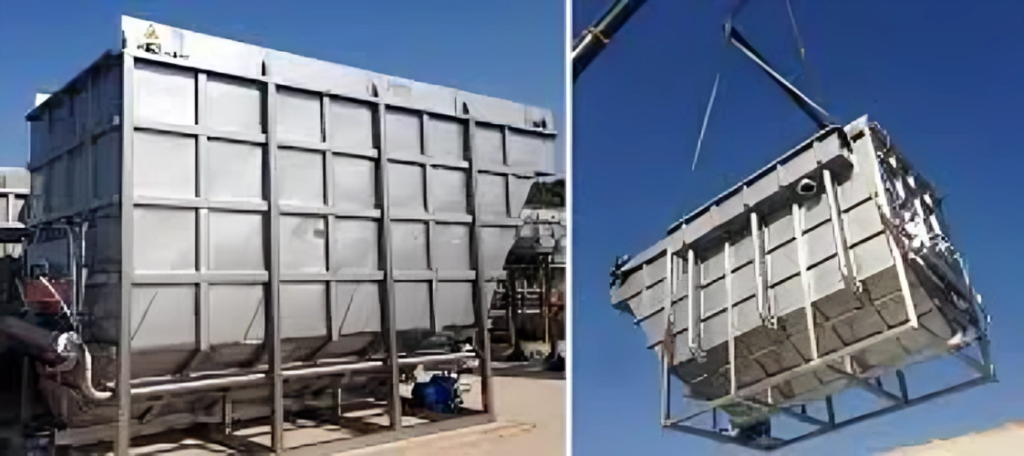
Figure 6. SIGMA DAF equipment, view of installed equipment and part of the installation process.


SIGMA offers a wide range of DAF flotation equipment, specially designed according to the flow rate to be treated and space requirements, from equipment that can treat flows of 5 m3/h to equipment that can treat 1,000 m3/h, compact equipment is also available. The treatment capacity of SIGMA DAF systems covers contaminant load ranges up to 40 kg of solids per flotation surface.
We have a wide range of high performance equipment suitable for different flow rates, each equipment is specially designed depending on the flow to be treated and its characteristics:
- SIGMA DAF FPAC: for flow rates between 5 and 160 m3/h of very high solids load. It is a high performance cross-flow system.

- SIGMA DAF FPBC: for flow rates between 10 and 250 m3/h with low to medium solids loads. The equipment applies countercurrent flow and has a high efficiency.

- SIGMA DAF FPHF: for flow rates between 200 and 1000 m3/h and high suspended solids content. A combination of counterflow and crossflow is used for optimum performance.

- COMPACT DAF: compact equipment installed in skid, in which the coagulation-flocculation system and the DAF are unified, saving space and energy consumption.
Advantages of SIGMA DAF systems:
- High and constant quality of the clarified product.
- Fast start-up.
- Minimal sludge production (sludge concentrations up to 5%, much higher than those achieved by conventional settlers)
- Easy to operate with simple, adaptable and efficient control systems.
- Well-known technology, flexible to each case and robust.
2.3. MBR Ultrafiltration Membrane Bioreactor
For the treatment of wastewater from the cosmetics industry, an aerobic biological activated sludge process in a membrane bio-reactor (MBR) is commonly and effectively applied.
MBR reactors combine the biological treatment process with ultrafiltration membranes as water and sludge separation technology. The biological process can be aerobic, anoxic or anaerobic, for the treatment of wastewater from the cosmetics industry an aerobic treatment is commonly applied.
The application of Ultrafiltration membranes as a clarification technology allows reaching very high concentrations of biomass inside the reactor, between 6000 and 12000 mg/L MLSS(mixed liquor suspended solids), which leads to a high performance of the biological process and a minimum production of excess sludge, therefore, the volumes of this type of reactors are much lower than those used in conventional biological processes.
MBR processes can be designed so that the membrane zone or tank is located outside the reaction tank or inside.
The aerobic biological process consists of the degradation of the organic matter contained in the wastewater to be treated by the action of microorganisms in the presence of oxygen. During the process, oxygen is injected into the reaction medium (consisting of wastewater and microorganisms) by means of aeration systems.
For typical wastewater from the cosmetic industry, special fine bubble aeration diffusers and the use of strict dissolved oxygen control are recommended for optimal and reduced energy consumption.
When an aerobic process is applied and therefore aerators are installed inside the reactor medium, it is recommended to use the configuration a) of Figure 13 of an external membrane module in order not to hinder the transfer of oxygen to the reaction medium.
The following conditions must be present in the reaction medium for this process to proceed correctly:
- Control pH between 6.5 and 8.5.
- Temperatures between 10 and 40ºC. Optimum yields are obtained between 20 and 35ºC.
- The absence of toxic or process-inhibiting substances, such as heavy metals, excessive salinity, etc.
The mixed liquor from the biological reactor, with very high MLSS solids content, passes to the Ultrafiltration membrane zone where filtration takes place.
The membranes separate the solid part and the liquid (hereafter called "permeate") is sent to a storage tank while the solids are sent back through a recirculation loop to the biological reactor.
One of the most important aspects of an MBR reactor (and of any technology that applies membranes) is the cleaning system since they are susceptible to fouling and clogging that reduces their efficiency and life cycle. The submerged membranes are periodically cleaned by backwashing using the permeate itself and the air used as motive force.
Occasionally, the membrane modules will be immersed in a cleaning solution using chemicals (usually acids).
Excess sludge from the biological process that needs to be purged to maintain a constant biomass concentration from the cleaning process is sent to the sludge treatment described in 2.5.
SIGMA, in collaboration with KOCH, designs its MBR plants to optimize membrane performance by specifically designing the hydraulic systems of this section in order to control and optimize the flow rates through the membranes, reducing the energy required to achieve longer filtration cycles and longer membrane life.
The MBR reactors applied for cosmetic industry wastewater designed by SIGMA use hollow-fiber out-inflow membranes , all bound together in bundles or modules that are submerged in the biomass in the membrane zone. They have high mechanical strength. The membranes are arranged in series of bundles mounted on multiple stainless steel structures with supports. Ultrafiltration membranes allow retention and removal of clarified matter:
- Suspended solids
- Bacteria
- Virus
- Proteins
- Colloids
The key aspects of Ultrafiltration membranes and their modular design are as follows:
- Special end design eliminates fouling problems.
- Integral membrane support, allows air circulation, permeate circulation and backwashing actions to be carried out without the need to modify the configuration and with energy savings.
- Manufactured in an integral and robust assembly for easy installation and maintenance.
- The membranes are reinforced by braiding to achieve a very high mechanical strength essential for their durability, especially in particularly harsh biological environments and ensuring low susceptibility to breakage and fouling. This gives the process a high operational safety.
- The modules have great flexibility to be able to vary, depending on each case, the following elements: number of rows per module, number of elements per row, fiber length (module height), packing density to achieve different filter surface areas. All this allows a total adaptation of the module dimensions according to the needs of the application.
The effluent from a properly designed MBR process for the treatment of wastewater from the cosmetics industry is of sufficient quality to reuse the water in some processes, the limits of which are set by local authorities.
Advantages of SIGMA MBR plants:
- Continuous discharge of clarified effluent.
- Total separation (100%) of the sludge and no suspended solids or particles in the clarified sludge.
- Very high organic load reduction performance (> 90% COD and BOD5 removal).
- Very high concentration of BIOMASS inside the reactor: between 6,000 and 12,000 mg/L MLSS.
- Reduced reaction volumes and space savings.
- High resistance to oxidizing agents.
- Very high and CONSTANT quality of the discharged water with the possibility of REUSE.
- Minimal sludge generation.
In addition to the implementation of modules attached to an MBR system, SIGMA designs, builds and installs compact MBR plants that incorporate in the same equipment the reaction zone (including anoxic zone and aeration zone) and filtration. SIGMA SMBR plants offer the following advantages:
- They are a PLUG&LAY solution.
- They offer maximum reliability and durability.
- They allow to obtain a constant effluent quality.
- It is a compact plant that allows the modular addition of UF membranes.
- Operation and control are simple and robust.
- They are highly resistant to oxidizing agents.
SIGMA DAF SMBR plants are designed specifically for each wastewater stream to be treated. Capacities range from 20 - 100 m3/day.


2.4. Reverse Osmosis
Although the clarified water from the previous MBR process has a very high quality to be applied as reuse water in certain processes, not all the destinations of this reuse are admissible by local legislations.
In order to expand the possibilities of reuse, an even more polished quality of the effluent is required, for which Reverse Osmosis technologies are used as the final stage of the treatment to obtain water for reuse.
Reverse Osmosis membranes can remove from water, in addition to the elements already removed by Ultrafiltration, the following:
- Traces of high, medium and low molecular weight organic compounds.
- Bivalent and monovalent ions.
The reject from a Reverse Osmosis system can be treated together with the rest of the sludge or it can even be discharged to the sewage system.
The flow fed to the Reverse Osmosis plant is divided into two streams: permeate or fresh water suitable for reuse and concentrate or reject.
The most efficient Reverse Osmosis membranes work with cross-flow: the clarified water is generated perpendicular to the water inflow.
With these membranes, a reuse water recovery of up to 75% of the treated stream can be achieved. The module configuration uses spiral wound membranes , a configuration of maximum filtration efficiency.

Reverse Osmosis systems designed by SIGMA allow up to 15% fouling of the membranes or decrease of the flow rate due to this fouling without losing the fresh water production capacity of the system. The Reverse Osmosis units have a control system that provides them with autonomy and automatic operation capacity with minimum intervention of operating personnel.
These membranes incorporate safety and warning systems and equipment in order to protect the system and its components from failures caused by clogging, fouling, rupture, excessive mechanical stress, uncontrolled pressure, etc.
A common practice is the installation of two or more Reverse Osmosis steps to achieve the most optimal clarified water quality.
The removal efficiencies of Reverse Osmosis processes applied to wastewater from the cosmetics industry are shown in Table 1. The yields are shown based on the effluent of the MBR process and the final clarified Reverse Osmosis:
Table 1. Performance of Reverse Osmosis applied to MBR effluent.
| Parameter | Reverse osmosis removal (%) |
|---|---|
| Total dissolved solids | 99,1 |
| Total hardness (CaCO3) | 99,8 |
| Calcium | 99,8 |
| Magnesium | 99,7 |
| Sodium | 98,9 |
| Bicarbonates | 98,4 |
| Chlorides | 99,2 |
| Sulfates | 99,9 |
| Nitrates | 95,8 |
Advantages of SIGMA's Reverse Osmosis processes:
- Obtaining a clarified product with the highest quality for reuse.
- Possibility to discharge the rejection to the sewage system and even recirculate it to the treatment plant.
- Recovery of up to 75% of the influent as clarified water.
- Modules installed on easy to attach brackets.
- Simple operation and maintenance.
- Robust equipment with high mechanical resistance.
Sludge treatment
The sludge generated in the physical-chemical process and the surplus from the biological process are treated in a SLUDGE DIGESTOR. Sludge digesters can be aerobic or anaerobic depending on the nature of the sludge and energy availability.
When subjected to a digestion process, the sludge will be reduced in volume by partial transformation of volatile compounds into water and by increasing the concentration of dry matter present. Also, once digested, especially the physicochemical ones, they offer better conditions for dewatering and treatment in the selected dewatering system (filter press, centrifugal decanter, etc.).
3. SIGMA Case Study: Beiersdorf Manufacturing Tres Cantos - Madrid.
Wastewater from the cosmetics industry is characterized by a high content of suspended solids, COD, oils and fats. Given the tightening of discharge limits and the increasing need for water reuse, more and more intensive and efficient treatment processes including advanced technologies are being applied to meet reuse quality requirements.
In the case of Beiersdorf Manufacturing Tres Cantos S.L., SIGMA designs and builds a complete wastewater reuse plant, based on a physico-chemical process (CAF, coagulation - flocculation, DAF) followed by a biological MBR process.
Year: 2011
Project location: Beiersdorf Manufacturing Tres Cantos - Madrid.
Objectives: Design and installation of a wastewater treatment plant to obtain very high quality water for reuse in the process. Treatment of the sludge generated in the plant.

Installed equipment:
- SIGMACELL ACAF grease and oil separator
- Homogenization tank with aeration by means of AQUA-JET diffusers.
- Coagulation, flocculation and pH adjustment system (includes reagent preparation tanks and reaction tanks).
- SIGMA DAF FPBC-PWF flotation equipment.
- MBR biological reactor with external Ultrafiltration membrane module.
- Aerobic sludge digestion reactor
- Sludge dewatering by decanter centrifuge
Capacity: 600 m3/day with capacity for 900 m3/day in future expansion of the production plant.
Table 2. Characteristics and performance of SIGMA's success case in the treatment of wastewater from the cosmetics industry for reuse. Case of Beiersdorf Manufacturing Tres Cantos S.L.
| COD (mg/L) | BOD5(mg/L) | TSS (mg/L) | Oils and fats (mg/L) |
|---|---|---|---|
| 11600 | 3700 | 1060 | 2000 |
| COD (%) | BOD5 (%) | TSS (%) | Oils and fats (%) |
|---|---|---|---|
| 44 | 19 | 81 | 95 |
| COD (%) | BOD5 (%) | TSS (%) |
|---|---|---|
| 96 | 95 | 95 |
| COD (%) | BOD5 (%) | TSS (%) | Oils and fats (%) |
|---|---|---|---|
| 98 | 96 | 99 | 95 |
Fats and oils are removed in the SIGMACELL ACAF equipment. The water is then homogenized and subjected to a carefully studied coagulation-flocculation process, for which Jar-Tests were carried out to determine the type and optimum dosage of coagulant (PAC with polyamide) and flocculant (cationic polyelectrolyte). The flocculated solids are separated in a SIGMADAF FPBC-PWF equipment which allows obtaining a very high quality clarified product. For the elimination of biodegradable organic matter, a biological treatment system MBR 'Membrane Bio-Reactor' with advanced Ultrafiltration membrane technology is installed. This allows obtaining a very high quality of water that is recirculated and reused in the production process of the cosmetic plant.
4. References
Artiga P. 2005. Contribution to the improvement of the biological treatment of wastewater from the tanning industry. Doctoral Thesis Report University of Santiago de Compostela, Department of Chemical Engineering.
Mohedano A.F., Monsalvo V.M., López J., Rodríguez J.J. Treatment of wastewater from the cosmetic industry in a membrane biological reactor. Publications of the Chemical Engineering Section, Universidad Autónoma de Madrid.
Are you interested in this solution?
BASIC INFORMATION CLAUSE
DATA CONTROLLER: SIGMADAF CLARIFIERS, S.L. PURPOSE: To respond to the user’s request. LEGAL BASIS: Consent of the data subject. DISCLOSURES: No disclosures are anticipated, except where required by law or court order. RIGHTS: Access, rectification, erasure, objection, restriction, data portability, and withdrawal of consent. If you believe that the processing of your data does not comply with the regulations, you may contact the Supervisory Authority (www.aepd.es). ADDITIONAL INFORMATION: For more information, please see our privacy policy.