
Treatment and reuse of water in the glass industry

- 1. Glass industry effluents and their recirculation.
- 2. Glass industry effluent treatment
- 3. Fireproof glass effluents: effectiveness of SIGMADAF physicochemical treatment.
- 4. Conclusions
1. Recirculation and reuse of water in glass production
Glass manufacturing requires large quantities of water, so it is common in many areas of the production line to use recirculated water from the process itself. This water must be of high quality and must have specific and controlled characteristics. Effluents from the glass industry are characterized by their high content of:
- Glass microparticles.
- Metals.
- Sales.
- Oils and fats.
- Suspended solids.
- Hardly biodegradable organic matter.
- Fluorides, lead and other heavy metals.
- Phenols, phosphors and other contaminants specific to the manufacture of specialty glass.
Suspended solids, especially glass particles, are a problem in the reused water circuit, as they adhere to the walls of ducts, cooling towers, pump mechanisms and process equipment. This generates a solid layer of dirt and, in many cases, causes the precipitation of compounds that degrade and corrode the materials, as well as hindering homogeneous temperature transmission in the cooling system.
The main objective of effluent treatment is to remove suspended solids, specifically to separate glass particles and precipitate salts, so that the water can be recirculated into the video production process.
2. Wastewater treatment in the glass industry
Wastewater from the glass industry must be treated in such a way that all glass particles and salts are removed, while suspended solids and oils are reduced as much as possible.
For this purpose, the following mechanical and physicochemical processes are applied:
- Screening.
- Preliminary oil removal.
- Coagulation-flocculation with pH adjustment.
- Dissolved air flotation.
- Multimedia sand filters.
- Activated carbon filters.
- Reverse osmosis.
- Depending on specific requirements, a disinfection step may be necessary.
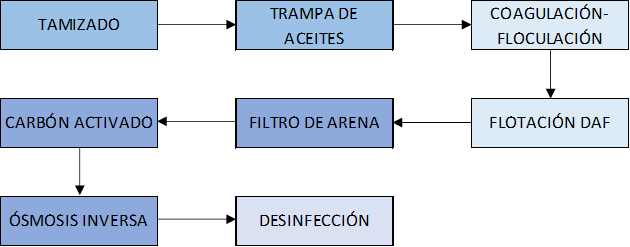
Sieving
Retains larger solids such as pieces of glass, large particles and other large diameter objects and particles.
Oil trap
It separates oils and fats from the effluent, which float on the surface and can be swept away by sweeping mechanisms. In certain production plants, these oils and fats are a recoverable product that is recovered as a raw material.
Coagulation-flocculation with pH adjustment
Coagulant products destabilize the suspended solid loads by separating them from the liquid phase.
The most common coagulants are compounds of iron salts (such as ferric chloride) and aluminum (such as PAC), as well as other synthetic and organic compounds, or mixtures of several products.
PAC coagulants are generally very effective in treating effluents from the glass industry.
Coagulants are acidic in nature and therefore lower the pH of the water, requiring neutralization with NaOH. The application of hydroxides not only allows neutralization, but also precipitates compounds that form hydroxides such as metals, which leave the liquid phase and pass to the coagulated solids.
Flocculants (polyelectrolytes) group clots into consistent, low-density floccules that float easily.
Dissolved Air Flotation (DAF)
DAF technology technology injects microbubbles into the water so that the floccules are transported to the flotation surface, where they are dragged and removed from the effluent, leaving a clarified product practically free of suspended solids and other compounds associated with them.
Sand filter
Multimedia filters (usually sand filters) are used to remove suspended solids that may have resisted the previous physicochemical process with dissolved air flotation. The sand traps these solids, allowing the clarified water to pass through the bed.
Activated carbon
In activated carbon filters, dissolved organic matter is retained and adsorbed on the activated and charged surface of the carbon particles in the bed.
The retention capacity of these filters is very high due to the large surface area of the activated carbon particles and their affinity for organic matter. Color, odors and some recalcitrant compounds are also retained.
Reverse osmosis
Reverse osmosis membranes retain residual salts and hydroxides left over from the physicochemical process, as well as other saline or recalcitrant compounds.
Disinfection
Disinfection is an optional process applied to effluents containing pathogenic microorganisms, or spores thereof, that have not been retained in the previous stages.
Generally, chlorination, ozonation or ultraviolet light is applied. Disinfection makes the treated water safe for reuse in the process and even for discharge to the aquatic environment, if the rest of the control parameters allow it.
3. Fireproof glass effluents: effectiveness of the physicochemical treatment proposed by SIGMADAF.
Fire resistant glass is a special type of fire resistant glass, whose manufacturing process requires the recirculation of treated water.
The following is a study carried out for an effluent produced in the manufacture of this type of glass.
The customer needed to remove silica particles from its effluent, which were damaging the metal parts of its equipment, especially aluminum, causing severe corrosion.
As the water is recirculated in the process, the repeated and constant leaching of ions from the glass powder causes an increase in the concentration of silica, carbonates and sodium, increasing the salt content and altering the pH and conductivity.
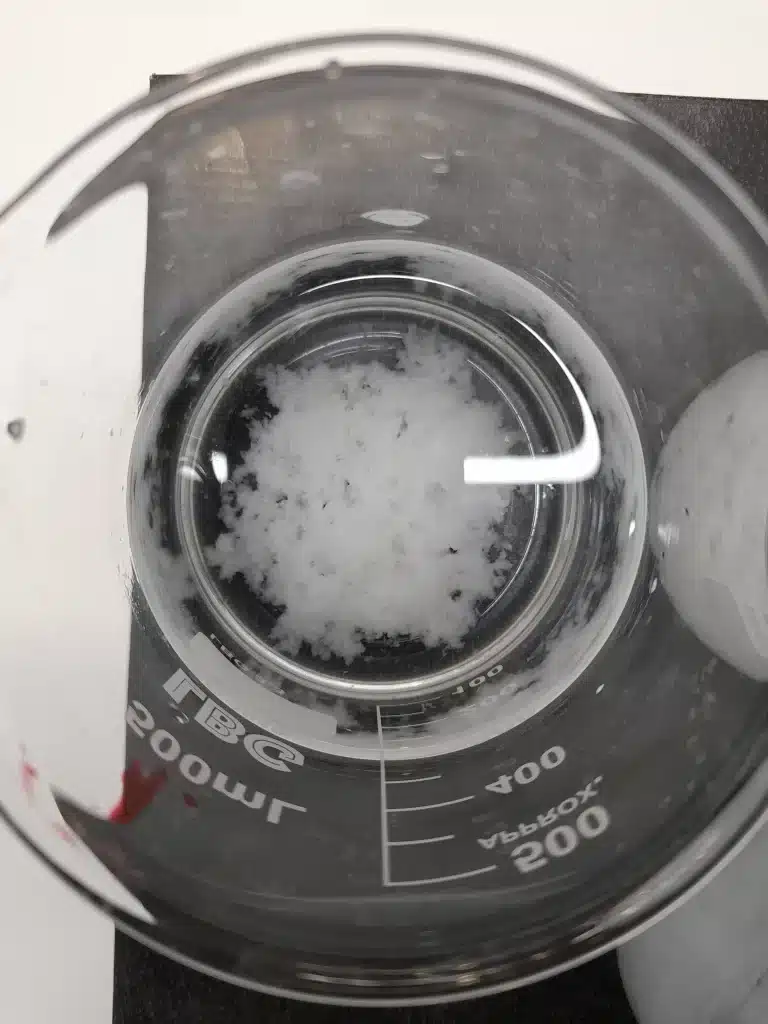
The effluent to be treated is whitish and has a high turbidity. It has an original pH of 8.9.
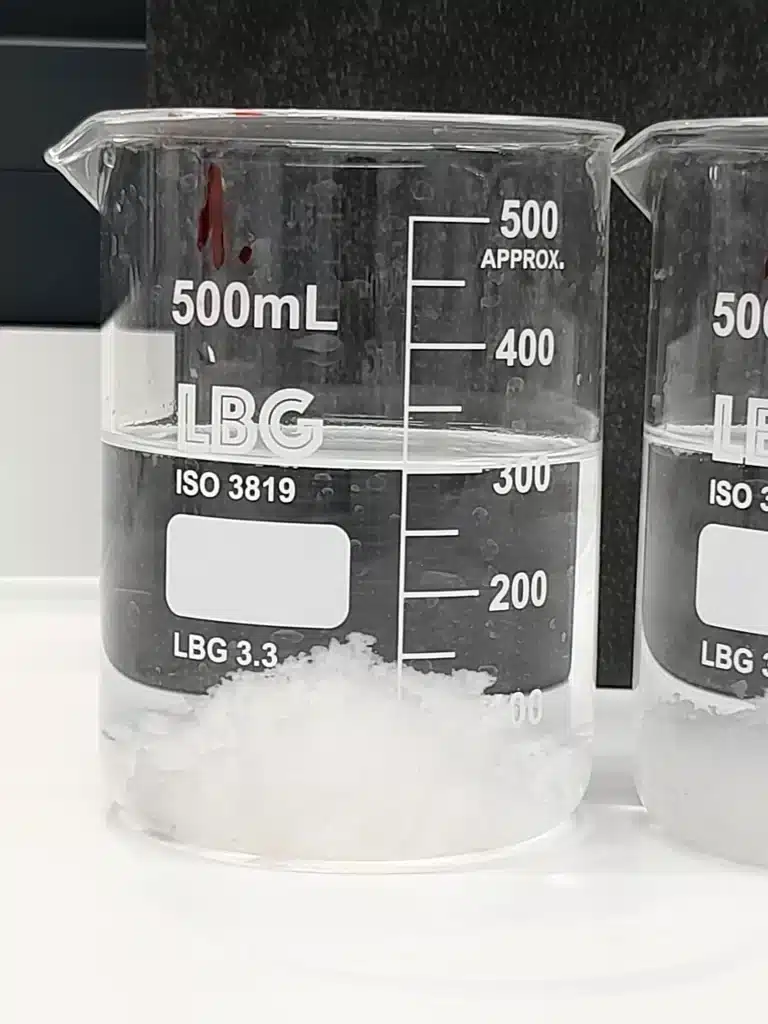
A study is carried out to analyze the performance of a physico-chemical physicochemical treatment process by coagulation-flocculation with pH adjustment and with pH adjustment and dissolved air flotation.
- A PAC coagulant is applied
- Subsequently, the pH is adjusted.
- For floc formation, an anionic flocculant related to the precipitated salts and existing solids is used, which generates consistent, low-density flocs that are prone to float, easily separable in a DAF system.
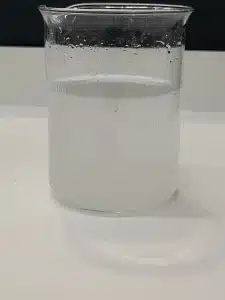
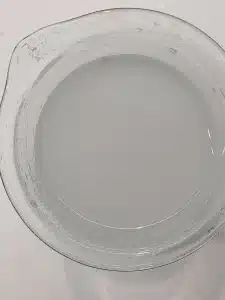
The proposed treatment obtains the following results:
- Removal of more than 98% of turbidity and suspended solids.
- The pH is not affected.
- The electrical conductivity increases due to the use of the coagulant and NaOH, leaving a residue of chlorides and hydroxides that increase the conductivity.
- The removal of salts is possible through the use of Reverse Osmosis membranes.
This process produces a clarified product of very high quality, which is suitable for safe re-injection into the process.
Are you interested in this solution?
BASIC INFORMATION CLAUSE
DATA CONTROLLER: SIGMADAF CLARIFIERS, S.L. PURPOSE: To respond to the user’s request. LEGAL BASIS: Consent of the data subject. DISCLOSURES: No disclosures are anticipated, except where required by law or court order. RIGHTS: Access, rectification, erasure, objection, restriction, data portability, and withdrawal of consent. If you believe that the processing of your data does not comply with the regulations, you may contact the Supervisory Authority (www.aepd.es). ADDITIONAL INFORMATION: For more information, please see our privacy policy.