
Concrete DAF systems designed for exceptionally high flow rates

MEGADAF
Dissolved-air flotation systems for exceptionally high flow rates

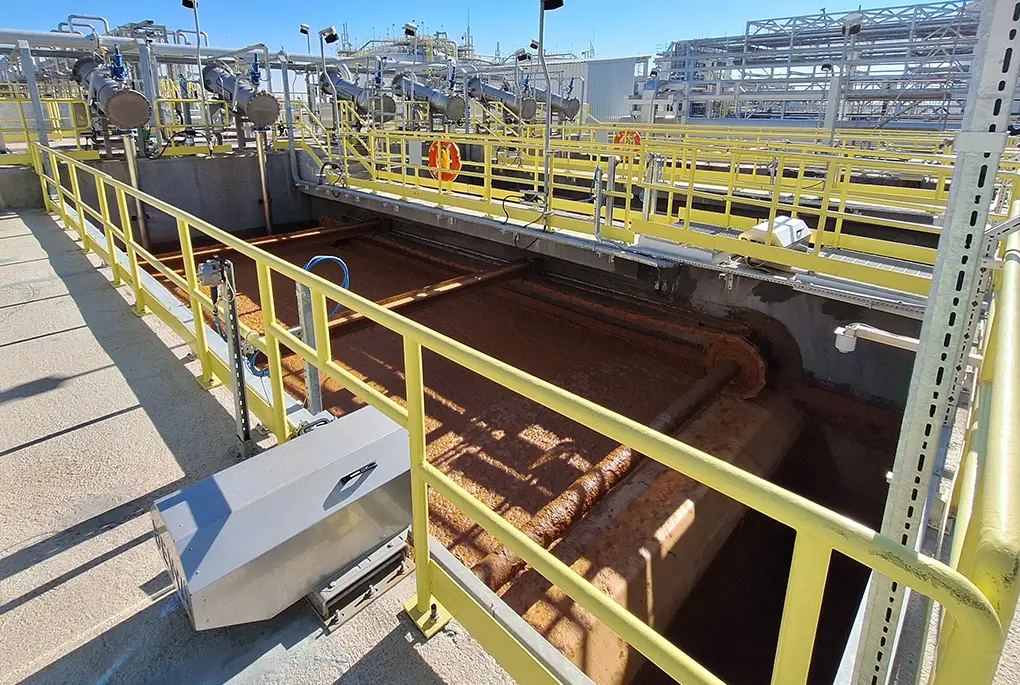
- More than 1,000 m³/h per DAF unit
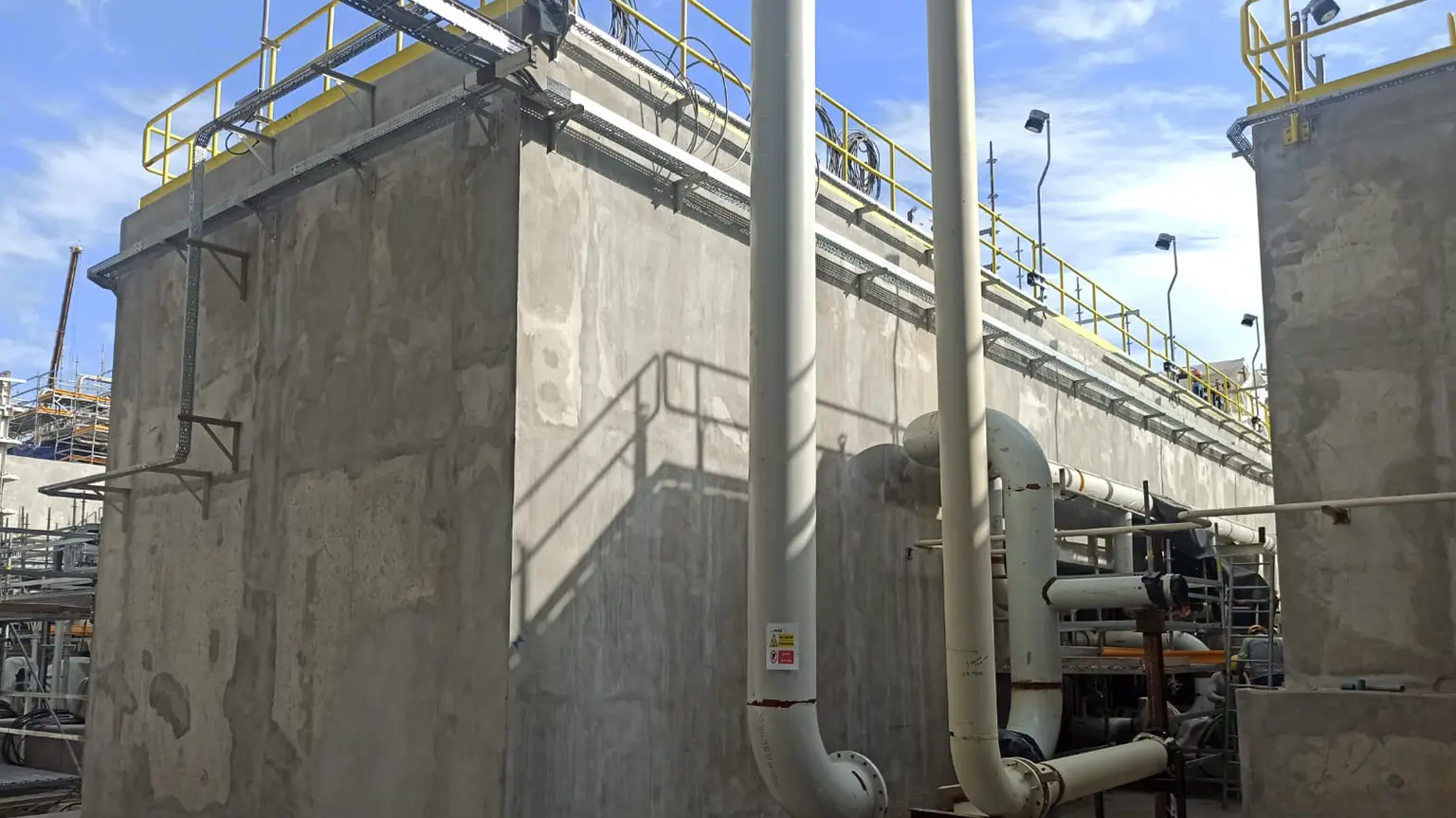
- Concrete Construction for Large Wastewater Treatment Plants
- Design with or without slats, depending on the application
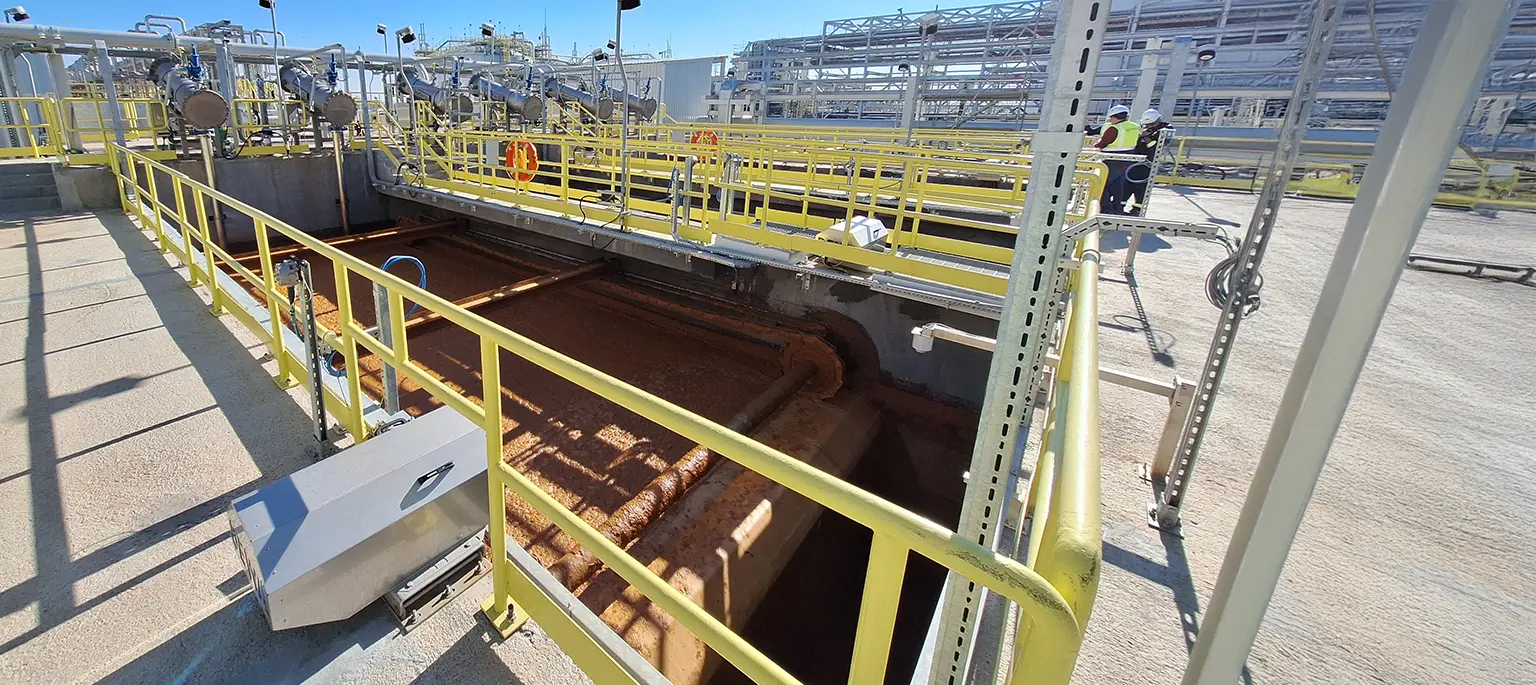

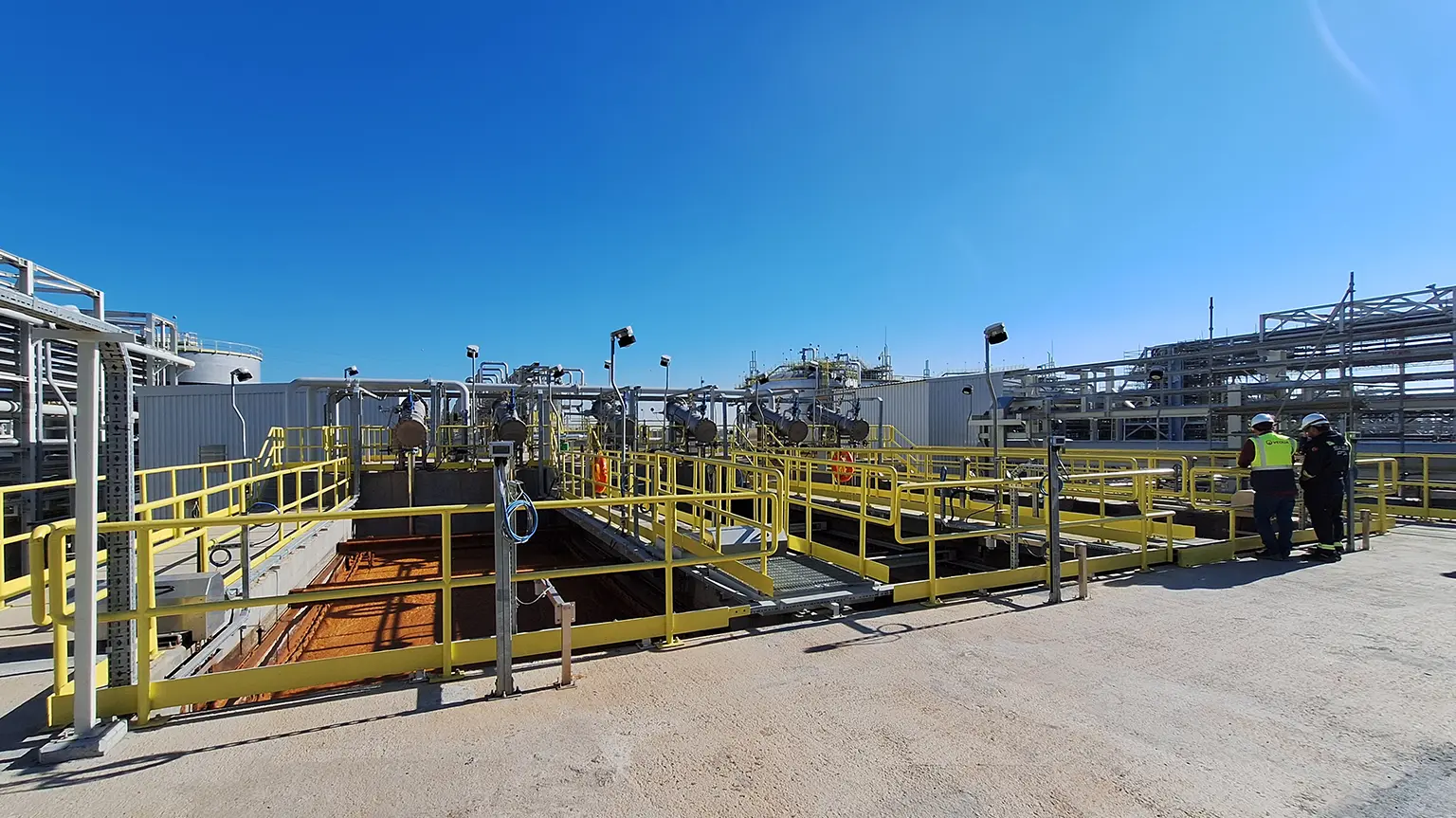
MEGADAF systems are dissolved-air flotation units constructed of concrete, specifically designed for the treatment of exceptionally large wastewater flows.
Its design allows for the development of high-capacity DAF units capable of handling flow rates exceeding 1,000 m³/h per unit, while maintaining high efficiency in the removal of suspended solids, oils, greases, algae, and flocculated matter.
These systems are used in both municipal and industrial plants, as well as in large water treatment and desalination facilities where reliability, treatment capacity, and durability are critical factors.
In addition to the MEGADAF systems, we offer a wide range of DAF systems made of stainless steel to treat various flow rates and pollutant loads.

Features of MEGADAF Systems
MEGADAF systems have been developed to deliver maximum performance in facilities where flow rates make the use of conventional DAF equipment impractical.
- Treatment capacity exceeding 1,000 m³/h per unit.
- Specifically designed for large water treatment plants.
- High efficiency in removing suspended solids, oils, fats, algae, and organic matter.
- Continuous operation with low operating and maintenance costs.
- Integration of the coagulation and flocculation stages into the concrete structure itself.
- Option to incorporate tubular flocculation for large-capacity facilities.
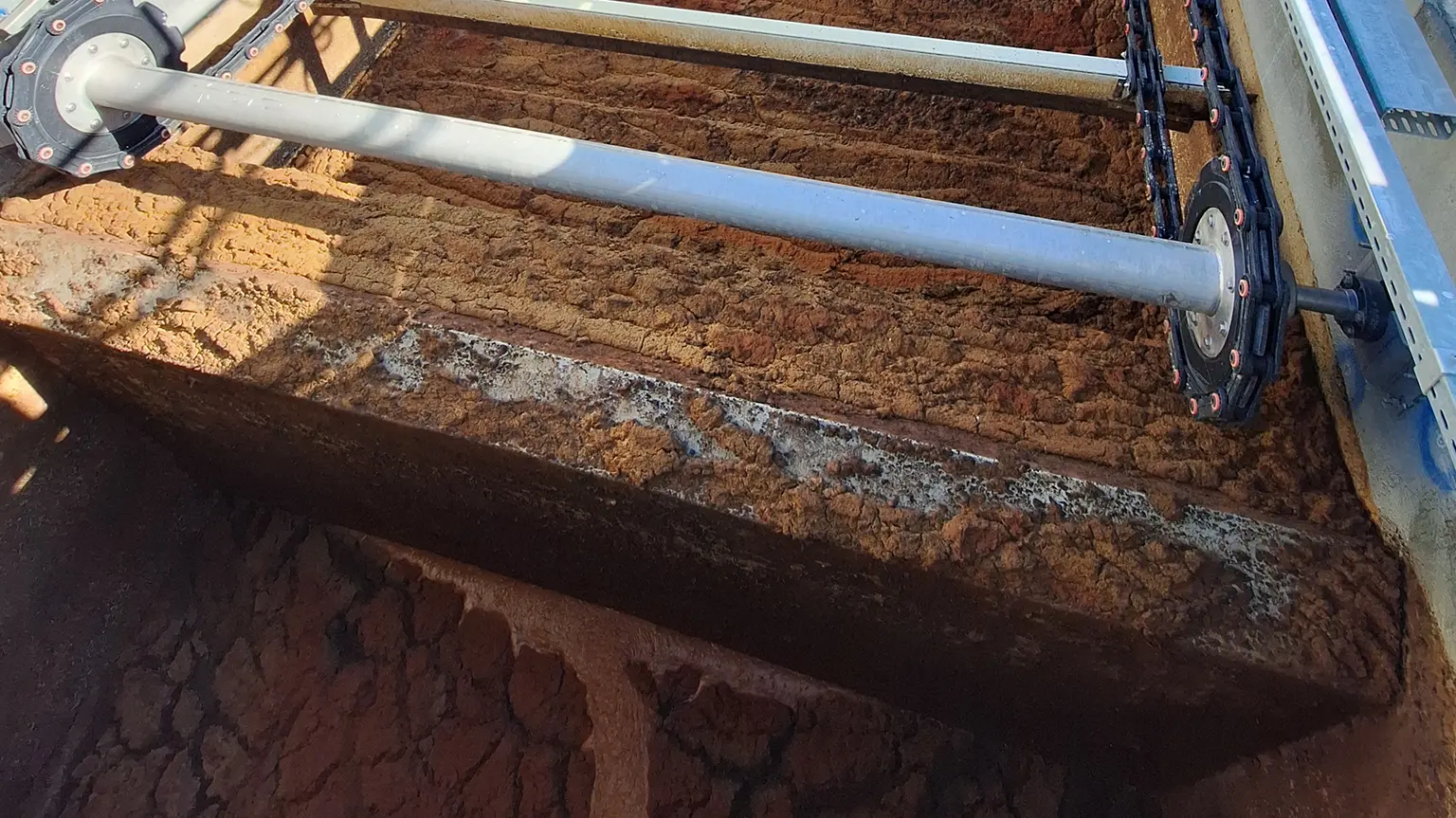
- Extraction systems for floated and settled sludge designed for reliable operation even under high solids loads.
Available configurations
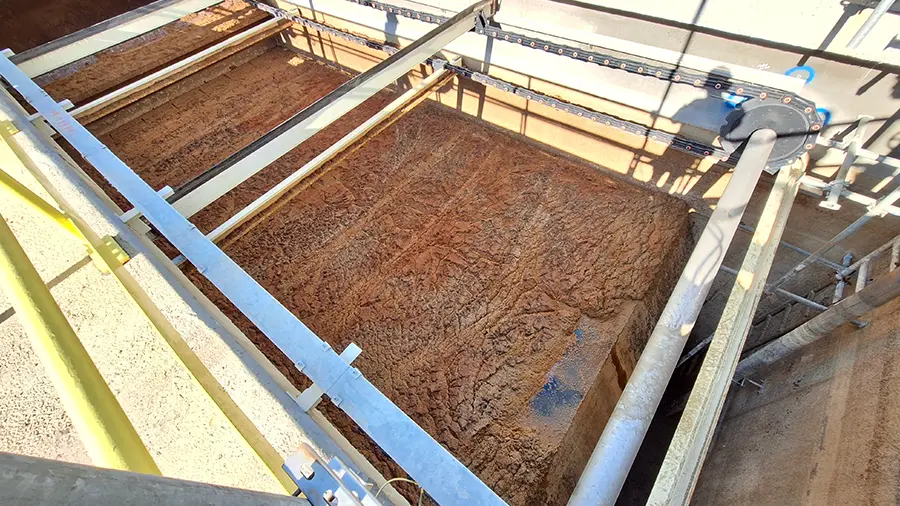
MEGADAF FPAC-CW
NO SLATS
This model features a large flotation and clarification area, operating at low hydraulic loads and with a large effective separation surface area.
It is particularly suitable for wastewater containing high concentrations of suspended solids, oils, fats, or flocculated matter, and can be used as a primary clarification process or as a post-treatment step following biological processes when the solids load is the primary design factor.
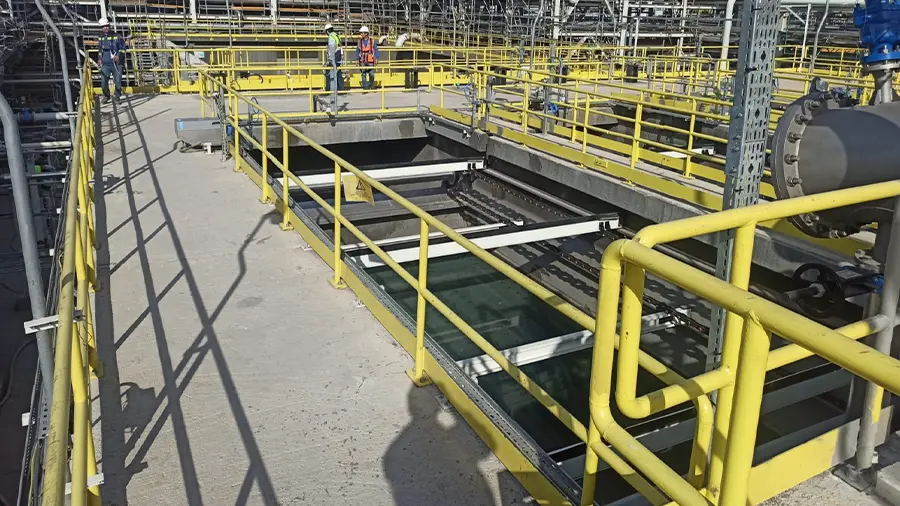
MEGADAF FPBC-CW
WITH LAMINATE PACKAGE
The FPBC-CW model features a set of vanes that optimize the hydraulic flow within the tank and improve the efficiency of the flotation process.
Thanks to this design, it can handle higher hydraulic loads, significantly reducing the footprint and volume of the tank without compromising the equipment's performance.

How the MEGADAF System Works
- Coagulation and Flocculation: The process begins with the dosing of chemical reagents into the coagulation and flocculation chambers, which are integrated into the equipment’s concrete structure.
In these chambers, equipped with vertical agitators, the finest particles, oils, and colloidal matter are destabilized and aggregate to form larger flocs, which are much easier to separate later through flotation.
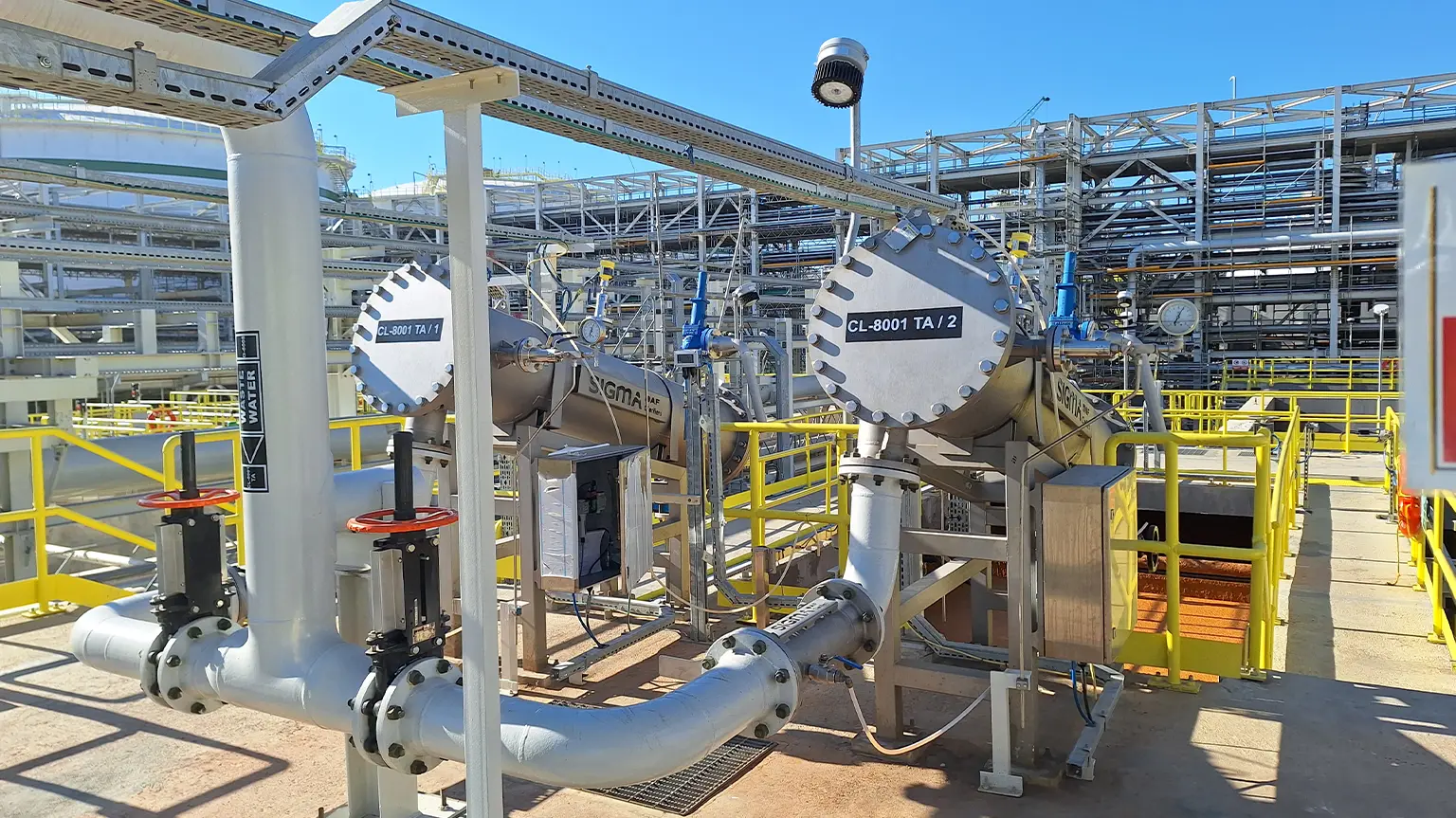
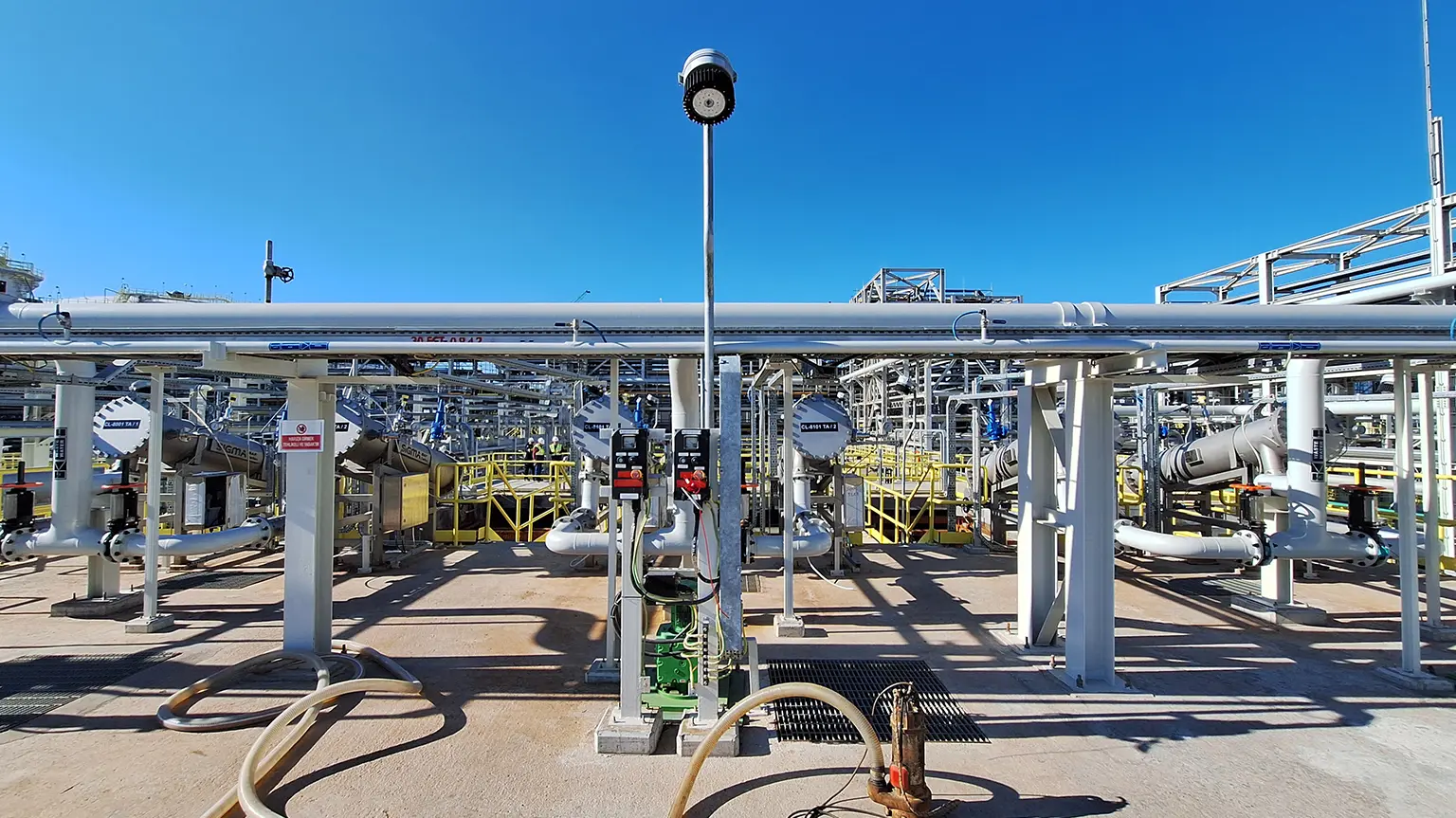
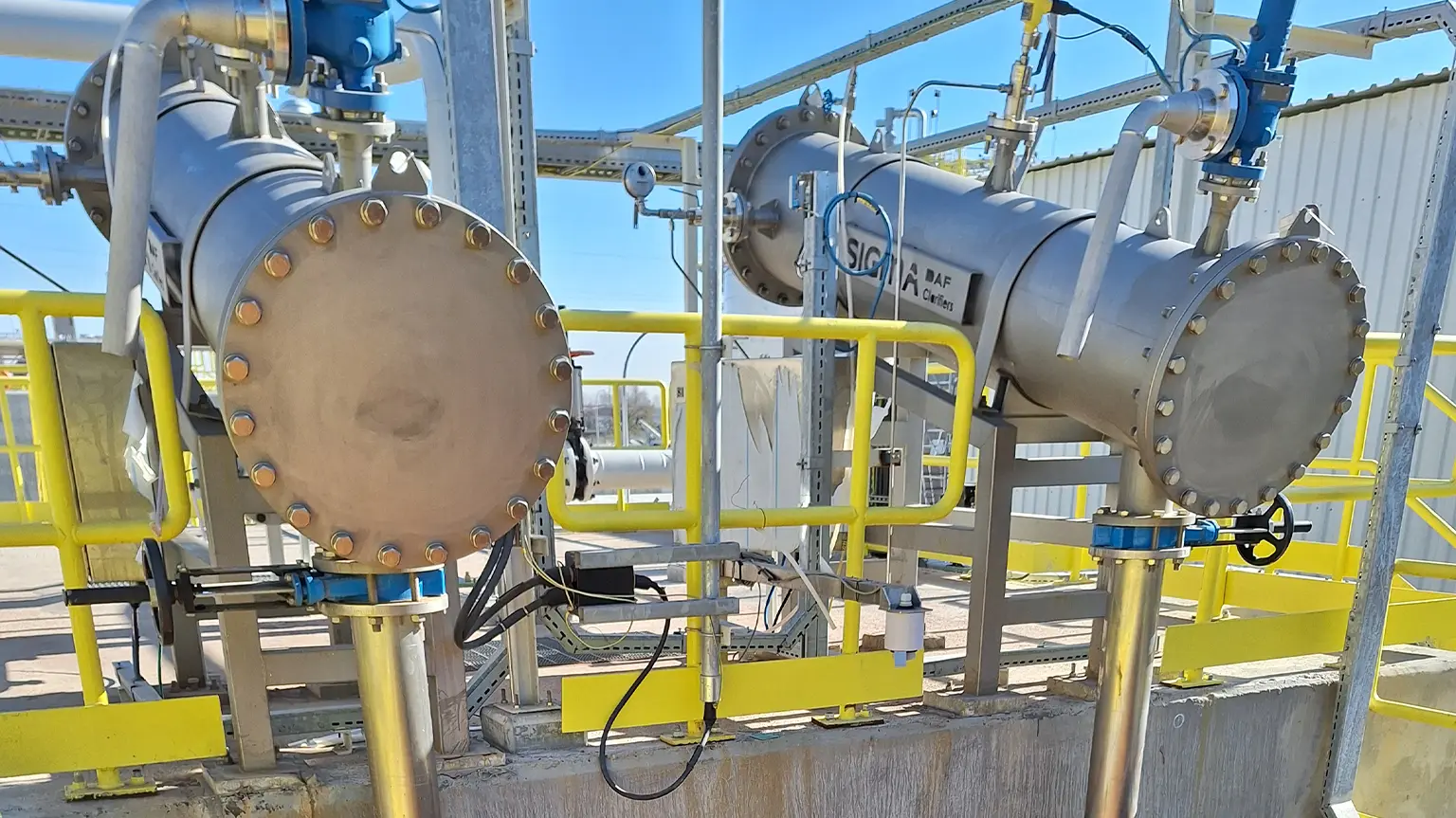
In very high-capacity facilities, the flocculation stage can also be carried out using external tubular units, optimizing floc formation without increasing the size of the main tank. - Microbubble Generation: As the water flows toward the flotation zone, a portion of the already clarified water is recirculated through the pressurization circuit. This circuit includes a recirculation pump, an air-water saturator, and a depressurization system that generates millions of microbubbles of air.
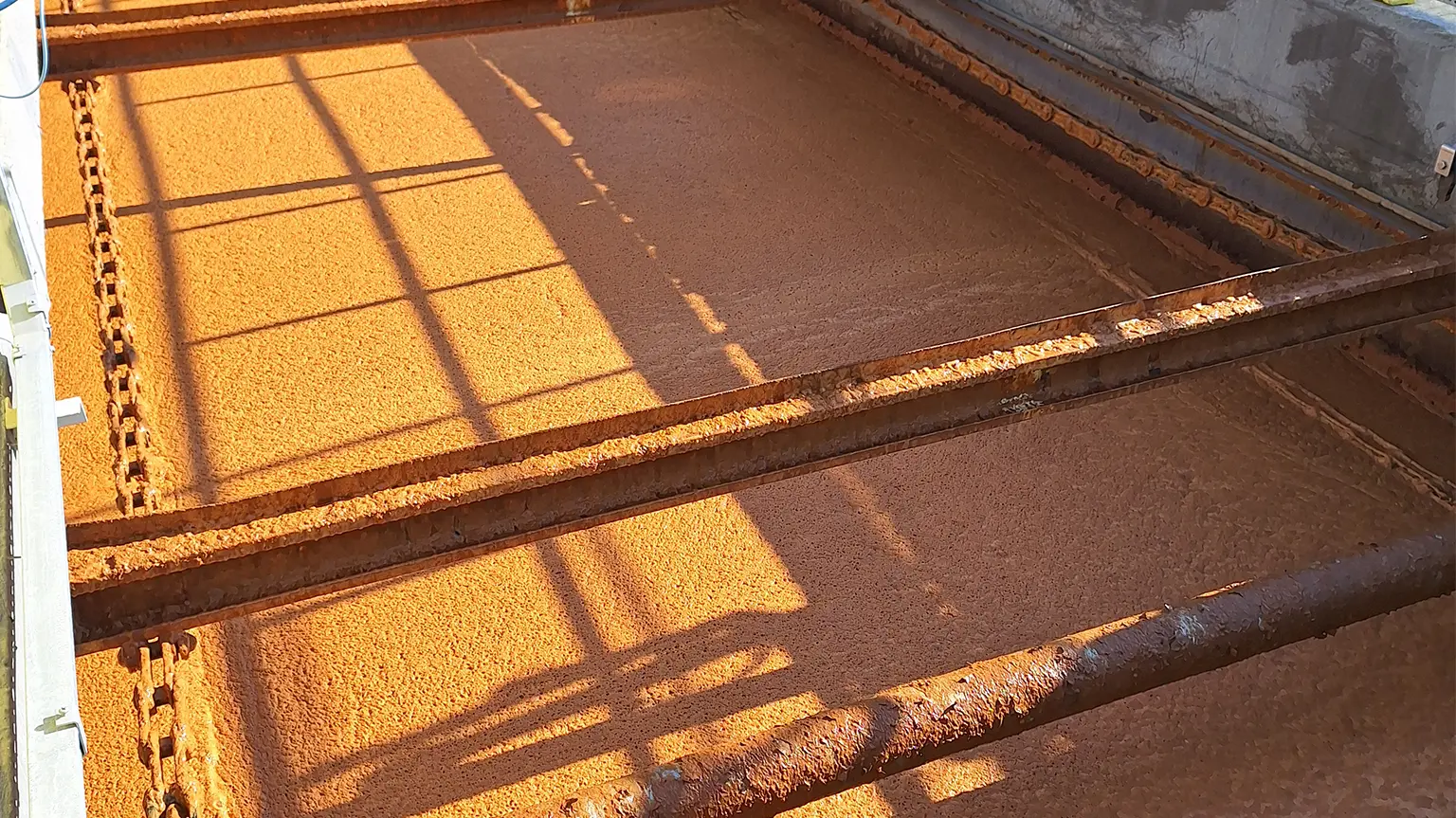
When the pressure is reduced, the dissolved air is released, forming extremely fine microbubbles that adhere to the flocs generated during the physicochemical treatment. - Flotation and contaminant separation: Microbubbles attached to the flocs reduce their density, causing them to rise rapidly to the surface of the tank, where they form a layer of floated sludge.
In the FPBC-CW models, the water also passes through a pack of lamellae that improves hydraulic distribution within the unit, prevents short-circuiting, and increases separation efficiency. This design allows operation at higher hydraulic loads while reducing the required tank surface area.
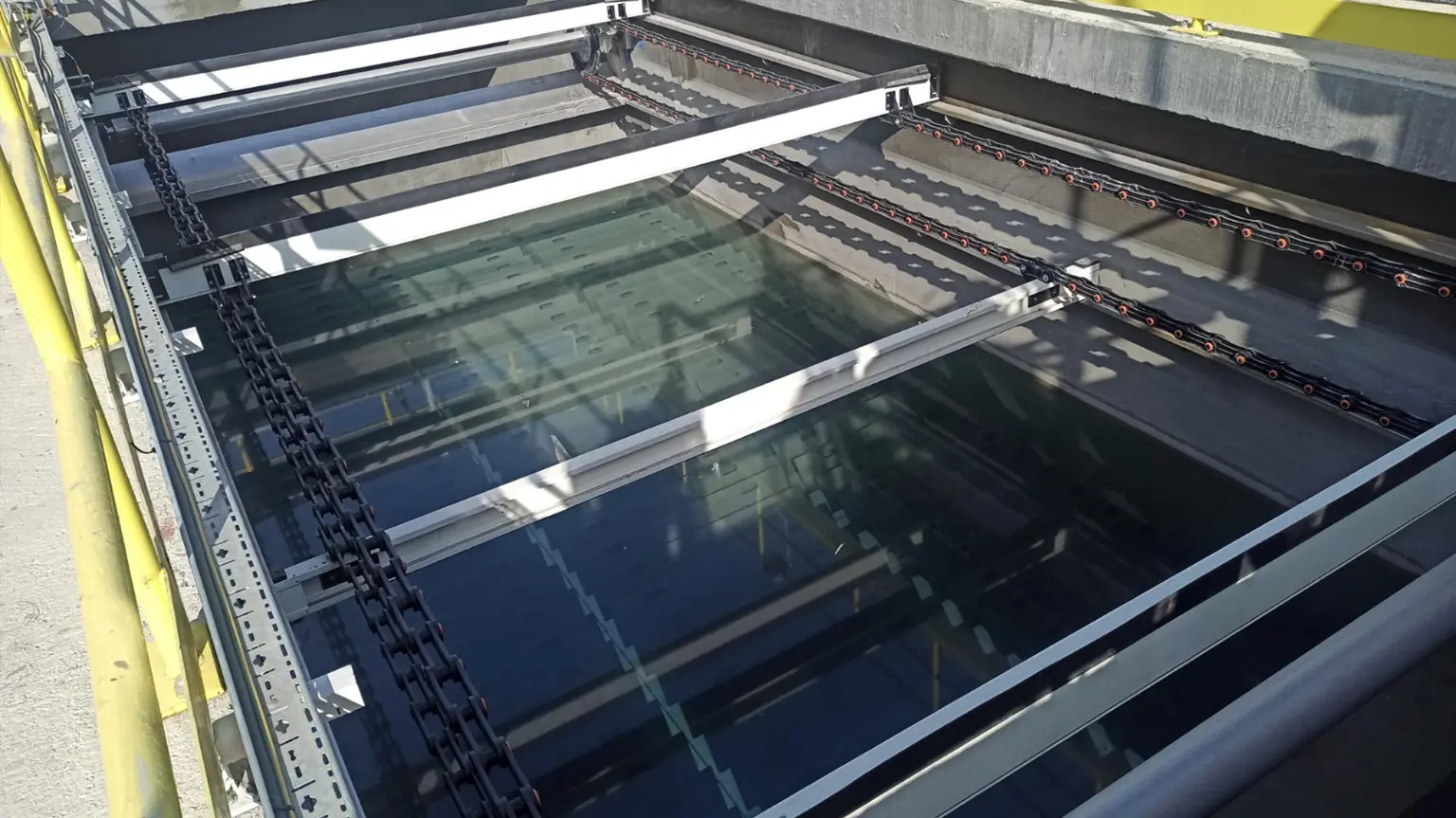
Higher-density particles that do not float settle to the bottom of the unit, where they can be collected by a bottom scraper when the application requires it. - Automatic Sludge Removal: Floating sludge is continuously removed by a surface scraper equipped with blades, which conveys it to a collection chamber located at the end of the tank.
If there are any settled solids, they are moved by a bottom scraper toward the discharge hoppers, from where they are removed manually or automatically. - Clarified Water Outlet: Once the contaminants have been removed, the clarified water leaves the system through the outlet manifolds located at the bottom of the tank or through the transfer ports to the clean water compartment, depending on the equipment configuration.
Water is also drawn from this compartment for use in the recirculation loop to regenerate the microbubbles, thereby completing a continuous, efficient, and energy-efficient process.
Advantages of MEGADAF Systems
- Treatment of Extremely High Flow Rates: Designed for facilities where a single unit can handle more than 1,000 m³/h, thereby reducing the number of units required.
- Maximum structural strength: The concrete construction provides high mechanical strength and a long service life, even in plants that operate continuously for decades.
- Optimization of Available Space: The incorporation of lamellar packs into the FPBC-CW models increases the allowable hydraulic load and significantly reduces the footprint of the DAF system.
- Full integration of the physicochemical process: The coagulation and flocculation chambers can be built into the equipment’s structure itself, facilitating gravity-fed operation and simplifying plant operations.
- Efficient sludge removal: The systems incorporate surface scrapers and, when required by the application, bottom scrapers and automatic drainage systems that ensure continuous removal of both floating solids and sediments.
- Suitable for a wide range of applications: MEGADAF systems can be configured for municipal and industrial wastewater treatment, drinking water treatment plants, desalination plants, and any facility requiring high separation capacity through dissolved-air flotation.

WHY CHOOSE THE MEGADAF SYSTEM?
MEGADAF brings the benefits of DAF technology to large-capacity facilities through concrete-constructed systems designed for the efficient treatment of flow rates exceeding 1,000 m³/h. Its high hydraulic capacity, adaptable design, and the ability to incorporate different flotation and lamella configurations make it a solution particularly well-suited for large industrial and municipal wastewater treatment plants.